
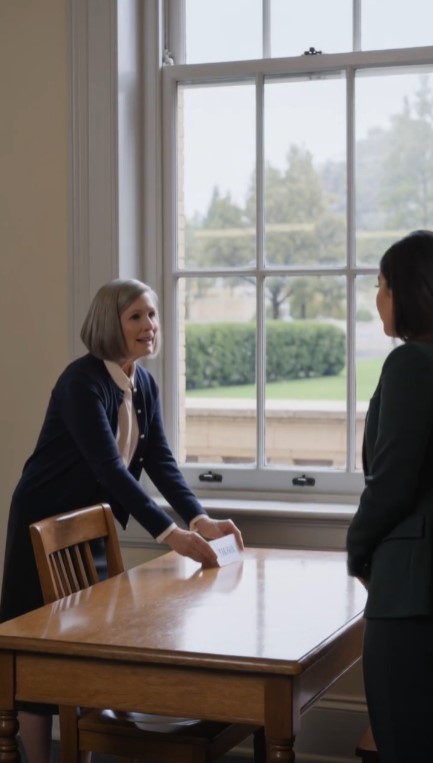
For fourteen years, librarian Helen never allowed anyone to use one particular desk.
Every morning she placed a reserved card on it.
One employee finally asked why.
Helen smiled.
“Someone promised he’d come back.”
His name was Robert.
He was already an older man when he admitted to Helen that he had never learned to read.
So after the library closed…
Helen secretly taught him.
Night after night.
Word after word.
Then one morning Robert stopped coming.
Fourteen years passed.
On the week Helen was retiring…
the library doors opened.
An elderly man walked inside carrying a book.
Helen froze.
“Robert?”
He smiled.
“I finished it.”
Robert had learned to read.
Then he learned to write.
And the book in his hands was his own.
He opened it to the dedication.
Helen saw her name.
But Robert had brought someone with him.
His granddaughter entered carrying an old pencil case.
The exact one Helen had given Robert decades earlier.
She placed it on the empty desk and said:
“He taught me with everything you taught him.”
Then Robert looked toward the library’s locked archive room.
His smile disappeared.
“There’s one more reason I came back.”
Helen looked at him.
“What do you mean?”
Robert placed his book carefully on the desk.
Then reached inside his coat.
He pulled out a small brass key.
Helen stared at it.
“That looks like one of our old archive keys.”
Robert nodded.
“It is.”
“How did you get that?”
“You gave it to me.”
Helen shook her head immediately.
“No, I didn’t.”
Robert smiled sadly.
“Not on purpose.”
Fourteen years earlier, on the final evening Robert had come to the library, Helen had given him a stack of practice materials.
A dictionary.
A children’s novel.
A notebook.
And the old pencil case.
Apparently the archive key had been inside one of the folders.
Robert found it only after leaving town.
Helen looked toward the locked archive room.
“That lock was changed years ago.”
Robert nodded.
“I know.”
“So why bring the key back?”
Robert’s granddaughter, Lily, answered.
“Because Grandpa thinks there’s something in there that belongs to him.”
Helen frowned.
“What?”
Robert looked down.
“My name.”
Helen stared.
Robert explained.
When he was a child, he had never attended school regularly.
His father moved the family constantly.
Farm work.
Construction.
Seasonal labor.
Robert learned to work before he learned to read.
By twelve, he could repair an engine.
By fourteen, he could build a fence.
But he could barely recognize his own written name.
He became good at hiding it.
He memorized signs.
Asked people to “summarize” documents.
Pretended he forgot his glasses.
Signed forms wherever someone pointed.
For decades, nobody knew.
Then one afternoon, when Robert was nearly sixty, he came into Helen’s library.
He stood at the front desk holding an envelope.
“Can you help me?”
Helen smiled.
“Of course.”
Robert handed it to her.
“It’s from my daughter.”
Helen started to pass it back.
“You’d like help finding something?”
Robert looked around.
Then whispered:
“I need you to read it.”
Helen understood immediately.
She didn’t embarrass him.
She led him to the quiet desk near the window.
The same desk she would later reserve for fourteen years.
She read the letter aloud.
Robert’s daughter had written that she was pregnant.
He was going to become a grandfather.
Robert started crying.
Helen assumed he was emotional about the baby.
He was.
But there was something else.
“My granddaughter is going to send me letters someday.”
Helen waited.
Robert whispered:
“I want to read them myself.”
That night, after the library closed, the lessons began.
Robert started with simple words.
House.
Tree.
Book.
Robert.
Helen wrote his name on a piece of paper.
He stared at it.
Then copied it.
Slowly.
R.
O.
B.
E.
R.
T.
The letters were shaky.
Helen smiled.
“There.”
Robert looked at the page for nearly a minute.
“That’s me.”
“Yes.”
He folded the paper and put it in his pocket.
They practiced three nights a week.
Sometimes Robert became frustrated.
“This is embarrassing.”
Helen would answer:
“No. Quitting because you’re embarrassed would be embarrassing.”
He hated that sentence.
Which meant it worked.
Months passed.
Robert read his first full page.
Then his first children’s book.
Then a newspaper article.
When Lily was born, Robert received a photograph with her name written underneath.
For the first time in his life, he read the name without asking anyone.
Lily.
He cried again.
Then, suddenly, Robert stopped coming.
No goodbye.
No explanation.
Helen called the phone number he had given her.
Disconnected.
She mailed a letter.
Returned.
She asked around.
Nobody knew where he had gone.
For fourteen years, she kept the desk reserved anyway.
Not all day.
Just during the hour they once used for lessons.
Seven to eight in the evening.
Every Thursday.
A small promise to someone who might never return.
Now Robert was standing beside it.
Helen crossed her arms.
“You disappeared.”
“I know.”
“For fourteen years.”
“I know.”
“You could’ve written.”
Robert looked ashamed.
“That’s the worst part.”
Helen waited.
Robert said:
“I could write by then.”
“So why didn’t you?”
Robert pulled out a folded piece of paper.
Old.
Creased.
“I did.”
Helen opened it.
A letter.
Her name at the top.
Dear Helen,
The handwriting was uneven.
But readable.
Robert had written it fourteen years earlier.
He explained that his daughter had become seriously ill shortly after Lily’s birth.
She lived several states away.
Robert left immediately to help.
He planned to return after a few weeks.
Weeks became months.
Then years.
Robert became Lily’s primary caregiver while his daughter underwent treatment.
Helen looked up.
“Is she…”
Robert shook his head.
“She died when Lily was four.”
Helen closed her eyes.
“I’m sorry.”
Robert nodded.
“After that, Lily needed me.”
He raised her.
School mornings.
Lunchboxes.
Homework.
Bedtime stories.
Robert smiled.
“At first, she thought I was reading the books to her.”
“I was mostly memorizing them.”
Lily laughed softly.
“He cheated.”
Robert nodded.
“Terribly.”
But over time, something changed.
Robert kept learning.
At night, after Lily slept, he practiced.
He read every book she brought home.
If she learned ten new spelling words, Robert learned them too.
When Lily reached second grade, she caught him struggling with a paragraph.
She asked:
“Grandpa, are you learning too?”
Robert thought she would laugh.
Instead, Lily sat beside him.
“I’ll help.”
So the student became the teacher.
Then teacher and student changed places again.
Robert read to her.
She corrected him.
He corrected her homework.
Together they learned.
Helen touched the old letter.
“But why didn’t you mail this?”
Robert looked toward the archive room.
“Because I was ashamed again.”
“Ashamed of what?”
“Leaving.”
Helen shook her head.
“You were caring for your family.”
“I know that now.”
“But back then, every month I waited made it harder to explain.”
Helen understood.
Time can do that.
A small delay becomes embarrassment.
Embarrassment becomes avoidance.
Avoidance becomes years.
Robert continued.
“Then I found something.”
When Lily was ten, Robert finally went through boxes that had belonged to his daughter.
Inside was an old school folder.
The folder had originally belonged to Robert.
His mother had kept it.
Inside were faded documents from a school he attended briefly as a boy.
Attendance sheets.
Teacher notes.
And one library card.
From Helen’s library.
Dated nearly fifty years earlier.
Helen looked stunned.
“You came here as a child?”
Robert nodded.
“Once.”
He didn’t remember much.
But attached to the old card was a note written by a librarian.
Robert enjoys listening to stories but struggles to recognize written words. Recommend extra reading support.
Helen sat down.
Robert whispered:
“There was another note.”
He handed her a photocopy.
Family moved before support could begin. Keep reading file in archive in case student returns.
Helen stared toward the locked archive room.
Robert said:
“That file might still be in there.”
The library had maintained old community literacy records for decades before digitization.
Many had been boxed and transferred into the archive.
Robert wanted to know one thing.
“Was somebody already trying to help me?”
Helen understood.
For most of his life, Robert believed nobody noticed.
That he had slipped through every school unnoticed because he wasn’t smart enough.
But the old note suggested the opposite.
Someone had seen him.
Someone had recognized the problem.
Life simply moved him away before help arrived.
Helen called the archive manager.
They opened the room.
Rows of boxes filled the shelves.
Dusty labels.
Old circulation records.
Community programs.
After nearly an hour, they found a box marked:
Youth Reading Support — 1968–1975
Helen opened it.
Inside were dozens of folders.
She found one.
Robert Miller.
Robert stopped breathing.
Lily took his hand.
Helen opened the file.
The first page included his childhood photograph.
Seven years old.
Messy hair.
Serious eyes.
Robert touched the image.
“I don’t remember that being taken.”
There were four notes.
His teacher had written that Robert was bright, mechanically gifted, and excellent at verbal problem solving.
But he struggled with reading and often missed school.
Another note recommended individual tutoring.
Another stated:
Robert appears embarrassed when asked to read aloud. Avoid public correction.
Helen looked at him.
Robert began crying.
“What?”
Lily asked.
Robert pointed.
“They knew.”
Helen nodded.
“They knew you were struggling.”
“No.”
Robert shook his head.
“They knew I wasn’t stupid.”
For nearly seventy years, he had believed the opposite.
He thought difficulty reading meant he lacked intelligence.
So he hid it.
Avoided school.
Worked with his hands.
Built a whole life around never being exposed.
But his childhood teachers had seen something he had never been told.
He was capable.
He simply needed help.
Robert sat at the archive table and cried quietly.
Helen placed one hand on his shoulder.
“I wish someone had gotten this to you.”
Robert nodded.
“But somebody eventually did.”
He looked at her.
“You.”
Helen shook her head.
“You did the work.”
“You opened the door.”
Robert’s granddaughter pulled his book from her bag.
“Show her.”
Robert placed it in front of Helen.
The title was:
THE WORDS I MISSED
It wasn’t a novel.
It was Robert’s life story.
Growing up moving from place to place.
Leaving school.
Learning to hide his illiteracy.
Becoming a mechanic.
A father.
A grandfather.
Then meeting Helen.
Learning his first written sentence.
Raising Lily.
Losing his daughter.
And discovering, late in life, that learning had no expiration date.
Helen opened to the dedication again.
She had been too overwhelmed earlier to read all of it.
It said:
For Helen, who never asked why I was late to learn. She simply pulled out a chair.
Below it:
And for Lily, who never laughed when Grandpa needed help with the homework too.
Helen wiped her eyes.
Then she noticed another name.
At the bottom:
And for whoever is sitting at the desk after me.
Helen looked at Robert.
“What does that mean?”
He smiled.
The book had already been accepted by a small publisher specializing in adult literacy stories.
Robert wasn’t expecting fame.
That wasn’t the point.
He wanted copies placed in libraries.
Especially near adult-learning programs.
He wanted people who had spent decades hiding to see someone like themselves.
Then Robert revealed something else.
He had brought a check.
Helen immediately refused.
“No.”
“You don’t even know what it’s for.”
“I know that look.”
Robert laughed.
The money wasn’t for Helen.
It was for the library.
Robert had sold the small repair business he built years earlier.
He wasn’t wealthy.
But he had saved carefully.
He wanted to fund an evening literacy program.
Private.
Free.
No complicated enrollment.
No shame.
Just adults helping adults learn.
Helen stared at him.
“What are you calling it?”
Robert pointed toward the reserved desk.
The Open Desk.
Helen smiled.
“You could have chosen something less sentimental.”
“No.”
“I had a good teacher.”
The program began three months after Helen retired.
She insisted she was not running it.
She attended the first night anyway.
Then the second.
By month two, everyone stopped pretending she was retired.
Robert volunteered too.
He sat beside adults who used the same excuses he once used.
“I forgot my glasses.”
“The print is too small.”
“I’m just not good at books.”
Robert never exposed them.
He understood.
He would simply say:
“Sit down.”
Then slide a pencil across the desk.
One evening, a fifty-six-year-old construction worker named Alan admitted:
“I can’t read this form.”
Robert nodded.
“I couldn’t read my granddaughter’s birth announcement.”
Alan stared.
“You?”
Robert smiled.
“Me.”
Then he opened his book.
The first sentence was simple.
Deliberately.
Robert wanted anyone learning to read to be able to begin it.
Alan sounded out the first line.
Slowly.
Robert waited.
No correction until necessary.
Exactly as Helen had taught him.
Lily eventually became a teacher.
Everyone assumed Robert pushed her toward it.
She insisted he hadn’t.
But on her first day in her own classroom, Robert gave her the old pencil case.
The one Helen had given him.
Lily opened it.
Inside were two pencils.
And a note.
Never assume quiet means incapable.
Lily kept it in her desk.
Years passed.
Helen grew older.
So did Robert.
The Open Desk became permanent.
Hundreds of adults used it.
Some stayed months.
Some came once and disappeared.
Helen never considered those failures.
“You never know which lesson they carried out the door.”
One Thursday evening, Robert sat at the original desk.
Helen joined him.
The reserved card was gone now.
The desk belonged to everyone.
Robert looked around the room.
A young mother practicing job applications.
An elderly man reading a newspaper.
A dishwasher learning English.
A grandmother learning to write messages to her grandchildren.
Robert smiled.
“You kept this desk empty for fourteen years.”
Helen nodded.
“That was probably ridiculous.”
“It was.”
“Thank you.”
Helen laughed.
Then Robert reached into his coat.
He pulled out the original letter he had written but never mailed.
“I think you should keep this.”
Helen read the final lines again.
Fourteen-year-old ink.
I’m sorry I left without saying goodbye.
But I can read enough now to write this myself.
At the bottom was Robert’s signature.
Not an X.
Not someone else’s handwriting.
His.
Helen touched it.
“You should be proud of this.”
“I am.”
Then Robert pointed toward his book.
“But I’m prouder of that.”
“Why?”
“Because when I wrote this letter, I learned to write my own name.”
“When I wrote the book, I learned my name belonged on something.”
Helen understood.
Years later, Robert died peacefully in his eighties.
At his memorial, Lily placed no flowers on the lectern.
She placed the two wooden pencils from Helen’s old case.
And one copy of The Words I Missed.
Helen attended in the front row.
Afterward, Lily handed her an envelope.
“Grandpa left this for you.”
Helen smiled.
“Another letter?”
“He got addicted to writing.”
Helen opened it.
Robert had written:
Helen,
The first word you taught me was my own name.
For most people that would be nothing.
For me, it was the first time I understood that words could belong to me too.
Helen stopped.
Then continued.
You thought you were teaching one man after closing time.
You were actually teaching my daughter’s daughter.
And Alan.
And every person I sat beside later.
Then the final lines:
You reserved a desk for fourteen years because you thought I might come back.
The truth is, I never really left it.
Helen folded the letter.
A few months later, she returned to the library.
The original desk was still beside the window.
But there was no reserved card.
Instead, a small sign had been attached to the edge.
THE OPEN DESK
Below it:
Sit down whenever you’re ready.
Helen smiled.
Then noticed a man standing nearby.
About sixty.
Work clothes.
Nervous.
He looked toward the desk several times.
Helen recognized that expression immediately.
The look of someone trying to decide whether asking for help would expose something he had hidden for years.
She approached.
“Are you looking for someone?”
The man shook his head.
Then hesitated.
“I heard there’s a reading program.”
Helen pointed toward the chair.
“There is.”
He looked embarrassed.
“I’m probably too old.”
Helen smiled.
She had heard that before.
“No.”
She pulled out the chair.
“You’re exactly old enough.”
The man sat.
Helen placed a blank sheet of paper in front of him.
Then a pencil.
“What should I write?”
Helen asked his name.
“Thomas.”
She wrote it once.
Then pushed the pencil toward him.
“Start there.”
Thomas copied the first letter.
Slowly.
T.
Then H.
Then O.
Helen watched.
For a moment, she saw Robert again.
An older man sitting at the same desk decades earlier.
Terrified that someone might discover what he could not do.
Then discovering instead what he still could.
For fourteen years, Helen had reserved one empty desk because a man promised he would return.
Robert eventually did.
He came back holding the book he had written himself.
But the most important thing he returned was not the old archive key.
Not the pencil case.
Not even the story of his life.
He returned the seat.
So somebody else could use it.