
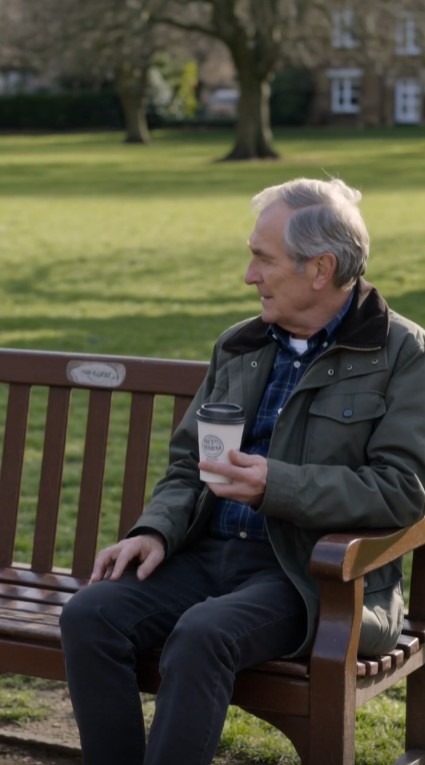
For 100 mornings, a teenage girl left a coffee on the same park bench.
Nobody drank it.
Still, she returned.
On day 101, an elderly man was sitting there.
He held the untouched cup.
“Are you Sophie?”
She froze.
Her late grandfather used to sit on that bench every morning.
Before he died, he’d told her:
“If my old friend ever comes back, buy him the coffee I owe him.”
Sophie had never even known the friend’s name.
The elderly stranger reached into his jacket.
“I’ve been trying to find your grandfather too.”
Then he handed her something.
Her grandfather’s watch.
Sophie stopped breathing for a second.
She recognized it immediately.
Brown leather strap.
Scratched silver face.
A tiny dent near the number four.
Her grandfather, Thomas, had worn that watch for as long as Sophie could remember.
She had seen it in birthday photographs.
Christmas pictures.
Family dinners.
He even wore it while gardening.
After he died two years earlier, the family searched for it.
They assumed it had been lost.
Now it was sitting in a stranger’s palm.
Sophie stared at the man.
“Where did you get that?”
He looked down at the watch.
“Your grandfather gave it to me.”
Sophie’s eyes narrowed.
“When?”
“Thirty-eight years ago.”
She almost laughed.
“That’s impossible.”
The man smiled sadly.
“I thought you might say that.”
His name was Henry.
He asked if Sophie wanted to sit.
She did.
The coffee remained between them.
For several moments, neither spoke.
Then Henry said:
“Your grandfather and I grew up three streets apart.”
Sophie had never heard his name.
Thomas talked constantly about his childhood.
Old teachers.
Neighbors.
Football games.
His first job.
But never Henry.
Sophie asked:
“If you were friends, why didn’t he ever tell me about you?”
Henry looked toward the trees.
“Because we stopped being friends.”
That answer surprised her.
Henry explained.
He and Thomas had been inseparable from the time they were eleven.
Same school.
Same summer jobs.
Same bad ideas.
They joined the same factory after graduation.
Both married young.
Thomas married Margaret.
Henry married Anna.
For years, the couples spent weekends together.
Then something happened.
Money disappeared from the factory’s employee emergency fund.
Several workers had contributed to help one of their coworkers after an accident.
Thomas helped organize it.
Henry handled the cash that week.
When the money went missing, suspicion fell on him.
Henry denied taking it.
Thomas believed him at first.
Then someone produced a receipt with Henry’s signature.
The friendship collapsed.
Thomas confronted him.
Henry became furious.
Both said things neither could take back.
A week later, Henry left town.
He never returned.
Sophie frowned.
“So Grandpa thought you stole money?”
“Yes.”
“Did you?”
“No.”
Henry answered immediately.
Then:
“But I couldn’t prove it.”
Sophie looked at the watch again.
“Then why did he give you this?”
Henry smiled.
“Because before all that happened, we made a stupid promise.”
At twenty-one, Thomas and Henry bought matching watches from a small jewelry store.
Not expensive.
But more than either could comfortably afford.
They joked that whoever became successful first would buy the other dinner.
Years later, during a difficult stretch, Henry lost his watch.
Thomas gave him his.
“Take mine until you’re back on your feet.”
Henry refused.
Thomas insisted.
Then the accusation happened.
Henry left town still wearing Thomas’s watch.
Sophie stared at him.
“You kept it for thirty-eight years?”
Henry nodded.
“I kept meaning to return it.”
“Why didn’t you?”
“Pride.”
That word landed harder than she expected.
Sophie had heard Thomas use it before.
Usually as a warning.
“Pride makes expensive mistakes.”
She never knew he might have been talking about himself.
Henry continued.
After leaving town, he found work in another city.
Built a life.
Had a daughter.
Then a son.
His marriage ended.
Jobs changed.
Years passed.
The watch stayed in a drawer.
Sometimes he wore it.
Mostly he didn’t.
But he never got rid of it.
Then twelve years ago, Henry received a letter.
From Thomas.
Sophie stared.
“What did it say?”
Henry reached into his coat.
Another envelope.
Old.
Folded repeatedly.
He handed it to her.
Thomas’s handwriting.
Sophie opened it.
Henry,
I was wrong.
She stopped.
Henry looked away.
The letter explained that Thomas eventually discovered the truth.
The emergency fund had not been stolen by Henry.
A supervisor had taken it.
The signature on the receipt had been copied.
Years later, during an audit, the truth came out.
By then Henry was gone.
Thomas searched.
Old addresses.
Former coworkers.
Relatives.
Nothing.
So he wrote one letter and gave it to a mutual acquaintance in case Henry ever returned.
Somehow, years later, it reached him.
Thomas wrote:
I should have believed you longer.
I should have asked more questions.
Instead, I let anger turn one bad week into decades.
Henry read that line so many times he memorized it.
Sophie continued.
If you ever come back, meet me at our old bench.
Sophie looked up.
“This bench?”
Henry nodded.
The park had looked different then.
But yes.
Same place.
Thomas and Henry used to meet there before work.
Coffee.
Newspapers.
Complaints.
Everything.
The letter ended:
I owe you coffee.
That was the promise Thomas passed to Sophie.
She looked at the cup.
Suddenly the ritual made sense.
“Why didn’t you come?”
Henry’s eyes filled.
“I was scared.”
Sophie stared.
“You waited twelve years?”
“Yes.”
“Why?”
“Because by the time I got the letter, I had already wasted so much time.”
“That makes no sense.”
“I know.”
Henry smiled sadly.
“But shame doesn’t usually make sense.”
He kept imagining Thomas would be angry.
Then he imagined Thomas would pity him.
Then he told himself he would go next year.
Then the year after.
Eventually, Henry became ill.
Nothing immediately life-threatening.
But enough to make him confront how much time had passed.
He finally returned to town.
He went to Thomas’s old house.
A stranger lived there.
He checked the factory.
Closed.
Then someone told him Thomas had died.
Two years earlier.
Henry sat in his car for almost an hour.
He had come back.
Too late.
Then he remembered the bench.
So he went there.
The first morning, he saw a coffee waiting.
Nobody nearby.
He assumed someone forgot it.
The second morning, another coffee.
Then another.
He began asking around.
A park maintenance worker said:
“Teenage girl leaves it every morning.”
That was how Henry found Sophie’s name.
He waited until day 101 because he wanted to be certain.
Sophie shook her head.
“You watched me for days?”
“From across the park.”
“That’s weird.”
Henry laughed.
“Fair.”
Then Sophie asked the question she had been avoiding.
“Did Grandpa know he was dying when he told me to do this?”
Henry’s expression softened.
“Probably.”
Thomas had been ill.
Sophie knew that.
He never talked much about it.
During one of their final conversations, he told her:
“If an old man ever sits on my bench looking like he missed an appointment by thirty years, buy him coffee.”
Sophie had laughed.
Thomas became serious.
“Promise.”
So she did.
After he died, Sophie started coming every morning.
At first, she expected someone.
After twenty days, less.
After fifty, not really.
By day 100, it had become something she did for Thomas.
A ritual.
One last unfinished task.
Now Henry was here.
Sophie picked up the coffee.
She handed it to him.
“You’re late.”
Henry smiled.
“Very.”
He took a sip.
Cold.
He made a face.
Sophie laughed.
“I bought it an hour ago.”
“Thomas always bought terrible coffee too.”
That was the first time they laughed together.
Then Henry turned the watch over.
On the back were tiny engraved initials.
T.M.
Thomas Miller.
“I came to return this.”
Sophie shook her head.
“No.”
Henry looked surprised.
“It belongs to your family.”
“It belonged to Grandpa.”
“Yes.”
“And he gave it to you.”
“Temporarily.”
“For thirty-eight years.”
Henry laughed.
Sophie continued.
“Keep it today.”
“Why?”
“Because you finally came back.”
Henry looked at her.
“You sound like him.”
“Everyone says that.”
They sat for almost two hours.
Henry told stories Sophie had never heard.
Thomas once tried jumping a bicycle over a creek and landed in mud.
He was terrified of public speaking.
He secretly sang badly in the factory.
He once spent an entire paycheck repairing Henry’s first car.
Sophie laughed until she cried.
For two years, she had remembered Thomas mostly as an old man.
Now Henry gave her another version.
Young.
Stubborn.
Ridiculous.
Alive.
Sophie gave Henry something too.
She told him about Thomas’s final years.
How he became obsessed with crossword puzzles.
How he cheated at cards.
How he pretended not to like Sophie’s dog but always fed him under the table.
How he talked about regret without naming it.
Henry listened.
Then asked:
“Was he happy?”
Sophie thought.
“Yes.”
“Good.”
Then:
“But I think he missed you.”
Henry looked down.
“How do you know?”
“Because of the coffee.”
That answer broke him.
He cried quietly.
Sophie sat beside him.
No speech.
No advice.
Just there.
The next morning, she returned.
So did Henry.
This time, there were two coffees.
Day 102.
They began meeting every Saturday.
Not every morning.
Sophie had school.
Henry had doctor appointments.
Life.
But Saturday mornings became theirs.
Henry showed her old photographs.
Thomas at twenty.
Thomas at thirty.
The two men beside an old truck.
One picture showed both wearing watches.
Sophie pointed.
“That one?”
Henry nodded.
His wrist had the matching model.
“Mine disappeared years later.”
Sophie smiled.
“So Grandpa technically won.”
“Won what?”
“He still has the watch.”
Henry looked at the one in his hand.
Then corrected her.
“You do.”
Eventually, Henry insisted Sophie take it.
She accepted.
But not immediately.
First, she asked a jeweler to repair the strap.
She kept the scratches.
Especially the dent near the four.
Then she wore it to her high school graduation.
Henry attended.
He sat beside Sophie’s mother, Rachel.
Rachel had been hesitant about him at first.
Thomas’s old friend appeared suddenly after decades.
With a watch.
A story.
A painful family history.
But when she read Thomas’s letter, everything changed.
Rachel asked Henry:
“Why didn’t Dad ever tell us?”
Henry answered:
“Probably because admitting you hurt someone is harder than admitting someone hurt you.”
Rachel nodded.
“That sounds like him.”
Over time, Henry became part of the family.
Not replacing Thomas.
Never.
He simply carried pieces of Thomas nobody else had.
At Christmas, he told stories.
At birthdays, he complained about candles.
He came to Sophie’s graduation.
Years later, her wedding.
Before walking into the ceremony, Henry handed her Thomas’s watch.
“You should wear it.”
Sophie fastened it around her wrist.
“You sure?”
“Yes.”
“Grandpa would approve?”
Henry smiled.
“He’d complain you were late.”
Sophie laughed.
Then she looked at him.
“I’m glad you came back.”
Henry’s eyes filled.
“So am I.”
Henry lived another nine years.
He and Sophie kept meeting at the bench.
As he grew older, Sophie began bringing the coffee to him.
He always complained it was too sweet.
She never changed the order.
One morning, Henry handed her a sealed envelope.
“What’s this?”
“Not yet.”
Sophie groaned.
“I hate family envelopes.”
Henry laughed.
“Open it when I’m gone.”
She did.
Months later, after Henry died peacefully, Sophie sat on the bench.
Two coffees.
One untouched.
She opened the letter.
Sophie,
Your grandfather thought he owed me coffee.
He was wrong.
What he owed me was the truth, and eventually he gave it.
What I owed him was courage, and I waited too long.
Sophie wiped her eyes.
The letter continued:
You gave both of us something we didn’t deserve.
One more chance to sit on this bench together, even if only through you.
Then:
Do not wait thirty-eight years to say what matters.
Sophie smiled.
That sounded like both men now.
The final line:
And stop buying terrible coffee.
She laughed out loud.
People walking past looked at her strangely.
She didn’t care.
Years later, Sophie brought her own daughter to the bench.
The girl asked why Sophie always touched the old watch on her wrist when she sat there.
So Sophie told her.
About Thomas.
Henry.
The missing money.
The false accusation.
The letter.
The pride.
The thirty-eight years.
And the 100 cups of coffee nobody touched.
Her daughter frowned.
“Why did you keep coming?”
Sophie thought about it.
“Because Grandpa asked me to.”
“That’s all?”
“At first.”
“And later?”
Sophie looked at the empty space beside her.
“Later, I think I was keeping a door open.”
Her daughter nodded like that made perfect sense.
Then asked:
“Did Henry forgive Grandpa?”
Sophie smiled.
“Yes.”
“When?”
“I don’t know.”
“Before the coffee?”
“Maybe.”
“After?”
“Probably both.”
Forgiveness had not erased what happened.
Neither man got the lost decades back.
But the final chapter changed.
Thomas admitted he was wrong.
Henry came home.
And Sophie became the bridge neither of them had managed to cross alone.
The story people loved to tell was about the watch.
An elderly stranger appearing on day 101.
A teenage girl recognizing something her grandfather had lost.
But Sophie always thought the coffee mattered more.
For 100 mornings, she placed a cup on a bench for someone she had never met.
Most people would have stopped.
She almost did.
Then on morning 101…
an old man was waiting.
He held the cup.
Knew her name.
And carried a watch that had been traveling through a broken friendship for nearly four decades.
Thomas never got to sit beside Henry again.
Not physically.
But because he left one small promise behind…
they still found a way back to the same bench.