
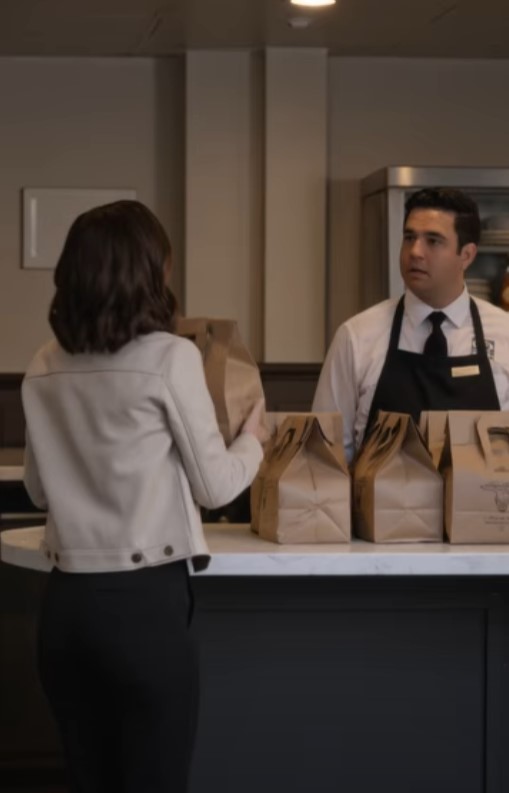
The woman walked into the restaurant alone…
And ordered 30 dinners.
The waiter thought he’d heard wrong.
“Thirty?”
“Yes.”
“For a party?”
She shook her head.
“No.”
The kitchen started preparing them.
Thirty meals.
Thirty drinks.
Thirty bags.
But when everything was ready…
The woman didn’t sit down.
She didn’t eat anything.
Instead, she asked:
“Can your staff help me carry these outside?”
The manager became curious.
“Where are they going?”
The woman pointed across the street.
Outside…
A group of exhausted overnight workers were finishing a long shift.
She began handing meals to them.
One by one.
The workers couldn’t understand why.
Neither could the restaurant staff.
Then one worker asked:
“Ma’am… why are you doing this?”
The woman became quiet.
She looked toward one particular man in the group.
Then said:
“Because twenty years ago, someone did the same thing for me.”
The man slowly looked up.
The woman froze.
She hadn’t recognized him at first.
But he recognized her.
And the first words out of his mouth made her drop the bag she was holding.
“Rachel Carter? Is that really you?”
The paper bag slipped from Rachel’s hands.
Fortunately, the food inside was packed tightly.
The restaurant manager quickly picked it up.
Rachel didn’t move.
She stared at the man.
He was older now.
His hair was almost completely gray.
His shoulders were slightly bent.
The reflective jacket and work gloves made him look nothing like the man she remembered.
But his eyes were the same.
“Henry?”
The worker smiled.
“It’s been a long time.”
Rachel covered her mouth.
“Oh my God.”
Then she hugged him.
The other workers looked at one another.
Nobody understood what was happening.
Neither did the restaurant staff standing nearby with the remaining meals.
Henry laughed.
“You almost knocked me over.”
Rachel stepped back.
“I can’t believe it’s you.”
“I could say the same thing.”
She looked at his uniform.
“You work here?”
“Night maintenance.”
“For how long?”
“Seven years.”
Rachel shook her head.
“I’ve driven past this place hundreds of times.”
“And I’ve probably been asleep for most of them.”
She laughed.
Then her expression changed.
“Henry…”
He knew what she was about to say.
“Don’t.”
“But these meals—”
“I know.”
“No, you don’t.”
Henry looked at the thirty bags.
Then at Rachel.
A small smile appeared.
“I think I do.”
Twenty years earlier, Rachel Carter had been twenty-seven years old.
She had a four-year-old daughter named Emily.
A car that barely started.
And seventy-three dollars in her bank account.
Three months earlier, the company where Rachel worked had closed.
She’d found temporary work cleaning offices at night.
The money covered part of the rent.
Not much else.
Rachel told almost nobody how difficult things had become.
She became very good at saying:
“We’re fine.”
When she wasn’t.
Some nights, Rachel brought Emily with her because childcare had fallen through.
Emily would sleep on two chairs pushed together in an empty break room while Rachel cleaned offices.
Rachel hated those nights.
She felt like she’d failed her daughter.
One freezing Thursday in December, Rachel finished work shortly after five in the morning.
Emily was asleep in her arms.
Rachel hadn’t eaten since the previous afternoon.
She had enough money for gasoline or breakfast.
Not both.
So she chose gasoline.
She carried Emily toward the parking lot.
Then someone called:
“Excuse me.”
Rachel turned.
A man in a maintenance uniform was standing near the building entrance.
Henry Wilson.
Rachel knew him only slightly.
He worked for the company that maintained the building.
He was perhaps forty-five then.
Quiet.
Always carrying keys.
Always fixing something.
Henry held a paper bag.
“You forgot this.”
Rachel looked confused.
“No, I didn’t.”
“Yes, you did.”
“I didn’t bring anything.”
Henry held out the bag.
“Then apparently someone forgot it for you.”
Rachel stared at him.
Inside were two breakfast sandwiches.
Fruit.
Two bottles of water.
A carton of milk.
And a small chocolate muffin.
Emily’s favorite.
Rachel immediately understood.
“I can’t take this.”
Henry shrugged.
“Then I’ll have to throw it away.”
“No, you won’t.”
“You don’t know me very well.”
Rachel almost smiled.
“Henry—”
He lowered his voice.
“Take the food.”
Rachel looked down at sleeping Emily.
“I can pay you next week.”
Henry’s expression changed.
“No.”
“I will.”
“No.”
“Please.”
Henry shook his head.
“If you pay me back, you’ll ruin the whole thing.”
Rachel looked confused.
Henry pointed toward the bag.
“You don’t pay kindness backward.”
She waited.
“You pass it forward.”
Rachel never forgot those words.
She took the food.
Sat in her old car.
And cried before she could even start the engine.
Emily woke.
“Mommy?”
“I’m okay.”
“Why are you crying?”
Rachel looked at the paper bag.
“Because somebody was nice to us.”
Emily thought about that.
Then asked the question only a four-year-old would ask.
“Can I have the muffin?”
Rachel laughed through her tears.
“Yes.”
They ate breakfast together in the parking lot.
For Emily, it became a small childhood memory.
For Rachel, it became something much bigger.
Because the food itself wasn’t what stayed with her.
It was the way Henry gave it to her.
He never asked what had happened.
Never made her explain why she was struggling.
Never made her feel like a charity case.
He simply noticed.
Then helped.
Several weeks later, Rachel found another job.
Then a better one.
Slowly, life stabilized.
She moved.
Emily started school.
Years passed.
Rachel eventually opened a small bookkeeping company.
The company grew.
She hired one employee.
Then three.
Then twelve.
By the time Rachel was forty-seven, she was doing better financially than she had ever imagined during those exhausted mornings cleaning offices.
But every December, she remembered Henry.
The breakfast.
The paper bag.
The chocolate muffin.
And those words:
You don’t pay kindness backward. You pass it forward.
She tried.
Sometimes quietly.
She paid for someone’s groceries.
Covered a school lunch balance through an approved assistance program.
Left larger tips when she could.
Helped employees during difficult periods through formal company support.
But she’d never seen Henry again.
Until that morning.
Rachel looked at him standing among the overnight workers.
“You did this.”
Henry laughed.
“I didn’t order thirty dinners.”
“You know what I mean.”
He nodded.
“I remember that morning.”
“You remember?”
“Of course.”
Rachel looked surprised.
“You acted like it was nothing.”
“It was breakfast.”
“It wasn’t nothing to me.”
Henry became quiet.
Rachel looked around at the workers holding their meals.
“Every year around this time, I do something.”
Henry smiled.
“Pass it forward?”
“Yes.”
“And today you picked us.”
Rachel nodded.
“I saw your crew out here last week when I drove past before sunrise.”
The temperature had been low.
The workers looked exhausted.
Rachel remembered exactly what that kind of exhaustion felt like.
So she’d returned.
Thirty meals.
No photographs.
No social media post.
No company banner.
Just breakfast.
One worker looked between them.
“So Henry bought you breakfast twenty years ago?”
Rachel smiled.
“Yes.”
“And you’ve remembered that all this time?”
Rachel looked at him.
“I remembered how I felt before he gave it to me.”
She paused.
“And how I felt afterward.”
Henry looked uncomfortable with the attention.
“Eat before everything gets cold.”
The workers laughed.
People began opening the bags.
Rachel picked up the one she’d dropped and handed it to Henry.
“This one is yours.”
Henry looked inside.
Then laughed.
“What?”
Rachel asked.
He pulled out a chocolate muffin.
Rachel froze.
The restaurant had included dessert with each meal.
Of all the things Henry could have pulled out first…
It was a chocolate muffin.
Henry held it up.
“Still your daughter’s favorite?”
Rachel laughed.
“You remember that too?”
“She talked about that muffin for twenty minutes.”
Rachel’s eyes filled again.
Henry immediately pointed at her.
“No crying.”
“You started it.”
“Twenty years ago.”
“Still counts.”
They sat together on a low wall while the workers ate.
Rachel asked about Henry’s life.
His wife, Margaret, had died four years earlier.
His children lived in different states.
He’d retired from full-time maintenance work, discovered he hated retirement, and taken a part-time overnight position.
“You could work during the day,” Rachel said.
“I like nights.”
“Why?”
“Fewer people.”
Rachel smiled.
“You still don’t like attention.”
“Correct.”
Henry looked at her.
“And Emily?”
Rachel immediately pulled out her phone.
“She has two children.”
Henry groaned.
“Oh no.”
“What?”
“You’re a grandmother.”
Rachel stared at him.
“So are you old man.”
“I’m experienced.”
She showed him photographs.
Henry smiled.
“The little girl who wanted the muffin has children.”
“She does.”
He shook his head.
“Twenty years.”
Before Rachel left, she asked Henry for his telephone number.
“You planning to order me breakfast every week?”
“No.”
“Good.”
“Maybe once a month.”
“Rachel.”
She laughed.
“I just don’t want to lose track of you again.”
Henry gave her his number.
They stayed in contact.
But Rachel quickly learned something.
Henry was still Henry.
If she tried to give him money, he refused.
If she offered expensive gifts, he became irritated.
So Rachel stopped trying to repay him.
Instead, she asked him something.
“Tell me what would actually help people working nights.”
Henry thought she meant his coworkers.
She meant more than that.
He told her.
Night workers were often forgotten.
Some had limited food options after midnight.
Transportation could be difficult.
Many community resources operated only during daytime hours.
Some workers came directly from a second job.
Some were caring for family members during the day.
Rachel listened.
Then she spoke with the restaurant manager.
Not about Henry.
About a program.
They started small.
Once a month, Rachel funded a batch of prepaid meals.
But there was a rule.
Nobody receiving one had to prove they were desperate.
Nobody had to explain their finances in front of a restaurant full of strangers.
The restaurant coordinated distribution with local organizations and employers that knew where the need existed.
Henry objected when he heard.
“You’re making too much out of one breakfast.”
Rachel shook her head.
“I’m not doing it because of one breakfast.”
“Then why?”
“Because of how you gave it to me.”
Henry waited.
“You didn’t make me explain why I needed it.”
Rachel looked directly at him.
“You let me keep my dignity.”
That silenced him.
The monthly meals continued.
Other customers heard about the program.
Some contributed.
A local business joined.
Then another.
Rachel insisted it remain simple and responsibly managed.
No one was promised endless free meals.
It wasn’t supposed to solve poverty.
It was simply one practical way to help someone through a difficult shift or difficult week.
A small sign eventually appeared near the register:
THE NEXT BAG
Underneath:
If you can give one, give one.
If you need one, take one.
Henry hated the sign.
Rachel asked why.
“My sentence was better.”
“What sentence?”
“You don’t pay kindness backward.”
Rachel smiled.
“That’s too long.”
“Then get a bigger sign.”
Eventually, the manager did.
Beneath THE NEXT BAG, another line appeared:
You don’t pay kindness backward. You pass it forward.
Henry pretended to be annoyed.
But Rachel caught him taking a photograph of it.
Three years later, Henry finally stopped working overnight.
His knees had made the decision before he did.
His coworkers organized a small retirement breakfast at the same restaurant.
Rachel attended.
So did Emily.
Henry hadn’t seen her since she was four.
Emily walked toward him carrying a paper bag.
Henry stared at her.
“You’re not going to do what I think you’re going to do.”
Emily smiled.
“I don’t know what you mean.”
She handed him the bag.
Henry opened it.
Inside was a breakfast sandwich.
Fruit.
Water.
And one chocolate muffin.
Henry laughed.
“You people are ridiculous.”
Emily hugged him.
“My mom told me what you did.”
“It was breakfast.”
“No.”
Emily looked at him.
“It was the morning she realized someone could know she was struggling and still treat her like she wasn’t a failure.”
Henry’s smile disappeared.
Emily continued.
“I don’t remember much about that time.”
She looked at Rachel.
“But Mom does.”
Henry nodded slowly.
Then Emily handed him a small envelope.
Inside was a photograph.
Rachel and four-year-old Emily sitting inside their old car.
Emily was holding a chocolate muffin.
Rachel had found the photograph in an old box years earlier.
On the back, Rachel had written:
THE MORNING AFTER SOMEONE NOTICED.
Henry stared at it for a long time.
“I didn’t know you took this.”
Rachel smiled.
“I used a disposable camera.”
Henry shook his head.
“Ancient technology.”
“Be quiet.”
He turned the photograph over again.
Then looked toward the restaurant counter.
The sign was still there.
You don’t pay kindness backward. You pass it forward.
By then, hundreds of meals had moved through the program.
Rachel hadn’t paid for all of them.
Far from it.
Most came from ordinary people adding a few dollars to their bill.
A construction worker.
A teacher.
A nurse.
A college student.
A retired couple.
People who would never meet whoever received the meal.
Henry stared at the sign.
“All this because of breakfast?”
Rachel shook her head.
“All this because you noticed.”
Years later, Rachel’s granddaughter asked her why she always kept an old paper bag folded inside a box at home.
The original bag from that morning was long gone.
But Rachel had kept one from the day she unexpectedly found Henry again.
She told her granddaughter the story.
About being twenty-seven.
About having almost no money.
About carrying a sleepy little girl toward an old car before sunrise.
About a maintenance worker who handed her breakfast and refused repayment.
Then she told her about walking into a restaurant twenty years later.
Thirty meals.
Thirty drinks.
Thirty bags.
She had planned to give them to strangers.
Instead, one of those strangers looked up.
He recognized her.
And suddenly the kindness Rachel thought she was passing forward had traveled in a circle.
Her granddaughter asked:
“So you finally paid him back?”
Rachel smiled.
“No.”
“But you bought him dinner.”
“That wasn’t paying him back.”
“Why not?”
Rachel thought about Henry’s words.
Then answered:
“Because some kindness isn’t a debt.”
She pointed toward the restaurant across the street.
“It’s an instruction.”
“What’s that mean?”
“It means somebody helps you.”
Rachel smiled.
“And when you’re able, you help the next person.”
Her granddaughter thought for a moment.
“Then they help somebody?”
“Maybe.”
“And that person helps somebody else?”
“That’s the idea.”
The girl smiled.
“Then it never ends.”
Rachel looked through the restaurant window.
Near the counter was the same sign.
You don’t pay kindness backward.
You pass it forward.
She thought about an exhausted young mother.
A four-year-old girl.
A maintenance worker.
One paper bag.
And a breakfast that cost very little but was remembered for twenty years.
“No,” Rachel said softly.
“If we’re lucky, it doesn’t.”