
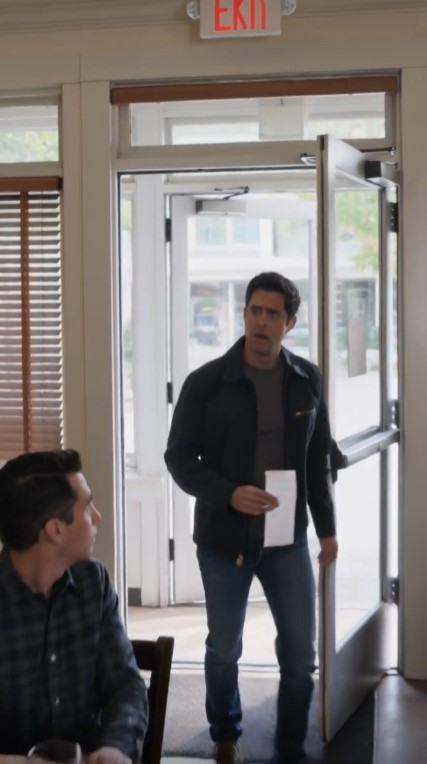
The delivery driver walked into the restaurant carrying one small order.
Then something bizarre happened.
One customer stood up.
Then another.
Then another.
Within seconds…
Almost everyone in the restaurant was standing.
The driver stopped.
“What’s happening?”
Nobody answered.
He looked at the receipt.
“Did I come to the wrong place?”
The manager walked toward him.
“No, Marcus.”
“You’re exactly where you’re supposed to be.”
The driver froze.
“How do you know my name?”
The manager pointed toward the back of the restaurant.
An elderly woman was standing there.
Marcus stared at her.
“I don’t know her.”
The woman slowly approached.
“You don’t remember me.”
Marcus shook his head.
Then she said:
“Sixteen years ago, you stopped your car for five minutes.”
Marcus’s face changed.
The woman smiled.
“Those five minutes changed the lives of everyone standing in this room.”
Marcus looked around at nearly fifty strangers.
And finally realized they were all connected to something he’d done years earlier.
Her name was Evelyn Carter.
Marcus stared at her for several seconds.
Then something returned to him.
Not her face.
The rain.
A broken-down car.
A little girl crying in the back seat.
And an elderly woman standing beside the road.
“Oh…”
Evelyn smiled.
“You remember.”
Marcus slowly placed the delivery bag on the counter.
“It was raining.”
“Hard.”
“Your car had stopped.”
“Yes.”
Marcus looked around the restaurant.
“But I still don’t understand.”
Evelyn pointed toward an empty chair.
“Sit down.”
Marcus shook his head.
“I have deliveries.”
The manager smiled.
“We already spoke to your dispatcher.”
Marcus looked stunned.
“You called my job?”
“Only after arranging this properly.”
Evelyn laughed.
“Sit down, Marcus.”
He reluctantly did.
Then Evelyn began telling a story Marcus had almost completely forgotten.
Sixteen years earlier, Marcus Reed was twenty-two.
He drove an old sedan that rattled whenever he went faster than fifty miles an hour.
He worked two jobs.
During the day, he stocked shelves at a hardware store.
At night, he delivered food.
He didn’t have much money.
He didn’t have a career plan.
Most weeks, he was simply trying to make it to Friday.
One rainy evening, Marcus was driving home after finishing a shift.
He noticed a car stopped on the shoulder.
Hazard lights blinking.
A woman stood beside it.
Marcus drove past.
Then looked in his mirror.
Something bothered him.
He slowed down.
Stopped.
Backed into a safe place farther ahead.
Then walked back.
“Everything okay?”
The woman shook her head.
“My car just died.”
That woman was Evelyn.
She was fifty-nine then.
In the back seat sat her nine-year-old granddaughter, Sophie.
The girl was crying.
Not because of the car.
Because they were already late.
“Late for what?” Marcus asked.
Evelyn hesitated.
Then explained.
Sophie’s mother, Rachel, was in a nearby hospital.
She had been admitted unexpectedly that afternoon.
Sophie had been at school.
Evelyn picked her up.
They were trying to reach the hospital.
Then the car stopped.
Marcus looked at the engine.
He knew almost nothing about engines.
But he knew the weather was getting worse.
“Call roadside assistance,” he said.
“I did.”
“How long?”
“Forty-five minutes.”
Marcus looked at Sophie.
Then at Evelyn.
“I’ll drive you.”
Evelyn immediately refused.
“No.”
“Why?”
“You don’t know us.”
“You don’t know me either.”
“That is exactly my point.”
Marcus smiled.
“Fair.”
He pulled out his driver’s license.
Then his employee badge from the hardware store.
“Take pictures.”
Evelyn stared at him.
“What?”
“Send them to somebody.”
He pointed at his license plate.
“Send that too.”
Evelyn did.
Marcus waited until she felt comfortable.
Then he drove them to the hospital.
The entire interaction from the moment he stopped until they left the roadside took only a few minutes.
Marcus remembered almost nothing about the drive.
But Evelyn remembered everything.
Especially what happened when they reached the hospital.
Sophie jumped from the car.
Evelyn thanked Marcus repeatedly.
Then reached into her purse.
“I want to pay you.”
Marcus shook his head.
“No.”
“At least take twenty dollars.”
“No.”
“Please.”
Marcus smiled.
“Use it for parking.”
Evelyn looked at him.
“You stopped in pouring rain, drove strangers to a hospital and now you won’t even take gas money?”
Marcus shrugged.
“Someone would’ve stopped eventually.”
Evelyn never forgot his next words.
“Just make sure you’re that someone next time.”
Then Marcus drove away.
He didn’t know Rachel was about to undergo emergency surgery.
He didn’t know Sophie had been terrified she wouldn’t see her mother beforehand.
He didn’t know his short delay on the roadside allowed the little girl to reach the hospital before Rachel was taken for the procedure.
Marcus went home.
Changed his wet clothes.
Ate leftover pizza.
And went to sleep.
To him, the story was over.
To Evelyn, it had just begun.
Rachel recovered.
A few weeks later, Evelyn was driving when she saw another car stopped beside the road.
Her first instinct was to keep going.
Then she remembered Marcus.
Just make sure you’re that someone next time.
Evelyn couldn’t safely repair a car herself.
So she pulled into a nearby business and called for assistance.
She stayed where it was safe and helped the stranded driver contact the right people.
The driver was a young nursing student named Emily Wilson.
Emily offered Evelyn money afterward.
Evelyn laughed.
“No.”
Then repeated Marcus’s words.
“Just make sure you’re that someone next time.”
Emily remembered them.
Months later, Emily was leaving a grocery store when she noticed an elderly man sitting alone near the entrance.
He looked confused.
People passed him.
Emily almost did too.
Then she stopped.
The man’s name was Thomas Miller.
He had become disoriented while trying to find the bus stop.
Emily helped him contact his daughter and waited with him until she arrived.
Thomas’s daughter tried to give Emily money.
Emily refused.
“Just make sure you’re that someone next time.”
Thomas remembered.
Several months later, Thomas saw a teenage boy outside a pharmacy counting coins.
The boy was trying to buy medicine for his younger brother.
Thomas quietly paid the difference.
The boy’s name was Daniel Harris.
Daniel never forgot.
Years later, Daniel became a teacher.
One winter morning, a student arrived at school without a proper coat.
Daniel didn’t embarrass him.
He worked through the school’s support program to make sure the student received what he needed.
That student grew up.
His name was Michael.
Michael eventually opened a small construction company.
One of his employees was a single father named James.
When James’s daughter became ill, he expected to lose his job because he needed time away.
Michael told him:
“Take care of your daughter. We’ll figure out the schedule.”
James never forgot.
Years later, James helped another employee.
That employee helped a neighbor.
The neighbor helped a stranger.
And slowly, without Marcus knowing anything about it, one small decision had traveled through dozens of people.
Marcus looked around the restaurant.
“Wait.”
He pointed toward the standing crowd.
“All of you?”
Evelyn smiled.
“Not exactly.”
Some people were there because they’d directly received help.
Others were the people they had later helped.
Some had brought family members.
The chain wasn’t perfectly documented.
Not every act could be traced with absolute certainty.
But Evelyn had spent years collecting the stories she could verify.
“How?” Marcus asked.
Evelyn laughed.
“I’m retired.”
The restaurant erupted in laughter.
She continued.
“And apparently I needed a hobby.”
It began ten years earlier.
Evelyn had run into Emily, the nursing student she’d helped.
During their conversation, Emily mentioned Thomas.
Evelyn became curious.
She found Thomas.
Thomas told her about Daniel.
Daniel told her about Michael.
Eventually, Evelyn started writing the names down.
One name connected to another.
Sometimes the chain ended.
Sometimes someone couldn’t be located.
Sometimes people didn’t even remember the names of those they’d helped.
But one thing kept appearing.
A sentence.
Just make sure you’re that someone next time.
Marcus stared at Evelyn.
“I said that?”
“Yes.”
“I don’t remember saying it.”
“I do.”
Marcus looked around.
A woman near the window raised her hand.
“My name is Emily.”
The former nursing student.
Now fifty.
She smiled.
“Evelyn helped me sixteen years ago.”
Thomas stood next.
“Emily helped me.”
Daniel stood.
“Thomas helped me.”
Michael stood.
“Daniel helped me.”
Then James.
Then another person.
And another.
Marcus watched as the chain moved around the restaurant.
Some connections were simple.
A meal.
A ride.
A repaired tire.
A grocery bill.
A night of childcare.
A job recommendation.
A school supply.
A few hours sitting beside someone who didn’t want to be alone.
Nobody claimed Marcus was personally responsible for every good decision these people later made.
That would have been too simple.
Each person had made their own choice.
But many said the same thing:
Someone had helped them first.
And that made it easier to notice the next person.
Marcus sat completely still.
Then he asked:
“Why today?”
Evelyn looked toward the manager.
The manager brought over the small delivery bag Marcus had carried inside.
“Check the receipt.”
Marcus picked it up.
The order was strange.
One sandwich.
One bottle of water.
One chocolate chip cookie.
The customer name read:
EVELYN C.
Marcus looked up.
“You ordered this?”
“Yes.”
“You had food delivered to a restaurant?”
“Yes.”
“That’s ridiculous.”
“Very.”
Everyone laughed.
“Why?”
“Because I needed to know which driver would receive the order.”
Marcus frowned.
Evelyn explained.
She had finally located him only weeks earlier.
Marcus had moved several times.
Changed jobs.
He’d married, divorced, and was raising a teenage son.
After losing a warehouse job during restructuring, he’d returned to delivery work while searching for something more stable.
Evelyn discovered the restaurant was within his regular delivery zone.
With cooperation from the restaurant and delivery company, they arranged the surprise without disrupting his shift.
Marcus shook his head.
“You did all this because I gave you a ride?”
Evelyn became serious.
“No.”
“Then why?”
“Because you think you gave me a ride.”
She moved closer.
“You didn’t.”
Marcus waited.
“You gave me an example.”
Evelyn pointed around the restaurant.
“And examples travel.”
Marcus looked down.
For the first time that evening, his eyes filled.
“I wasn’t doing anything special.”
Evelyn nodded.
“I know.”
That surprised him.
“You know?”
“Yes.”
She smiled.
“That’s exactly why it mattered.”
Marcus looked confused.
Evelyn explained.
If Marcus had been wealthy and arrived in a limousine, perhaps she would’ve remembered generosity.
If he’d been a doctor or emergency worker, perhaps she would’ve thought helping was simply his job.
But Marcus was a tired twenty-two-year-old driving a terrible car home from his second job.
He had almost nothing to spare.
Yet he stopped.
Not because he was extraordinary.
Because he decided five minutes belonged to someone else.
Evelyn looked around the room.
“That made it feel possible for the rest of us.”
The restaurant became quiet.
Then a man near the back spoke.
“Marcus?”
Marcus turned.
It was Michael, the construction company owner.
“I heard you’re looking for work.”
Marcus immediately laughed.
“Oh no.”
People smiled.
Michael raised both hands.
“I’m not offering you charity.”
“Good.”
“I need a logistics coordinator.”
Marcus stopped laughing.
Michael’s company had grown.
They managed multiple crews.
Deliveries.
Materials.
Schedules.
Marcus had nearly ten years of warehouse and logistics experience.
“You’d have to interview.”
Marcus looked at Evelyn.
She smiled.
“I didn’t arrange that.”
Michael nodded.
“She really didn’t.”
“Then why?”
Michael shrugged.
“I read your résumé.”
“How did you get my résumé?”
Evelyn suddenly became very interested in her water glass.
Marcus stared at her.
“Evelyn.”
“I may have helped with that part.”
The room laughed again.
Marcus eventually interviewed.
He got the job.
Not because he stopped his car sixteen years earlier.
Because he was qualified.
But the interview happened because someone he’d unknowingly influenced had finally noticed that Marcus himself needed an opportunity.
Six months later, Marcus returned to the restaurant.
This time, he wasn’t carrying a delivery bag.
His son, Ethan, was beside him.
Evelyn was waiting.
Marcus introduced them.
“This is the woman I told you about.”
Ethan smiled.
“The lady from the broken car?”
Evelyn laughed.
“I suppose that’s me.”
They sat together.
Ethan had heard the entire story.
But he struggled with one part.
“So Dad helped all those people?”
Marcus immediately shook his head.
“No.”
“But they said—”
“I helped Evelyn.”
Marcus pointed toward her.
“She helped Emily.”
“Emily helped Thomas.”
“And it kept going?”
“For a while.”
Ethan thought about it.
“So if you hadn’t stopped, none of it would’ve happened?”
Marcus considered the question carefully.
“We don’t know that.”
Evelyn smiled.
Marcus continued.
“Those people were good people. They might’ve helped someone anyway.”
“Then what’s the point?”
Marcus leaned back.
“The point isn’t that one tiny thing controls everybody else’s life.”
He looked at his son.
“The point is that what you do around people can become part of what they think is normal.”
Ethan frowned.
“What does that mean?”
“If people see everyone walking past someone who needs help, walking past starts feeling normal.”
Marcus paused.
“If they see somebody stop…”
Ethan understood.
“Stopping feels normal.”
“Exactly.”
Years passed.
The group didn’t continue meeting every year.
Life moved on.
Some friendships remained.
Others faded.
But Evelyn kept one thing.
A notebook.
On the first page, she had written:
FIVE MINUTES
Underneath was Marcus Reed’s name.
Then hers.
Then Emily.
Thomas.
Daniel.
Michael.
James.
And dozens more.
When Evelyn died at eighty-two, the notebook went to Marcus.
Inside the front cover was a letter.
Dear Marcus,
You always said I made too much of what happened that night.
Maybe you’re right.
You stopped because you saw a grandmother and a frightened little girl beside a broken car.
You didn’t know what would happen next.
None of us ever do.
Marcus stopped reading.
Then continued.
That’s why I’ve decided the five minutes aren’t really the important part.
The important part is that you didn’t need to know the ending before deciding to help.
You just stopped.
At the bottom:
Thank you for being that someone.
— Evelyn
Marcus closed the notebook.
Years later, it sat on a shelf in his home.
One evening, his son Ethan came through the door.
He was twenty-four now.
Almost exactly Marcus’s age when he’d first met Evelyn.
“You’re late,” Marcus said.
“Sorry.”
“What happened?”
Ethan put down his keys.
“There was a woman in the grocery store parking lot whose battery died.”
Marcus looked at him.
“And?”
“I waited until roadside assistance arrived.”
Marcus smiled.
“How long?”
“About twenty minutes.”
Marcus nodded.
Ethan looked at him suspiciously.
“What?”
“Nothing.”
“Dad.”
Marcus laughed.
“Nothing.”
Ethan headed upstairs.
Marcus walked toward the shelf.
He opened Evelyn’s notebook.
He turned past the final written name.
Then picked up a pen.
He wrote:
ETHAN REED
Marcus looked at the name for a moment.
Then closed the notebook.
Sixteen years earlier, he’d stopped his car for five minutes.
He didn’t save a life.
He didn’t perform some extraordinary rescue.
He didn’t even remember it clearly afterward.
He simply saw two strangers having a difficult night and decided not to keep driving.
Years later, nearly fifty people stood when he walked into a restaurant.
Marcus initially thought they’d mistaken him for somebody important.
Eventually, he understood why they hadn’t.
They weren’t standing because he was important.
They were standing because one ordinary decision had reminded them that ordinary people could matter to one another.
Marcus had once told Evelyn:
“Just make sure you’re that someone next time.”
She did.
Then somebody else did.
Then somebody else.
And sixteen years later, when Marcus finally saw how far those five minutes had traveled, he understood something Evelyn had known all along.
Kindness doesn’t need to be enormous to continue.
Sometimes…
Someone simply has to stop first.