
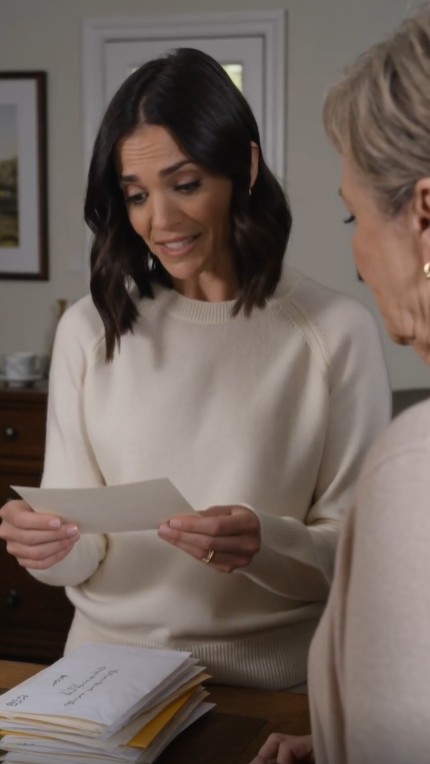
For twenty-six years, Claire received the same anonymous birthday card.
No name.
No return address.
No explanation.
Only five words:
“I remembered. I always will.”
The first card arrived when Claire was nine.
At that age, she assumed it came from an aunt or distant cousin.
Her mother, Helen, barely reacted when Claire showed it to her.
“Probably somebody from the family,” she said.
The following year, another arrived.
Same handwriting.
Same five words.
“I remembered. I always will.”
By the time Claire turned sixteen, she had started wondering.
“Mom, seriously. Who sends these?”
Helen would shrug.
“I have no idea.”
But Claire noticed something.
Every time the card arrived, her mother became quieter.
She would find an excuse to leave the room.
Sometimes she wouldn’t mention the card again for days.
Claire eventually stopped asking.
The cards became part of her birthday.
Cake.
Phone calls.
Dinner.
And the mysterious envelope waiting in the mailbox.
When Claire turned thirty, curiosity finally got the better of her.
She placed the card in front of her mother.
“Twenty-one years, Mom.”
Helen looked at it.
“What about it?”
“You know who sends these.”
“No.”
“Mom.”
“I don’t.”
Claire stared at her.
She knew immediately that her mother was lying.
But Helen refused to say anything else.
Five more birthdays passed.
Five more cards arrived.
Then Claire turned thirty-five.
She checked the mailbox that morning.
Bills.
A catalog.
Nothing else.
She checked again after lunch.
Nothing.
By evening, she felt ridiculous.
It was just a card.
Five words from someone she didn’t even know.
Still, its absence bothered her.
For the first time in twenty-six years, someone had forgotten.
Or something had happened.
Claire found herself staring at the empty mailbox long after she should have gone inside.
The next morning, someone knocked on her door.
Claire opened it.
An elderly woman stood on the porch.
She looked to be in her seventies.
She held a rectangular wooden box against her chest.
“Claire?”
“Yes?”
“My name is Margaret.”
Claire waited.
Margaret looked nervous.
Her hands were trembling.
“I’ve been sending your birthday cards.”
Claire froze.
“You?”
Margaret nodded.
“For twenty-six years.”
Claire stared at her.
“Why?”
Before Margaret could answer, Helen appeared behind Claire.
The moment she saw the woman on the porch, all the color left her face.
Margaret looked at her.
“Helen.”
Claire turned.
“You know her?”
Her mother slowly sat down.
That frightened Claire more than anything Margaret had said.
“Mom?”
Margaret stepped inside.
She placed the wooden box on the dining table.
“Your mother asked me never to tell you.”
Claire looked between them.
“Tell me what?”
Margaret opened the box.
Inside were envelopes.
Dozens of them.
Carefully arranged by year.
Claire picked up the first.
Her name was written across the front.
Claire Morgan.
Age 9.
Another:
Claire Morgan.
Age 10.
Then 11.
Twenty-six envelopes.
One for every birthday.
Claire stared at Margaret.
“What are these?”
Margaret looked toward Helen.
Then back at Claire.
“The letters I was replacing.”
Claire didn’t understand.
“Replacing?”
Margaret nodded.
“The cards you received every year weren’t the originals.”
Claire slowly picked up the first envelope.
“Who wrote these?”
Margaret’s eyes filled.
“Your father.”
Claire stopped moving.
“My father?”
Helen looked away.
Claire’s father, Richard, had disappeared from her life when she was eight years old.
That was the story Claire had grown up with.
Her parents separated.
Richard left.
He stopped calling.
Stopped visiting.
Eventually, Claire stopped asking when he was coming back.
Helen told her that some adults simply weren’t ready to be parents.
It hurt, but Claire learned to live with it.
She had spent most of her life believing one thing:
Her father had chosen to leave.
Claire looked at the envelopes.
“This is impossible.”
Margaret sat across from her.
“No.”
Claire turned toward her mother.
“You told me he never contacted us.”
Helen’s eyes filled with tears.
“I know.”
“Then what are these?”
Helen said nothing.
Claire picked up the envelope marked Age 9.
It was still sealed.
“You never opened them?”
Margaret shook her head.
“No.”
“Why?”
“Because they weren’t mine.”
Claire turned toward Helen.
“Mom?”
Helen’s voice barely came out.
“I asked Margaret to keep them.”
Claire stared.
“You knew?”
Helen nodded.
Every birthday.
For twenty-six years.
Richard had written Claire a letter.
And every year, Helen had prevented her from seeing it.
Claire stood.
“Why?”
Helen began crying.
“It wasn’t as simple as you think.”
“Then make it simple.”
Margaret remained silent.
Helen looked toward the box.
“When your father and I separated, things were terrible.”
Richard had struggled with responsibility.
He moved frequently.
His work was unstable.
He made promises and sometimes failed to keep them.
After several painful disappointments, Helen decided Claire needed stability.
Richard wanted contact.
Helen didn’t trust him to remain consistent.
Then, not long after Claire’s eighth birthday, Richard moved across the country.
Helen saw it as proof that she had been right.
But Richard continued writing.
The first birthday letter arrived the following year.
Helen didn’t give it to Claire.
She was afraid Richard would reappear emotionally in Claire’s life and disappear again.
Another arrived the next year.
Then another.
Eventually, Helen contacted Margaret.
Claire frowned.
“Who are you?”
Margaret took a breath.
“I was your father’s older sister.”
Claire’s eyes widened.
Her aunt.
A woman she had never been told existed.
Margaret explained that Richard had asked her to make sure the letters reached Claire if anything ever happened to him.
But when Margaret contacted Helen, she was told not to deliver them.
“I should have fought harder,” Margaret said.
“But I believed your mother when she said she was protecting you.”
Claire looked at the birthday cards she had actually received.
“Then why send these?”
Margaret looked ashamed.
“Because I couldn’t stand the idea that your birthday would pass with nothing from his side of the family.”
So every year, Margaret sent a simple card.
No name.
No explanation.
Only five words:
“I remembered. I always will.”
Claire looked down.
“Those words were yours?”
Margaret shook her head.
“No.”
Claire looked up.
“They were your father’s.”
Richard ended his first letter with that sentence.
Margaret copied it onto every card she sent afterward.
Claire’s hands began shaking.
“So he remembered every birthday?”
“Yes.”
“Every one?”
“Yes.”
Claire looked at her mother.
“You let me believe he forgot me.”
Helen cried quietly.
“I thought I was protecting you from disappointment.”
“Twenty-six years?”
“I kept thinking I would tell you when you were older.”
“I’m thirty-five.”
“I know.”
Claire turned away.
Then she noticed something.
The final envelope was different.
It wasn’t marked Age 35.
It was marked:
When Claire finally learns the truth.
Claire picked it up.
“This one isn’t a birthday letter.”
Margaret shook her head.
“No.”
“Who wrote it?”
“Your father.”
Claire looked at her.
“When?”
“Eleven years ago.”
Claire stared.
“Why eleven years ago?”
Margaret’s voice softened.
“Because that’s when he died.”
Claire sat down.
The room seemed to disappear around her.
Her father had been dead for eleven years.
And she had never known.
“How?”
“Heart failure.”
Margaret explained that Richard had known his health was worsening.
Before he died, he gave Margaret the final letter.
He knew there was a chance Claire would never read any of the others.
But he made Margaret promise one thing.
“If she ever learns they exist, give her everything.”
Margaret had kept that promise.
Claire opened the final envelope first.
The handwriting was different from the neat writing on the earlier ones.
Less steady.
Claire,
If you are reading this, then somebody finally decided you deserved the whole story.
Claire stopped.
She looked at her mother.
Helen lowered her eyes.
Claire continued.
Richard did not excuse himself.
He wrote that he had failed in many ways.
He admitted he had been unreliable during the marriage.
He admitted moving away had been a mistake.
He admitted there were years when he could have fought harder to remain part of Claire’s life.
Then he wrote something Claire hadn’t expected.
Please don’t turn your mother into the villain of this story.
Claire paused.
Richard explained that Helen had been frightened.
She had been left carrying bills, parenting and uncertainty.
He understood why she stopped trusting him.
He wrote:
Your mother stayed when I made staying difficult. Never forget that.
Helen covered her face.
Claire kept reading.
But Richard also wanted Claire to know that distance had not meant forgetting.
He had followed her life through Margaret.
When Claire graduated high school, Richard knew.
When she went to college, he knew.
When she changed careers, he knew.
When Claire got engaged and later ended the engagement, Margaret told him.
“He knew all that?”
Margaret nodded.
“He always asked.”
Claire looked back at the box.
She opened the letter from her eighteenth birthday.
Inside was a photograph.
Richard was standing beside a cake with the number 18 written in icing.
On the back he had written:
Celebrating from far away.
The nineteenth birthday letter contained a small newspaper clipping about the college Claire had chosen.
Her twenty-first included a handwritten memory of the day she was born.
Her twenty-fifth contained a page Richard had written about how proud he was that she had become a nurse.
Claire looked at Margaret.
“How did he know?”
“I told him.”
Claire began opening the letters one after another.
Some were long.
Others were only a page.
Richard never pretended they had a relationship they didn’t.
He didn’t call himself the perfect father.
He didn’t blame Helen.
He simply wrote.
Year after year.
At the bottom of every letter were the same words.
I remembered.
I always will.
Claire finally understood the cards.
Margaret had not invented a mysterious birthday tradition.
She had preserved the only part of Richard’s letters she felt she was allowed to give.
Then Claire reached the final birthday letter Richard had written before his death.
She was twenty-four that year.
Inside, Richard wrote that he had been thinking about contacting her directly.
But he was afraid appearing suddenly would cause more pain.
He ended with:
Maybe one day you’ll want to know me.
And if that day comes too late for us to sit across a table, I hope these letters can at least introduce us.
Claire cried for a long time.
Nobody interrupted.
Eventually, she looked at her mother.
“I don’t know what I’m supposed to feel.”
Helen nodded.
“I know.”
“I’m angry.”
“You should be.”
“I spent my entire childhood thinking he didn’t care.”
Helen wiped her eyes.
“I made a decision I thought was right. Then I kept making it because admitting I might have been wrong became harder every year.”
Claire didn’t forgive her immediately.
Some things couldn’t be repaired in one conversation.
But for the first time, they were talking honestly.
And that mattered.
Then Claire looked at Margaret.
“Why didn’t a card come yesterday?”
Margaret gave a sad smile.
“Because I decided thirty-five was long enough.”
Claire stared at her.
Margaret had almost sent another anonymous card.
She had written it.
Stamped the envelope.
Then she looked at the wooden box she had kept for twenty-six years.
She realized that if she sent another card, Claire might spend another year not knowing.
“So I came instead.”
Claire reached across the table and took Margaret’s hand.
“You should have come sooner.”
“I know.”
Over the following months, Claire read every letter slowly.
Not all at once.
One at a time.
She discovered a father who had been flawed.
Sometimes selfish.
Sometimes afraid.
But not indifferent.
The truth was more complicated than the story she had grown up believing.
She also got to know Margaret.
Her aunt showed her childhood photographs of Richard.
Home videos.
Old family recipes.
Stories Claire had never heard.
And eventually, Claire and Helen began rebuilding trust too.
On Claire’s thirty-sixth birthday, she walked to the mailbox out of habit.
There was one envelope inside.
For a moment, her heart stopped.
No return address.
She opened it.
Inside was a simple card.
But this time the message was different.
Happy birthday. Dinner at six. Love, Aunt Margaret.
Claire laughed.
Then she turned the card over.
At the bottom, Margaret had added five familiar words.
I remembered.
I always will.
Claire placed the card inside the wooden box beside her father’s twenty-six unopened letters.
For most of her life, she had believed those words came from a stranger.
Now she knew they had crossed decades, distance, mistakes and silence to reach her.
Late.
But finally with the truth.