
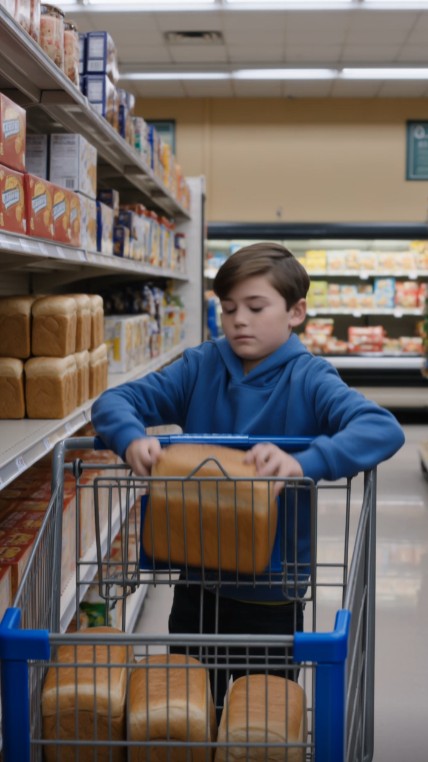
At first, the supermarket employees thought Noah was causing trouble.
The ten-year-old had walked away from his mother’s cart and started putting groceries back on the shelves.
A loaf of bread.
A carton of milk.
A box of cereal.
One employee approached him.
“Hey, buddy. Where are your parents?”
Noah pointed toward the checkout lanes.
“My mom is paying.”
The employee looked at the items in his hands.
“Then why are you putting everything back?”
Noah didn’t answer.
He carried the bread to the bakery aisle.
Then returned for the milk.
By the time his mother noticed, he had removed nearly half the groceries from their cart.
“Noah!”
He stopped.
His mother hurried toward him.
“What are you doing?”
Noah lowered his voice.
“We don’t need all of it.”
His mother looked embarrassed.
“Please put everything back in the cart.”
Instead, Noah pointed toward the next checkout lane.
An elderly man stood there alone.
He was quietly removing groceries from his own cart.
One by one.
The cashier would tell him the new total.
The man would look at the screen.
Then remove something else.
A package of chicken.
A bag of apples.
A frozen dinner.
Every time the total dropped, he checked the cash in his hand.
Still not enough.
Noah watched him put back a small container of soup.
Then a bunch of bananas.
Finally, the man was left with only bread and milk.
Noah’s mother understood.
Her expression softened.
Before she could say anything, Noah pushed their cart toward the elderly man.
“You can have ours.”
The man looked surprised.
“No, son.”
“It’s okay.”
“No.”
He smiled gently.
“You keep your groceries.”
Noah looked at the nearly empty cart beside him.
“We have more than we need.”
The elderly man stared at him.
Then something changed in his expression.
He leaned slightly closer.
“What is your name?”
“Noah.”
The man looked toward Noah’s mother.
“What’s his last name?”
She hesitated.
“Miller.”
The elderly man grabbed the checkout counter.
“No…”
Noah’s mother frowned.
“Are you okay?”
He looked at Noah again.
“Do I know you?”
“No.”
The man shook his head.
“Not you.”
Then he pointed toward Noah.
“But I’ve seen that face before.”
Noah’s mother became still.
“Where?”
The man reached for his wallet.
His hands trembled as he opened it.
Inside, behind several old cards and folded receipts, was a small photograph.
The corners were worn.
The image had faded with time.
He handed it to Noah’s mother.
She looked down.
And forgot completely about the groceries.
The photograph showed a young man standing beside an old pickup truck.
He was smiling.
Dark hair.
Same eyes.
Same slightly crooked smile.
Noah looked at the picture.
“That looks like Dad.”
His mother whispered:
“It is.”
The elderly man stared at her.
“You knew Daniel?”
She looked up quickly.
“That was my husband.”
The man’s face changed.
“Was?”
Noah’s mother swallowed.
“He died six years ago.”
The elderly man closed his eyes.
For several seconds, nobody spoke.
Then he looked at Noah.
“So you’re Daniel’s son.”
Noah nodded.
The man sat down on a nearby bench.
His name was Harold.
Twenty-two years earlier, he had owned a small neighborhood grocery store on the other side of town.
It wasn’t a supermarket.
Just six aisles.
A meat counter.
A tiny bakery.
And one old cash register near the door.
Daniel had been sixteen when Harold first met him.
He came into the store one evening with a backpack and twelve dollars.
He bought bread.
Peanut butter.
Milk.
Cereal.
Nothing unusual.
Then Harold noticed him return half the items before reaching the register.
Almost exactly as Noah had just done.
Noah’s mother stared at him.
“Why?”
Harold smiled faintly.
“Because there was a woman ahead of him who couldn’t afford her groceries.”
The woman was elderly.
She had counted coins at the register.
She kept removing items until only a few remained.
Daniel watched quietly.
Then he walked back through the store and returned several things from his own basket.
He used the money he saved to pay the rest of her bill.
Noah looked surprised.
“Dad did that?”
Harold nodded.
“He didn’t tell her.”
Daniel simply handed Harold the money and asked him to say the store had made a pricing mistake.
The woman left believing she had received a discount.
Harold never forgot it.
A week later, Daniel returned.
Harold asked him why he had done it.
Daniel shrugged.
“She looked hungry.”
That was all.
Over the next few years, Daniel became a regular customer.
Sometimes he helped Harold carry boxes.
Sometimes he swept the floor after school.
Eventually, Harold offered him a part-time job.
Daniel accepted.
He worked there through high school.
Noah’s mother looked at the photograph.
“Daniel never told me about this store.”
Harold smiled.
“He didn’t like talking about things he thought were ordinary.”
Noah’s mother laughed softly.
“That sounds like him.”
Harold pointed toward the picture.
It had been taken on Daniel’s final day at the store.
Before leaving for college, Daniel gave Harold something.
A small envelope.
Inside was money.
Not much.
But enough to cover a few bags of groceries.
“He told me to use it the next time somebody came up short.”
Harold tried to refuse.
Daniel insisted.
So Harold started a quiet tradition.
Whenever a customer didn’t have enough money, he used a few dollars from the envelope.
Then something unexpected happened.
Some of those customers came back later.
They replaced what they had used.
Sometimes they added more.
The envelope grew.
Harold kept it beneath the register.
For years, it quietly helped people.
Then the store closed.
Harold retired.
He saved one thing.
The old photograph of Daniel.
Noah’s mother looked at him.
“You’ve carried this for twenty years?”
Harold nodded.
“Because he changed the way I ran my store.”
Noah glanced toward Harold’s nearly empty cart.
“Then why were you putting your food back?”
Harold smiled sadly.
“Because life has a funny way of switching places on people.”
His pension barely covered his rent and medication.
He had miscalculated what he could afford that week.
He was embarrassed to admit it.
Noah looked toward his mother.
Then back at Harold.
“So Dad helped you help people.”
“Yes.”
“And now you need help.”
Harold nodded slowly.
Noah pushed the cart toward him again.
This time he didn’t ask.
He placed the bread, fruit, cereal, soup and chicken into Harold’s cart.
Harold shook his head.
“Your father already did enough for me.”
Noah answered:
“I’m not Dad.”
Harold looked at him.
Noah smiled.
“I’m Noah.”
His mother covered her mouth.
Harold’s eyes filled with tears.
The cashier looked away, pretending to organize receipts.
Noah’s mother paid for both carts.
Harold protested until she finally said:
“Daniel would be furious if I let you leave with bread and milk after hearing that story.”
Harold laughed.
“He probably would.”
They moved away from the register.
Noah kept staring at the photograph.
Then he noticed something written on the back.
He turned it over.
Three words.
Keep it going.
Noah looked at his mother.
“Did Dad write this?”
Harold nodded.
“He did.”
Noah studied the words for a long time.
Then Harold reached into his wallet again.
There was something else inside.
A small folded piece of paper.
“This belonged with the photograph.”
He opened it.
It was the original note Daniel had placed inside the envelope all those years earlier.
If someone comes up short, help them without making them feel small.
Noah’s mother began crying.
She had heard Daniel say things like that before.
But never knew where the idea came from.
Harold explained that after the store closed, he thought the tradition had ended.
But now, standing beside Noah, he realized it hadn’t.
It had simply traveled.
Two weeks later, Noah asked his mother if they could return to the supermarket.
He brought a small envelope.
Inside was twenty dollars from his birthday money.
He gave it to the store manager.
“What’s this for?”
Noah pointed toward the checkout lanes.
“If somebody doesn’t have enough.”
The manager smiled.
“That’s very kind.”
Noah shook his head.
“There’s one rule.”
“What?”
“Don’t tell them who paid.”
His mother looked at him.
The manager nodded.
“Deal.”
Months later, the supermarket started a small community fund.
Customers could add a dollar or two when they checked out.
The money went toward groceries for people who came up short.
No names.
No public announcements.
No photographs.
Just help.
Harold visited occasionally.
One afternoon, he stood beside Noah near the checkout and watched an employee quietly cover part of a woman’s grocery bill.
The woman looked confused.
The cashier smiled.
“Looks like you had a store credit.”
Harold laughed softly.
Noah looked at him.
“What?”
“That’s exactly what I used to say.”
Noah smiled.
Then Harold handed him the old photograph.
Noah shook his head.
“You should keep it.”
“No.”
Harold closed Noah’s fingers around it.
“I carried it long enough.”
On the back were still the same three words:
Keep it going.
Noah took the photograph home.
He placed it beside a picture of his father.
Years later, he would remember that afternoon not because he learned his father had once bought groceries for a stranger.
He remembered it because he finally understood something Daniel had apparently known as a teenager.
Kindness doesn’t have to be large enough to change the whole world.
Sometimes it only has to reach the next person in line.