
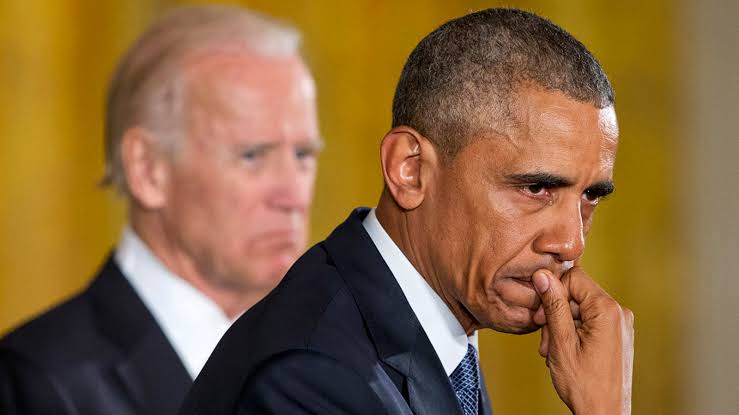
Seven Emotional Moments When Barack Obama Could Not Hide His Feelings in Public
Barack Obama served as the 44th president of the United States from January 2009 to January 2017. Throughout his presidency, he delivered speeches during moments of national celebration, public mourning, political disagreement, and personal reflection.
Although his public speaking style was often measured and controlled, several occasions revealed a more emotional side of the former president.
Some involved devastating tragedies. Others centered on the people who shaped his life, including his family and influential figures from American history.
One particularly memorable occasion had nothing to do with politics. During a musical tribute in Washington, Obama was visibly moved while watching the legendary Aretha Franklin perform.
From his final presidential address to the loss of his grandmother, these seven moments show the different circumstances in which Obama’s emotions became part of the public record.
1. Remembering Civil Rights Leader Dorothy Height in 2010
On April 29, 2010, Barack Obama delivered a eulogy for Dorothy Height at Washington National Cathedral.
Height was one of the most important figures in the American civil rights movement. Known as the “Godmother of the Civil Rights Movement,” she spent decades advocating for racial equality, women’s rights, and greater opportunities for African American communities.
Born in 1912, Height worked alongside many prominent civil rights leaders, including Martin Luther King Jr.
She also served as president of the National Council of Negro Women for forty years, helping expand the organization’s influence across the country.
Even in her later years, she remained involved in public affairs and continued advocating for the causes she believed in.
Height died on April 20, 2010, at the age of 98.
At her funeral, Obama paid tribute to her extraordinary lifetime of service, describing the importance of preserving her place in American history.
His remarks acknowledged not only her leadership but also the personal dignity and determination that made her an influential figure across generations.
The occasion was a solemn reminder of the sacrifices made by the people who helped shape the civil rights movement long before Obama reached the White House.
2. Addressing the Sandy Hook Elementary School Tragedy in 2012
One of the most heartbreaking moments of Obama’s presidency came after the December 14, 2012, shooting at Sandy Hook Elementary School in Newtown, Connecticut.
Twenty children, aged six and seven, and six adult educators were killed.
The tragedy devastated families and shocked communities across the United States.
Two days later, on December 16, Obama attended an interfaith prayer vigil in Newtown.
He addressed grieving families, first responders, and residents struggling to comprehend what had happened.
His speech focused on remembrance, shared grief, and the need to support those affected.
He acknowledged that words alone could not remove the pain experienced by the families.
At one point, he spoke about Americans holding their own children close and mourning alongside the Newtown community.
The speech became one of the defining emotional addresses of his presidency.
Rather than approaching the occasion primarily as a political event, Obama spoke about the responsibilities of parents, the vulnerability of children, and the sorrow experienced by the entire community.
The loss of the children and educators would remain an issue he returned to in later speeches about gun violence.
3. Becoming Emotional During His Farewell Address in 2017
On January 10, 2017, Obama delivered his presidential farewell address in Chicago, the city where he began much of his political career.
The speech came near the end of his second term and provided an opportunity to reflect on eight years in the White House.
He discussed American democracy, citizenship, and the importance of public participation.
But some of the most memorable moments came when he turned his attention away from politics.
Obama thanked his wife, Michelle, acknowledging the role she played throughout their years in public life.
He also spoke directly to their daughters, Malia and Sasha.
During his presidency, both daughters had grown up under extraordinary public scrutiny.
Obama expressed pride in the young women they had become, emphasizing their kindness, thoughtfulness, and strength.
As he spoke about his family, he became visibly emotional.
The audience responded with prolonged applause.
For many viewers, the moment highlighted the contrast between the responsibilities of the presidency and the deeply personal role of being a husband and father.
It was not an inauguration ceremony, as some retellings suggest. It was his farewell address, delivered ten days before Donald Trump’s inauguration on January 20, 2017.
4. Mourning His Grandmother on the Eve of the 2008 Election
Before becoming president, Obama experienced a deeply personal loss at a pivotal point in his political career.
His grandmother, Madelyn Dunham, died on November 3, 2008, at the age of 86, after battling cancer.
Her death came just one day before the presidential election.
Dunham had helped raise Obama in Hawaii and played an important role in his childhood.
He frequently spoke about her work ethic, humility, and commitment to family.
During a campaign rally in Charlotte, North Carolina, Obama addressed her death.
His voice became emotional as he described the woman who had helped shape his life.
He remembered her as one of the many ordinary Americans whose contributions rarely receive public recognition.
As he spoke, tears were visible.
The timing made the occasion especially poignant.
Obama was approaching an election that could make him the first Black president of the United States, but the grandmother who helped raise him would not live to witness the result.
The following day, November 4, 2008, he won the presidential election.
5. Honoring Senator Daniel Inouye in 2012
On December 21, 2012, Obama delivered a eulogy for Senator Daniel Inouye at Washington National Cathedral.
Inouye had represented Hawaii in the United States Senate from 1963 until his death in December 2012.
A decorated World War II veteran, he became one of the nation’s longest-serving senators.
For Obama, however, Inouye represented something deeply personal.
Both men had connections to Hawaii, and Obama remembered seeing Inouye on television when he was a child.
In his eulogy, Obama recalled watching the senator during the Watergate hearings in the 1970s.
He explained that seeing a respected Japanese American senator participating in such an important national moment influenced his understanding of what might be possible in his own life.
Obama reflected on Inouye’s military service, public responsibilities, and belief in American democratic institutions.
The tribute highlighted how public figures can influence younger generations simply through their visibility and example.
For Obama, Inouye was not only an accomplished politician.
He was one of the earliest figures who helped shape his imagination about public service.
6. Tears During His 2016 Gun Safety Announcement
On January 5, 2016, Obama delivered remarks at the White House announcing executive actions intended to strengthen the enforcement of federal gun laws and improve efforts to reduce gun violence.
The announcement came after years of public debate over mass shootings and firearm regulation.
During the speech, Obama referred to the children killed at Sandy Hook Elementary School in 2012.
As he discussed the tragedy, he became visibly emotional and wiped tears from his eyes.
He expressed frustration that the deaths of children had not resulted in the legislative changes he supported.
The speech drew national attention partly because of the unusually visible emotion he displayed.
The measures he announced included steps addressing firearm-dealer licensing and background-check enforcement, along with other initiatives concerning gun safety.
Supporters argued that the measures were needed to address weaknesses in existing enforcement.
Critics questioned the administration’s approach and the appropriate scope of executive authority.
The announcement illustrated how the Sandy Hook tragedy continued to influence Obama’s views during his second term.
It is important to distinguish this occasion from his December 2012 remarks in Newtown.
The Newtown address focused on mourning and remembrance.
The January 2016 speech concerned specific executive actions and the broader policy debate.
7. Aretha Franklin’s Performance Moved Obama to Tears in 2015
One of the most widely remembered lighter moments of Obama’s emotional public appearances occurred during the 2015 Kennedy Center Honors.
The annual ceremony celebrates individuals who have made significant contributions to American culture through the performing arts.
That year, singer-songwriter Carole King was among the honorees.
During the ceremony on December 6, legendary singer Aretha Franklin performed “(You Make Me Feel Like) A Natural Woman,” a song closely associated with both performers.
Franklin’s powerful performance quickly became one of the evening’s standout moments.
As she sang, Obama was shown wiping a tear from his eye.
Michelle Obama sat beside him.
Carole King also appeared visibly delighted and emotional during the tribute.
The performance was broadcast on CBS on December 29, 2015, and clips subsequently circulated widely online.
The moment demonstrated a different side of presidential emotion.
There was no national tragedy or personal loss behind the tears.
Instead, Obama appeared moved by the power of music and the performance of one of America’s most celebrated vocalists.
Years later, the recording remained a popular example of Franklin’s extraordinary ability to connect with an audience.
Why These Moments Are Still Remembered
Public appearances by presidents are usually carefully planned, and their speeches are often closely scrutinized.
Yet emotional reactions can reveal aspects of public figures that formal remarks alone do not fully convey.
For Obama, some of the most memorable occasions involved family.
His grief over the loss of his grandmother in 2008 and his emotional farewell remarks about Michelle, Malia, and Sasha in 2017 showed how personal relationships remained central to his public life.
Other moments reflected national mourning.
His remarks after Sandy Hook and his later response to gun violence demonstrated the emotional weight of tragedies that affected families across the country.
His tributes to Dorothy Height and Daniel Inouye highlighted his respect for earlier generations of American leaders.
And Aretha Franklin’s Kennedy Center performance showed how music could move even a president accustomed to speaking before enormous audiences.
These moments occurred across different years, under very different circumstances.
Some involved visible tears. Others are remembered for the emotion and personal reflection in Obama’s words rather than a clearly documented instance of crying.
Together, they form a record of the personal, historical, and cultural experiences that shaped Obama’s years in the national spotlight.
A Presidency Remembered Through More Than Speeches
Barack Obama’s presidency was defined by major political events, policy decisions, and national debates.
But some of the most frequently revisited recordings from those years capture moments that were personal rather than procedural.
A grieving grandson speaking about the woman who raised him.
A father expressing pride in his daughters.
A president honoring civil rights leaders who helped open doors for future generations.
And an audience member moved by a remarkable musical performance.
These scenes help explain why certain public moments remain memorable long after the events themselves.
They also show that emotion in public life can have many sources: grief, gratitude, admiration, frustration, joy, and love.
For Obama, each of these seven occasions reflected a different part of the experience of being both a public leader and a person.