
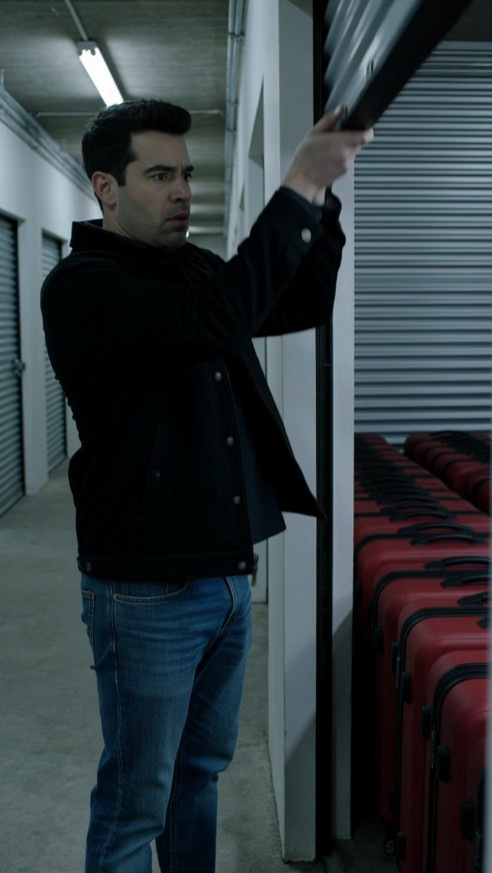
I’ve been buying abandoned storage units for almost eight years.
I’ve found antique furniture, forgotten photographs, old electronics, and once, an envelope containing nearly three thousand dollars.
But nothing prepared me for what was waiting inside Unit 214.
Thirty-seven identical red suitcases.
All standing upright.
Arranged in perfectly straight rows.
Each one had a white luggage tag.
And every name had been covered with black tape.
There was no furniture.
No shelving.
Not even an ordinary cardboard box.
I had paid $200 for the unit at an authorized storage auction.
According to the facility manager, the contents had been sitting undisturbed for nineteen years.
I opened the first suitcase.
Empty.
The second.
Empty.
The third contained an old airline blanket.
I was beginning to wonder whether I’d purchased thirty-seven pieces of worthless luggage.
Then I heard a sound.
A faint electronic ringing.
It came from the last row.
I followed it.
One suitcase was vibrating against the concrete floor.
Inside was an old mobile phone connected to a newer portable battery.
The screen was glowing.
Someone was calling.
I hesitated.
Then answered.
“Hello?”
For several seconds, nobody spoke.
Then a man’s voice whispered:
“Did you open the red suitcases?”
I looked around the empty unit.
“Who is this?”
The caller ignored my question.
“How many are there?”
I counted again.
“Thirty-seven.”
There was a long silence.
Then the man said:
“There should be thirty-eight.”
I turned toward the back wall.
And that’s when I noticed something I had completely missed.
A narrow red thread protruded from beneath the metal paneling.
It was attached to a luggage tag.
And on the tag, beneath the black tape, someone had written a single word.
MISSING.
The Auction Nobody Wanted
The storage facility was located on the outskirts of a quiet industrial district.
It was an older building, with rows of metal doors and narrow concrete corridors.
I’d purchased several units there before.
Most contained ordinary household belongings.
But Unit 214 was different.
The facility manager, Harold, explained that its original renter had stopped paying decades earlier.
There had been a complicated legal history involving the account.
Ownership records had been reviewed.
Required notices and procedures were completed.
And eventually the contents were released for auction.
I didn’t know anything about the original renter.
The auction listing provided only the unit number and a brief description.
Stored personal property.
No guarantees.
Sold as permitted under the auction terms.
When I offered $200, nobody bid against me.
At the time, I thought I was getting a bargain.
I had no idea I was buying the beginning of a mystery that had remained unresolved for nearly twenty years.
Thirty-Seven Identical Suitcases
The suitcases were bright red.
Not faded burgundy.
Not dark maroon.
The kind of unmistakable red that would stand out immediately on an airport luggage carousel.
They were all the same size and design.
Each had two wheels, a black handle, and a white identification tag.
Their placement was unusually precise.
Five rows contained seven cases each.
The final row contained two.
Thirty-seven altogether.
It looked less like someone had stored luggage and more like someone had arranged an exhibition.
I walked between the rows.
Then noticed that the luggage tags were numbered.
The first read 01.
The next read 02.
Then 03.
I continued checking.
Every number was present through 37.
There were no duplicates.
No obvious mistakes.
And no explanation.
The Strange Things Inside
I began opening the cases.
Most were empty.
But several contained objects.
Suitcase 03 held a folded airline blanket.
Suitcase 08 contained a child’s knitted scarf.
Suitcase 12 held a photograph of an airport terminal.
Suitcase 19 contained an old boarding pass.
And Suitcase 26 held a small silver picture frame.
Inside the frame was a photograph of a young woman standing beside an elderly man.
They were smiling.
Behind them was an airport departures board.
Something about the collection felt deliberate.
These weren’t random forgotten belongings.
Someone had placed specific items inside specific suitcases.
Then hidden the owners’ names beneath black tape.
I continued searching.
That’s when the phone rang.
The Voice on the Phone
The phone was inside Suitcase 37.
It was connected to a recently manufactured portable charging battery.
That immediately caught my attention.
The storage unit had supposedly remained untouched for nineteen years.
Yet the power bank looked almost new.
Someone had clearly accessed or modified the contents more recently than the original storage date.
The phone continued ringing.
I answered.
The caller asked whether I had opened the red suitcases.
Then asked how many there were.
When I said thirty-seven, he became silent.
Finally, he whispered:
“There should be thirty-eight.”
I asked who he was.
He replied:
“My name is Edward.”
Then he asked another question.
“Did you find the little blue suitcase?”
I looked around.
“No. They’re all red.”
He exhaled.
“Then it’s still missing.”
The Secret Behind Number 38
Edward explained that the red suitcases had once belonged to a charitable travel program.
Nearly twenty years earlier, a group of volunteers had helped families affected by a major regional flood relocate temporarily while their homes were repaired.
The program arranged transportation, accommodations, and essential supplies.
To organize the journeys, every participating family received a red suitcase.
Each case was numbered.
Thirty-eight families had originally registered.
But only thirty-seven suitcases were returned to the organizers after the program ended.
The last case was never accounted for.
I listened carefully.
“Why would someone store all the returned suitcases for nineteen years?”
Edward paused.
“Because the woman who organized the program couldn’t bring herself to throw them away.”
“Who was she?”
“Her name was Margaret Ellis.”
He became quiet.
“She was my sister.”
Margaret’s Promise
Margaret Ellis had been a social worker.
She spent much of her career helping families during emergencies.
When the floods devastated several neighborhoods, she volunteered to coordinate travel arrangements for people who needed temporary shelter.
Her program wasn’t particularly large.
But it was organized with extraordinary care.
Each family received a red suitcase containing basic supplies.
Clothing.
Toiletries.
Documents.
And small comfort items for children.
Margaret personally labeled every case.
She also asked families to leave a small note or keepsake when they returned the luggage.
She wanted to preserve the stories of the people the program had helped.
Her plan was to create a community exhibition after the recovery effort ended.
An exhibition about ordinary families rebuilding their lives.
But one family never returned its suitcase.
And Margaret never stopped thinking about them.
The Family Who Disappeared
Suitcase 38 had been assigned to a mother named Anna Parker and her six-year-old daughter, Lily.
The two had lost their home during the flood.
Margaret arranged transportation to temporary accommodation in another city.
Anna was grateful.
She promised to contact the program once she settled.
But months passed.
Then a year.
Letters were returned.
Telephone numbers stopped working.
And the forwarding address became outdated.
Margaret searched through the appropriate assistance records but couldn’t establish contact.
There was no evidence that Anna or Lily had died.
They had simply disappeared from the program’s records.
Margaret worried that the family might still need help.
She kept the other thirty-seven suitcases in storage while planning to complete the exhibition.
Then an unexpected illness changed her life.
The Exhibition That Never Opened
Margaret became seriously ill several years after the flood.
She was forced to stop working.
Her health gradually declined.
The planned exhibition was postponed.
Edward helped her organize the materials.
Together, they packed the suitcases in Unit 214.
Each case contained an object connected to the family’s journey.
But Margaret refused to display the names publicly without the families’ permission.
She covered the tags with black tape.
She kept a separate register of the families and their stories.
And she continued searching for Anna and Lily.
Margaret died before the exhibition could be completed.
Edward inherited responsibility for the materials.
But he couldn’t bring himself to finish the project.
Eventually, his own life became complicated.
He moved away.
The storage account fell into administrative confusion.
And the suitcases remained hidden.
The Phone That Shouldn’t Have Been There
I interrupted Edward.
“There’s something I don’t understand.”
“What?”
“The phone inside Suitcase 37 has a new battery.”
He became silent.
Then said:
“Yes. I put it there.”
I looked toward the storage door.
“You were here recently?”
Edward explained that several weeks earlier, he had been allowed supervised access to review the contents as part of the unit’s legal disposition process.
He had discovered that the old phone still contained recordings connected to the project.
The phone itself was outdated.
But its contents had been preserved through a replacement device and backup.
Edward had placed a functioning phone and charged power bank inside the suitcase so it could be located by whoever received the unit.
He had intended to include written instructions but hadn’t completed them.
When he learned the unit had been auctioned, he called the number.
He hoped someone would answer.
I stared at the suitcases.
“So you knew I might find them?”
“I hoped someone would.”
Then Edward said:
“But I didn’t know the thirty-eighth suitcase might still be there.”
The Red Thread
I asked him about the luggage tag beneath the wall panel.
Edward sounded surprised.
“What tag?”
I described it.
The narrow red thread.
The white label.
And the word MISSING.
Edward became quiet.
Then said:
“Margaret used red thread to mark unfinished parts of the exhibition.”
I knelt beside the rear wall.
The metal panel wasn’t part of the original concrete structure.
It appeared to be a removable storage divider installed inside the unit.
I didn’t attempt to force it open.
Instead, I called Harold, the facility manager.
He came upstairs.
Together, we examined the divider.
Harold checked the unit records and confirmed that the interior panel had been installed by the renter.
Because the unit had been lawfully sold, he arranged for the panel to be inspected and removed safely.
When it came away, we discovered a narrow storage recess.
Inside was a blue suitcase.
Not red.
Blue.
The Thirty-Eighth Suitcase
The blue suitcase was smaller than the others.
It had a faded fabric handle.
Its wheels were damaged.
And a paper tag hung from the zipper.
The number 38 was written on one side.
On the other side were two names.
ANNA AND LILY PARKER.
I called Edward back.
“I found it.”
He didn’t answer immediately.
Then I heard him crying.
“Are you sure?”
I read the names aloud.
Edward whispered:
“That’s them.”
The suitcase was closed with a small combination lock.
I didn’t force it open.
Edward asked me to wait.
He wanted to be present when its contents were examined.
I agreed.
Something about the discovery no longer felt like an auction purchase.
It felt like I had stumbled into someone else’s unfinished promise.
The Man Who Arrived the Next Morning
Edward came to the facility the following day.
He was seventy-three years old.
He walked slowly and carried a folder of old documents.
When he saw the rows of red suitcases, he stopped.
His eyes filled with tears.
For several minutes, he simply stood in the doorway.
Then he approached the blue case.
He knelt.
Touched the handle.
And whispered:
“Margaret, what did you do?”
I asked what he meant.
Edward pointed toward the luggage tag.
“Anna and Lily’s suitcase was red when they received it.”
I frowned.
“Then why is this one blue?”
He shook his head.
“I don’t know.”
That was the moment we realized the mystery was larger than a missing suitcase.
The Letter Inside
Edward had documentation establishing his connection to the project, and we arranged to examine the case together.
Inside were neatly folded clothes.
A small stuffed rabbit.
A photograph.
And a sealed envelope.
The envelope was addressed to Margaret Ellis.
Edward recognized the handwriting on the front.
It belonged to Anna Parker.
His hands began trembling.
He opened the letter.
The first sentence made him stop.
Dear Margaret,
I am sorry we disappeared without saying goodbye.
Edward looked at me.
Then continued reading.
Anna’s Explanation
The letter explained that Anna and Lily had moved to another city after the flood.
Anna found temporary work.
Then received an offer for a permanent job.
She accepted.
But during the move, several important documents were misplaced.
Her address changed repeatedly.
And she lost contact with the charitable program.
Years later, Anna tried finding Margaret.
She learned that the organization had closed.
She eventually located the storage facility address associated with the exhibition materials.
Anna wrote that she had returned with Lily, who was now a teenager.
They had visited the storage unit while Margaret still had access to it.
Margaret welcomed them.
And the reunion changed something important.
Anna and Lily were no longer simply recipients of help.
They wanted to contribute to the project.
Why the Suitcase Was Blue
The original red suitcase had been badly damaged during the family’s travels.
Anna had kept its luggage tag.
But the case itself was no longer usable.
When she returned to Margaret, she brought a blue suitcase containing objects from the years after the flood.
It held clothing from Lily’s childhood.
Photographs of their new home.
And a letter explaining how the assistance program had helped them start again.
Margaret accepted the blue suitcase as the thirty-eighth family’s contribution.
But she didn’t place it with the others.
She wanted the exhibition’s final display to reveal something special.
The blue case represented a new beginning.
It wasn’t identical to the red ones.
Because Anna and Lily’s lives were no longer defined by the disaster.
They had built something different.
The Photograph That Changed Everything
At the bottom of the blue suitcase was a photograph.
It showed Margaret standing beside Anna and Lily.
The three women were smiling.
Behind them was a modest apartment building.
Lily was holding a school certificate.
On the back, Anna had written:
Because of your kindness, we found our way forward.
Edward looked at the photograph for a long time.
Then smiled through tears.
“Margaret found them.”
I nodded.
“She did.”
He shook his head slowly.
“She never told me.”
Perhaps Margaret had planned to surprise him.
Perhaps she intended to reveal the full story when the exhibition opened.
But her illness prevented her from completing the project.
And the blue suitcase remained hidden behind the panel.
The Last Recording
Edward asked me about the phone.
We opened Suitcase 37.
He picked up the device and accessed the preserved recordings.
One file was labeled:
FOR THE FINAL EXHIBITION.
Edward pressed play.
A woman’s voice filled the quiet storage unit.
It was Margaret.
Her voice sounded warm but slightly tired.
“Welcome to the Journey Home exhibition.”
Edward covered his mouth.
The recording continued.
“These thirty-eight suitcases represent thirty-eight families who had to begin again after losing their homes.”
She paused.
“Some returned quickly. Others took longer. And one family reminded me why we should never measure someone’s recovery by how fast they come back.”
Edward began crying.
Then Margaret said:
“The thirty-eighth suitcase is blue because it represents what happens after the emergency ends. It represents a life rebuilt.”
The Message Margaret Left for Edward
The recording continued.
“Edward, if you’re hearing this, I hope you finally opened the exhibition.”
He closed his eyes.
Margaret’s voice became softer.
“I know you think you haven’t done enough. But you’ve helped me more than you realize.”
There was a pause.
Then she said:
“If I can’t finish this project, please don’t let the suitcases stay hidden forever.”
Edward wiped his face.
“She knew,” he whispered.
I looked at him.
“She knew what?”
“That she might not be here to see it.”
For years, Edward had believed his sister’s project was incomplete.
Now he understood that she had left instructions for its completion.
He simply hadn’t known where to find them.
The Decision We Made
I had purchased the unit legally.
The contents belonged to me under the auction terms.
But after hearing Margaret’s recording, I couldn’t imagine separating the suitcases and selling them individually.
Edward offered to buy everything back.
I refused his money.
Instead, I proposed something else.
“What if we finish the exhibition?”
He stared at me.
“You mean all thirty-eight?”
I nodded.
“All thirty-eight.”
Edward looked around the storage unit.
Then smiled.
“Margaret would have loved that.”
We agreed to work with the local historical society and relevant families to ensure the materials were handled respectfully.
Personal names and belongings would only be displayed with appropriate permission.
The project would tell the story of recovery, not turn private hardship into entertainment.
Finding the Families
The historical society helped review the surviving records.
Some families had moved away.
Others still lived in the region.
A few original participants had died.
Their relatives were contacted where possible.
The responses were emotional.
One woman remembered receiving a suitcase when she was ten years old.
Another family still had photographs from the temporary housing program.
Several participants offered to share their stories.
Others preferred privacy.
Their wishes were respected.
Edward was amazed.
For nearly two decades, he had believed the project was forgotten.
Now people were helping bring it back to life.
The Search for Anna and Lily
The most important question remained.
Where were Anna and Lily now?
The address on Anna’s letter was outdated.
The phone number no longer worked.
But the historical society located a public reference to Lily’s professional work.
She had become a social worker.
Just like Margaret.
Edward could hardly believe it.
The girl whose family had once needed emergency assistance had grown up to help others.
A letter was sent through the appropriate professional channel, inviting Lily to contact the organizers if she wished.
Several days later, Edward received a call.
A woman introduced herself.
“My name is Lily Parker.”
Edward became silent.
Then he said:
“I have something I think belongs to you.”
Lily Returns
Lily was now in her late thirties.
She remembered Margaret clearly.
She remembered the red suitcase.
The temporary housing.
And the small stuffed rabbit her mother carried during their journey.
When she learned that Margaret’s exhibition materials had been found, she became emotional.
She explained that her mother had died several years earlier.
But Anna had often spoken about the woman who helped them after the flood.
“She gave us more than transportation,” Lily said.
“She treated us like we still had a future.”
Edward told her about the blue suitcase.
Lily laughed through tears.
“I remember that.”
Then she said something unexpected.
“Margaret asked me to choose the color.”
The Secret Behind the Blue Case
Lily explained that she had been embarrassed by the original red suitcase.
It reminded her of the evacuation.
The uncertainty.
And the months when her family had no permanent home.
When she and Anna returned to see Margaret, she didn’t want to bring another red suitcase.
She wanted blue.
Her favorite color.
Margaret asked why.
Lily answered:
“Because the sky is blue when the storm is over.”
Margaret loved the explanation.
She decided to make the blue case the final part of the exhibition.
But she never had the chance to open it publicly.
Lily began crying as she told the story.
“I thought everyone had forgotten.”
Edward shook his head.
“Margaret never did.”
The Exhibition Opens
Six months later, the Journey Home exhibition opened in a renovated community hall.
Thirty-seven red suitcases stood in carefully arranged rows.
At the end was one blue suitcase.
Each display contained photographs, historical context, or donated objects.
Some families shared personal stories.
Others participated anonymously.
The exhibition focused on recovery, community assistance, and the practical challenges of rebuilding after disaster.
At the entrance, visitors heard a short recording of Margaret explaining the project.
Edward stood near the front.
I stood beside him.
And Lily waited near the final display.
For the first time in nearly twenty years, the suitcases were no longer hidden behind a storage-unit door.
The Speech That Silenced the Room
Lily was invited to speak at the opening.
She approached the microphone.
Her hands trembled.
“When I was six years old, my mother and I lost our home.”
The room became quiet.
“We had very little left.”
She looked toward the red suitcases.
“One woman gave us a suitcase, helped us find temporary housing, and reminded my mother that asking for help didn’t make her weak.”
Lily paused.
“Years later, we returned with a blue suitcase.”
She smiled through tears.
“Margaret asked me why I chose that color.”
Lily looked toward the final display.
“I told her it reminded me of the sky after a storm.”
Several visitors began crying.
Then Lily added:
“Today, I work with families facing difficult circumstances. And every time I help someone, I remember the woman who helped us.”
Edward’s Final Surprise
After Lily’s speech, Edward approached her carrying a small envelope.
He explained that it had been found among Margaret’s personal papers.
On the front was Lily’s name.
She opened it carefully.
Inside was a photograph of her younger self standing beside the blue suitcase.
There was also a short handwritten note.
Dear Lily,
One day, I hope you’ll look at this photograph and remember how far you’ve come.
The suitcase doesn’t represent what you lost.
It represents everything you carried forward.
Never forget that your story matters.
With love, Margaret.
Lily pressed the note against her chest.
She began crying.
Then hugged Edward.
For a moment, the entire room was silent.
The Suitcase That Changed My Life
Before Unit 214, I measured storage auctions in dollars.
I calculated what furniture might sell for.
Whether electronics worked.
And how much profit I could make after cleaning and transportation.
I still enjoyed the business.
But the red suitcases changed the way I thought about forgotten belongings.
Sometimes an object is valuable because of its price.
Sometimes because of its age.
And sometimes because it holds a story that deserves to be returned to the people who lived it.
I paid $200 for the storage unit.
I expected to find merchandise.
Instead, I found thirty-eight families’ memories.
And the unfinished work of a woman who believed those memories were worth preserving.
The Final Visit to Unit 214
After the exhibition opened, Edward and I returned to the storage facility.
Unit 214 was empty.
The red suitcases were gone.
The blue case was gone.
Even the temporary wall panel had been removed.
Only the concrete floor remained.
Edward stood in the doorway.
For a moment, he looked sad.
Then he smiled.
“Margaret would be happy.”
I nodded.
“I think so.”
He turned toward me.
“Do you know why I called that phone?”
I laughed.
“Because you wanted to know who bought the unit.”
Edward shook his head.
“Not exactly.”
I looked at him.
He continued.
“I wanted to know whether anyone would answer.”
I smiled.
“Well, I did.”
Edward laughed softly.
“Yes. You did.”
The Last Recording
At the exhibition’s closing event, the organizers played one final recording from Margaret.
It had been preserved with the other project materials.
Her voice filled the room.
“Sometimes people believe a disaster ends when the water goes down, the roads reopen, or the emergency crews leave.”
She paused.
“But for families who lose everything, that’s often when the hardest work begins.”
The audience listened.
“We can give someone a suitcase. We can offer temporary shelter. We can help them reach a safer place.”
Another pause.
“But what matters most is reminding them that their future is still worth believing in.”
Then Margaret said:
“Every suitcase carries more than belongings. It carries the possibility of beginning again.”
Lily wiped her eyes.
Edward held her hand.
And I understood why Margaret had saved the suitcases for so long.
The Thirty-Eighth Suitcase
The mystery began when I purchased an abandoned storage unit for $200 and found thirty-seven identical red suitcases arranged in neat rows.
Each case was numbered.
Each had a luggage tag with a concealed name.
Then a phone began ringing inside the last suitcase.
A man named Edward asked how many cases I had found.
When I answered thirty-seven, he told me there should be thirty-eight.
The missing case was hidden behind a removable wall panel.
But it wasn’t red.
It was blue.
Inside were personal belongings and a letter connected to a mother and daughter who had rebuilt their lives after a devastating flood.
The suitcases had belonged to a charitable relocation program organized by Edward’s late sister, Margaret.
She planned to create an exhibition honoring the families she helped.
But illness prevented her from completing it.
Her recordings and documents eventually allowed us to finish the project.
The missing daughter, Lily, returned to see the exhibition.
And she revealed why she had chosen a blue suitcase.
Because blue reminded her of the sky after the storm.
The Phone Call I’ll Never Forget
People sometimes ask what happened to the phone that rang inside Suitcase 37.
I still have it.
Edward gave it to me after the exhibition.
The original recordings were preserved in the historical archive, but the device remained a personal reminder of how everything began.
Sometimes I look at it and remember the first call.
The unfamiliar voice.
The silence.
And the words:
“There should be thirty-eight.”
At the time, I thought someone was trying to frighten me.
I imagined hidden money.
A forgotten crime.
Or something dangerous concealed behind the wall.
But the truth was different.
The missing suitcase contained the story of a family who found their way forward after losing almost everything.
And the phone call led us to a promise that had been waiting nineteen years to be fulfilled.
I went to the auction hoping to make a profit.
I left with something worth far more.
Thirty-seven red suitcases told the story of families who needed help.
One blue suitcase told the story of a little girl who grew up to help others.
And when the thirty-eighth suitcase finally stood beside the other thirty-seven, the exhibition was complete.
Not because every question had been answered.
But because the people behind the luggage were no longer forgotten.
Sometimes the greatest treasure inside an abandoned storage unit isn’t gold, jewelry, or money.
Sometimes it’s a story someone loved enough to keep safe.
And sometimes all that story needs is one person willing to answer the phone.