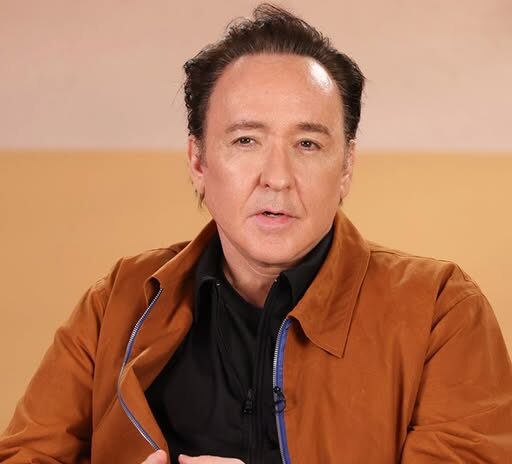
John Cusack spent decades building a successful career as one of Hollywood’s most recognizable leading men, but years of frustration behind the scenes gradually changed the way he viewed the film industry.
After repeatedly watching projects struggle to secure financing or emerge from the editing process in a form he no longer recognized, Cusack began looking for a way to tell stories with fewer restrictions.
That search eventually led him toward an entirely different creative format: the graphic novel.
Cusack, now 60, became widely known through films such as High Fidelity, Serendipity, Say Anything…, Must Love Dogs, and Hot Tub Time Machine.
For years, he was closely associated with major studio productions and memorable leading roles.
But over time, the opportunities available to him changed.
Cusack has spoken openly about how difficult it became to get projects financed.
In a 2020 interview, he admitted that he had not been considered “hot” in Hollywood for a long time and said projects had become harder to fund.
He suggested that age and changing industry interest may have played a role.
For Cusack, the challenge was not simply finding acting work.
He also wanted to develop and shape stories.
That became increasingly difficult in an industry where large productions depend on investors, studios, executives, editors, distributors, and many other people who can influence the final result.
Even when a film was successfully made, Cusack said he often felt disappointed by what happened afterward.
He described the editing process as one of the most frustrating parts of filmmaking.
A project could begin with a clear creative vision, require months or years of work, and then change dramatically before reaching audiences.
Cusack said films could end up being altered so heavily in the editing room that the finished version no longer reflected what the people involved originally intended.
That experience gradually made the process less satisfying.
At one point, he described the movie business as brutal, transactional, superficial, and dumb.
The remark revealed how deeply frustrated he had become with the compromises involved in large-scale filmmaking.
That frustration helps explain why his latest project looks so different from the films that made him famous.
Cusack has created his first graphic novel, Momo.
The project allowed him to continue thinking visually while avoiding many of the financial and organizational pressures that come with making a feature film.
Cusack has said graphic novels appealed to him because they feel cinematic.
A writer and illustrator still choose what the audience sees.
They decide the angles, the moments, the pacing, and the visual sequence.
But unlike a major movie production, there is no need to coordinate large crews, expensive locations, actors, equipment, and a multimillion-dollar budget.
That gave Cusack something he had been missing.
Creative control.
Momo was illustrated by Ignacio Noé and published by Mad Cave Studios.
The story combines several genres, including crime, science fiction, and political satire.
Its unusual premise gave Cusack the freedom to build something that did not have to fit neatly into the expectations of a traditional studio project.
For him, that freedom was the entire point.
Cusack said he wanted to tell a story without having to negotiate every part of it.
In filmmaking, the people providing millions of dollars usually expect to have a say in how that money is used.
That can lead to changes involving dialogue, characters, casting, pacing, themes, or even the ending.
A creator may begin with one idea and gradually find that it has been reshaped by financial concerns and committee decisions.
Momo allowed Cusack to avoid much of that.
The graphic novel was built primarily through the collaboration between Cusack and Noé.
Cusack handled the writing.
Noé created the illustrations.
There was no large committee constantly changing the work.
That simplicity appears to have been one of the most satisfying parts of the process for Cusack.
He emphasized that the project remained close to the vision the two creators originally had.
For someone who had spent years watching film projects change after production, that level of control was deeply appealing.
The graphic novel also allowed Cusack to use skills developed during his film career in a new way.
He could still think in scenes.
He could still imagine visual rhythm.
He could still structure moments almost like shots in a movie.
But he no longer needed approval from a large group of executives before moving the story forward.
Writing itself was not entirely new territory for him.
Cusack had previously co-written the 2016 essay collection Things That Can and Cannot Be Said.
That project already demonstrated his interest in communicating ideas outside acting.
Momo expands that interest by combining written storytelling with visual imagery.
Interestingly, Cusack has not ruled out the possibility that Momo could eventually become a film.
He has even joked that he would be willing to appear in an adaptation.
If that happened, the story would return to the industry that frustrated him.
But there would be one important difference.
The original version would already exist.
Cusack would have created the story on his own terms before anyone else became involved.
His move toward graphic novels also reflects a broader shift in how he appears to think about creative work.
The scale of a project seems less important to him than ownership of the final result.
A major Hollywood movie may reach a huge audience, but it also requires substantial compromise.
A graphic novel can be created by a far smaller team while preserving much more of the creator’s original intention.
For Cusack, that trade-off appears to have become increasingly attractive.
His sister, Joan Cusack, has also stepped back from some of Hollywood’s most visible traditions.
She has spoken about prioritizing family life in Chicago and spending less time on red carpets and major promotional events.
Her decision was different from John’s, but both siblings appear to have reconsidered how much of the traditional Hollywood system they wanted to make part of their lives.
John Cusack has not abandoned storytelling.
Quite the opposite.
He has simply found another way to do it.
After decades of dealing with studio financing, editing disputes, and projects that did not always survive the filmmaking process intact, he found a format that allowed him to keep more control.
Momo represents that new chapter.
It combines the visual instincts he developed through film with the independence of publishing.
For an actor who spent years working inside one of the most collaborative and expensive creative industries in the world, that freedom appears to matter more than ever.
Cusack may no longer be chasing the traditional leading-man path that once defined much of his career.
But his desire to create has not disappeared.
It has simply moved somewhere with fewer compromises, fewer committees, and more room for the story he actually wants to tell.