
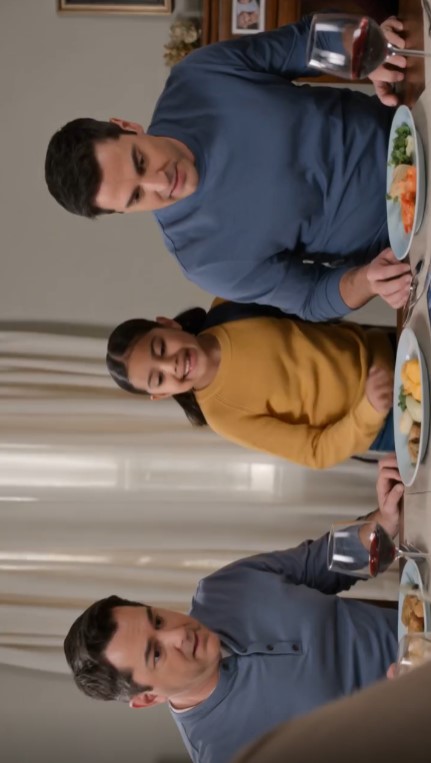
Everyone laughed when 9-year-old Emma pointed at the old family photograph.
“That’s not Grandpa.”
Her father smiled.
“Of course it is.”
Emma shook her head.
“No. The man who comes to Grandma’s house looks exactly like him.”
The room went silent.
Grandma stopped holding her fork.
Emma’s father turned toward her.
“What man?”
Grandma immediately said Emma was confused.
But Emma ran to her backpack.
She pulled out a drawing.
“I drew him last Sunday.”
Her father stared at it.
The man had the same unusual glasses his father had worn for decades.
There was only one problem.
His father had been gone for twelve years.
Grandma stood up.
“Enough.”
But Emma’s father had already noticed something.
A phone number was written on the paper Grandma had been holding.
He recognized the area code.
It belonged to the town where his father grew up.
He called.
An elderly man answered.
Emma heard the voice…
and immediately shouted:
“Daddy! That’s him!”
Grandma closed her eyes.
Then the man on the phone said:
“Is Margaret finally ready to tell you who I am?”
Emma’s father, Daniel, looked at his mother.
Margaret had gone completely pale.
“Mom?”
She sat back down.
“Hang up.”
Daniel stared.
“No.”
“Please.”
The man on the phone spoke again.
“My name is Samuel.”
Margaret covered her face.
Daniel felt a strange chill.
Samuel.
That name meant something.
He had heard it once as a child.
His father, Thomas, had been half asleep after surgery and suddenly said:
“Sammy knows.”
Margaret immediately changed the subject.
Daniel never heard the name again.
Now an elderly stranger with his father’s voice was on the telephone.
Daniel asked:
“How do you know my family?”
Samuel was silent for several seconds.
Then:
“Thomas was my brother.”
Daniel almost dropped the phone.
His father had always said he was an only child.
Margaret whispered:
“Not here.”
Daniel turned.
“What do you mean, not here?”
Emma sat quietly now.
She realized nobody was laughing anymore.
Margaret looked at her granddaughter and softened.
“Emma, sweetheart, would you go show Aunt Rachel your new book?”
Emma frowned.
“Why?”
“Because the adults need to talk.”
Emma looked at Daniel.
He nodded.
“It’s okay.”
Emma reluctantly left the dining room.
The moment she was gone, Daniel put the phone on speaker.
“Start from the beginning.”
Samuel sighed.
“I think your mother should.”
Daniel looked at Margaret.
For a long time, she said nothing.
Then she opened the drawer beside her chair.
Inside was a small wooden box.
Daniel had seen it hundreds of times.
Margaret had always said it contained old receipts and photographs.
She placed it on the table.
Then opened it.
On top was a photograph.
Two boys.
Identical faces.
Same dark hair.
Same unusual round glasses.
Daniel stopped breathing.
Twins.
His father had been a twin.
Margaret whispered:
“Thomas and Samuel were born eleven minutes apart.”
Daniel picked up the photograph.
One boy had his arm around the other.
On the back:
Thomas + Samuel, age 17.
Daniel looked at the phone.
“Why did Dad never tell me?”
Samuel answered:
“Because for almost fifty years, he thought I betrayed him.”
Margaret closed her eyes.
The brothers had grown up in a small town several hours away.
They did everything together.
Shared a bedroom.
Shared clothes.
Worked at the same repair shop.
Even bought matching glasses as teenagers because Thomas thought it was funny when teachers confused them.
At twenty-one, they planned to open a small garage together.
Then they both fell in love with the same woman.
Margaret.
Daniel looked at his mother.
“What?”
Margaret laughed sadly.
“That’s the part everyone assumed destroyed them.”
“But it didn’t.”
Samuel spoke from the phone.
“I knew she loved Thomas.”
Samuel had liked Margaret first.
But Margaret chose Thomas.
Samuel was hurt.
Still, he stood beside his brother at the wedding.
For a while, everything remained normal.
Then their father died.
He left the brothers a small amount of money and the repair property they planned to turn into a business.
A year later, the money disappeared.
All of it.
The account showed a withdrawal made using Samuel’s identification.
Thomas confronted him.
Samuel denied taking it.
But the evidence looked overwhelming.
There was a signature.
A bank record.
And a witness who claimed Samuel had talked about leaving town.
Thomas believed it.
Margaret said:
“It wasn’t just about the money.”
Samuel had been struggling then.
He owed several people small debts.
He had talked about moving west.
Everything fit.
Samuel begged Thomas to believe him.
Thomas asked one question:
“Did you take Dad’s money?”
Samuel said no.
Thomas replied:
“Then prove it.”
Samuel couldn’t.
Three days later, Samuel left town.
Daniel frowned.
“That made him look guilty.”
Margaret nodded.
“Exactly.”
Samuel’s voice came quietly through the phone.
“I was twenty-two and furious. I thought if my own twin didn’t believe me, there was nothing worth staying for.”
He moved across the country.
The brothers stopped speaking.
Years passed.
Thomas and Margaret had Daniel.
Samuel married too.
He had a daughter.
Neither brother reached out.
Then the truth emerged.
The money had been taken by their father’s former business partner, Robert Hayes.
Robert had access to old paperwork and knew enough personal information to impersonate Samuel.
He believed the brothers owed him money from a dispute with their father.
Years later, during an unrelated financial investigation, Robert admitted what he had done.
Daniel stared.
“Dad found out?”
“Yes.”
Samuel answered.
“When?”
“Twenty-seven years ago.”
Daniel’s confusion turned to anger.
“Then why did he never tell us about you?”
Samuel was quiet.
Margaret answered instead.
“Because knowing Samuel was innocent didn’t immediately repair everything.”
Thomas called Samuel.
Their first conversation in more than twenty years lasted only six minutes.
Thomas apologized.
Samuel accepted the apology.
Then Thomas asked:
“Why didn’t you come back?”
Samuel became angry.
He said:
“Why didn’t you come looking?”
Old resentment returned.
The call ended badly.
Another decade passed.
Daniel rubbed his forehead.
“So they lost another ten years after finding out the truth?”
Margaret nodded.
“Pride is incredibly expensive.”
Then Thomas became ill.
Not the illness that eventually killed him.
An earlier heart problem.
Margaret became frightened.
Without telling Thomas, she found Samuel’s number.
She called him.
Samuel came.
He walked into Thomas’s hospital room after more than thirty years apart.
Daniel asked:
“What happened?”
Samuel laughed softly.
“Your father looked at me and said, ‘You got old.’”
Margaret smiled through tears.
Samuel answered:
“So did you.”
Then both men cried.
That was the beginning of their reconciliation.
Not a dramatic instant repair.
They talked.
Argued.
Compared memories.
They discovered how much life they had missed.
Children.
Jobs.
Marriages.
Deaths.
Birthdays.
Ordinary Tuesdays.
Samuel visited several times a year.
But Thomas asked him not to tell Daniel yet.
Daniel’s face hardened.
“Why?”
Margaret looked ashamed.
“Your father kept waiting for the right moment.”
Daniel stood.
“He had years.”
“I know.”
“He let me believe he had no brother.”
“I know.”
Samuel spoke.
“I told him the same thing.”
Thomas always had another reason.
Daniel was getting married.
Then Daniel and his wife were expecting a child.
Then work was difficult.
Then Margaret’s mother became sick.
There was always something.
Eventually Thomas said:
“I’ll tell him next Christmas.”
He died two months before Christmas.
Daniel stared at the photograph.
“Twelve years ago.”
Margaret nodded.
After Thomas died, Samuel wanted to come to the funeral.
Margaret told him not to.
Daniel looked at her sharply.
“You did what?”
“I was grieving.”
“That doesn’t explain it.”
“No.”
Margaret looked down.
“I was afraid.”
“Of what?”
“That I would have to explain why none of you knew him.”
Daniel laughed bitterly.
“So instead you continued the lie.”
“Yes.”
She didn’t defend herself.
That mattered, but only a little.
Samuel stayed away.
Then five years passed.
Margaret finally contacted him.
Not to introduce him to the family.
Just to apologize.
They began speaking occasionally.
Then Samuel moved closer after his wife died.
That was when he started visiting Margaret’s house.
Emma had seen him.
Daniel suddenly remembered his daughter’s words.
The man who comes to Grandma’s house looks exactly like him.
“Emma has met you?”
Samuel laughed.
“Not properly.”
He had visited Margaret three Sundays while Emma happened to be there.
Margaret introduced him only as “an old family friend.”
Emma apparently spent much of one afternoon staring at him.
Samuel asked why.
She said:
“You look like somebody.”
Margaret interrupted before she could finish.
Daniel turned toward his mother.
“You let my daughter meet my father’s twin and said nothing?”
Margaret whispered:
“Yes.”
Daniel’s anger rose.
“Why?”
“I was finally going to tell you.”
“When?”
“Today.”
Daniel looked toward the piece of paper she had been holding when Emma spoke.
The phone number.
Samuel’s number.
Margaret had written something beneath it.
Daniel picked it up.
Tell Daniel tonight. No more excuses.
His anger softened slightly.
“You really were going to tell me?”
Margaret nodded.
“I invited everyone for dinner because I was going to.”
Emma had simply gotten there first.
Samuel laughed through the phone.
“Your daughter apparently inherited Thomas’s ability to ruin carefully prepared plans.”
Daniel smiled despite himself.
Then Emma returned.
She stood in the doorway.
“Are you done with the secret?”
Nobody answered.
Emma crossed her arms.
“Because I already know he’s Grandpa’s brother.”
Daniel stared.
“How?”
She pointed at the photograph.
“They have the same face.”
Children sometimes make complicated things embarrassing in their simplicity.
Daniel crouched.
“Come here.”
Emma sat beside him.
He showed her the picture of the twins.
“This is Grandpa Thomas.”
He pointed.
“And this is Samuel.”
Emma looked at the photograph.
Then toward the phone.
“Grandpa Samuel?”
Daniel almost corrected her.
Then stopped.
Samuel made a sound somewhere between a laugh and a sob.
“I suppose that works.”
Emma grinned.
“I knew you weren’t Grandpa because Grandma said Grandpa died.”
The adults went quiet.
Emma continued:
“But you look like him.”
Samuel whispered:
“So did he.”
Then Emma asked the question nobody expected.
“Can he come for dinner?”
Margaret looked at Daniel.
Daniel looked at the photograph.
Then at his daughter.
“Yes.”
Samuel arrived two hours later.
When Daniel opened the door, he stopped.
Photographs had not prepared him.
Samuel was thinner than Thomas had been.
His hair was slightly different.
But the face…
His father’s face.
Older than Daniel had ever seen it.
Samuel smiled nervously.
“Daniel?”
Daniel couldn’t answer immediately.
Samuel’s eyes filled.
“You have his eyebrows.”
That broke the tension.
Daniel laughed.
“My wife hates them.”
Samuel nodded.
“Margaret hated Thomas’s too.”
From behind Daniel came Margaret’s voice.
“I still do.”
Samuel smiled.
For one strange second, the house felt as if Thomas might walk in behind him.
He didn’t.
That absence remained.
But something else had arrived.
Samuel entered.
Emma ran over holding the drawing.
“I made your glasses too big.”
Samuel inspected it.
“They’re pretty accurate.”
Then she asked:
“Did you and Grandpa really look the same?”
Samuel reached into his coat.
He had brought an album.
Photographs of the twins as boys.
Matching bicycles.
Matching school uniforms.
Fishing.
Working beneath an old truck.
Emma laughed at one photograph.
“I can’t tell which is Grandpa.”
Samuel smiled.
“Neither could our mother sometimes.”
Then Daniel saw a photograph that made him stop.
Thomas and Samuel.
Older.
Much older.
Taken only thirteen years earlier.
They were sitting on Margaret’s porch.
Together.
Daniel looked at his mother.
“This was a year before Dad died.”
“Yes.”
His father had been reunited with Samuel almost until the end.
Daniel should have felt betrayed.
Part of him did.
But another part felt relief.
Thomas had not died carrying the belief that his twin stole from him.
He had known the truth.
They had repaired something.
Samuel touched the photograph.
“That was the last good day we had together.”
Thomas was already sick.
He tired easily.
But that afternoon they sat outside for nearly five hours.
Samuel had brought an old object from their childhood.
A small metal toy truck.
They had fought over it constantly.
Samuel handed it to Thomas.
Thomas laughed and said:
“You stole this too?”
Samuel answered:
“Apparently I steal everything.”
For the first time, they were able to joke about the accusation that had separated them.
Before Samuel left, Thomas gave him something.
Samuel reached into his coat again.
A wristwatch.
Daniel recognized it instantly.
His father’s old watch.
“Dad said he lost that.”
Samuel looked guilty.
“He gave it to me.”
“Why?”
Samuel turned it over.
Engraved on the back were two letters:
T + S
Their father had originally given the watch to both sons when they turned eighteen.
They were supposed to share it until they could afford another.
Predictably, that caused arguments.
Eventually Thomas kept it.
When they reconciled, he returned it to Samuel.
Samuel whispered:
“He said I had waited long enough for my turn.”
Daniel wiped his eyes.
Then Samuel handed him the watch.
“No.”
Daniel pushed it back.
“Dad gave it to you.”
Samuel nodded.
“And now I’m giving it to his son.”
Daniel looked at Margaret.
She was crying.
He accepted it.
Dinner became very different from what anyone expected.
Nobody discussed the original celebration.
Nobody cared.
They listened to Samuel.
He told stories about Thomas that Daniel had never heard.
Thomas once accidentally drove their father’s truck through a chicken fence.
Thomas was terrified of frogs until he was fourteen.
Thomas cheated at cards.
Margaret protested.
“He did not.”
Samuel stared at her.
“You married him. You didn’t investigate him.”
Emma laughed so hard she nearly fell from her chair.
Then Samuel told Daniel something more serious.
“Your father talked about you constantly.”
Daniel looked up.
“During those years you were seeing him?”
“Every time.”
Thomas showed photographs.
Daniel’s wedding.
Emma as a baby.
Family vacations.
Samuel knew Emma’s name before ever meeting her.
“He wanted me to know all of you even while he was too afraid to introduce me.”
Daniel shook his head.
“That makes no sense.”
Samuel nodded.
“No. Families often don’t.”
After dinner, Margaret brought out another box.
Inside were letters Thomas had written during the final year of his life.
One was addressed to Daniel.
Margaret had never opened it.
She hadn’t even known it was there until recently.
That discovery was what finally convinced her to tell the truth.
Daniel opened it.
Danny,
There is a person you should have known your whole life.
Daniel glanced at Samuel.
The letter continued:
His name is Samuel. He is my twin brother.
I let one accusation take him away from me. Then I let embarrassment keep him away from you.
Both were mistakes.
Daniel stopped.
Thomas described the stolen money.
The separation.
The reconciliation.
Then:
If I don’t tell you myself, don’t let my cowardice become your inheritance.
Margaret began sobbing.
“I should have given you this years ago.”
Daniel looked at her.
“When did you find it?”
“Six weeks ago.”
He nodded.
That was different.
Not twelve years.
Six weeks.
She had found it while clearing an old cabinet.
She had spent those weeks deciding how to reopen a family story she had helped hide.
Daniel wished she had done it immediately.
But at least she had been trying.
Thomas ended with:
Samuel will probably pretend he doesn’t need family. Do not believe him.
Samuel laughed.
“He wrote that?”
“Yes.”
“Hypocrite.”
Daniel continued:
And if Emma is old enough to understand when this happens, tell her she has two grandfathers with the same terrible glasses.
Emma shouted:
“I knew it!”
Everyone laughed.
Even Margaret.
That line transformed something in the room.
Thomas had known Emma might someday meet Samuel.
He had imagined it.
He had wanted it.
He simply ran out of time before making it happen.
Daniel folded the letter.
Then looked at Samuel.
“So what now?”
Samuel shrugged.
“I was hoping for dessert.”
Emma immediately liked him.
That became the first of many dinners.
Samuel did not replace Thomas.
Nobody wanted him to.
He had his own personality.
Thomas had been serious.
Samuel joked constantly.
Thomas loved baseball.
Samuel hated watching sports.
Thomas drank coffee black.
Samuel added so much sugar Daniel said it qualified as syrup.
But every now and then…
Samuel would tilt his head.
Or laugh.
Or push his glasses upward with one finger.
And Daniel would see his father.
At first it hurt.
Then it became comforting.
Emma had no trouble with any of it.
She called him Grandpa Sam.
Nobody told her to.
It simply happened.
Samuel complained once.
“I’m technically your great-uncle.”
Emma shrugged.
“You look like Grandpa.”
Argument finished.
Samuel attended school plays.
Birthday parties.
Sunday dinners.
He taught Emma to play cards.
Margaret warned her:
“Watch him.”
Samuel said:
“Your grandmother is slandering me.”
Emma caught him cheating ten minutes later.
Years passed.
Daniel learned about Samuel’s daughter, Rachel.
That meant more family.
Rachel had grown up knowing she had an uncle named Thomas somewhere, but had never met him.
She had always wondered about his children.
The first time Daniel and Rachel met, they stared at each other awkwardly.
Then Rachel said:
“So our fathers wasted half a century being stubborn?”
Daniel nodded.
“Pretty much.”
“Great family tradition.”
“We’re trying to stop.”
They did.
Slowly.
Holidays became larger.
Old photographs came out.
Stories were compared.
Margaret apologized to Rachel for keeping Samuel outside the family even after the brothers reconciled.
Rachel accepted, but she was honest.
“I wish my father had been at Thomas’s funeral.”
Margaret nodded.
“So do I.”
No excuse.
Just regret.
Samuel eventually visited Thomas’s grave with Daniel.
He had avoided it for twelve years.
They stood there quietly.
Samuel brought the shared wristwatch.
Daniel noticed.
“I thought you gave that to me.”
“You brought it.”
Daniel smiled.
He had.
Samuel placed his hand on the stone.
“You always were eleven minutes older and acted like it made you wise.”
Daniel looked away.
Samuel continued:
“You were wrong about me.”
A pause.
“I was wrong about you too.”
Then:
“We wasted enough time.”
He didn’t leave the watch.
The watch belonged with the living now.
On the way home, Daniel asked:
“Did you forgive him completely?”
Samuel thought.
“No.”
Daniel was surprised.
Samuel continued:
“I forgave him enough.”
“What does that mean?”
“It means some things still hurt when I remember them.”
He looked out the window.
“But I stopped needing the hurt to win.”
Daniel never forgot that.
When Samuel died years later, Emma was seventeen.
She gave the eulogy.
She brought the drawing she had made at nine.
The one with the oversized glasses.
She held it up.
“Everyone thought I was confused.”
People laughed.
Emma smiled.
“I wasn’t.”
Then she told the story.
How she had seen a man at Grandma’s house who looked exactly like a grandfather she knew only from photographs.
How one innocent sentence at dinner exposed a secret nobody had managed to explain for decades.
Then she said:
“My family lost almost fifty years because adults kept deciding silence was easier than truth.”
Margaret sat in the front row crying.
Emma continued:
“Grandpa Sam taught me something better.”
“If you miss someone, call.”
“If you’re angry, say why.”
“If you’re wrong, apologize before twenty years pass.”
Everyone laughed again.
After Samuel’s memorial, Daniel gave Emma the old wristwatch.
She stared.
“This is yours.”
“No.”
“It was Grandpa Thomas’s.”
“And Grandpa Sam’s.”
Daniel closed her fingers around it.
“Now it’s yours.”
Emma turned it over.
T + S
Two brothers.
One watch.
One accusation.
Almost fifty lost years.
Emma kept it.
Years later, when she had children, they would ask about the letters.
“What do T and S mean?”
Emma told them.
Not the shortened version.
The whole story.
Because that became the family’s new rule.
No erased people.
No secret siblings.
No pretending complicated history never happened.
Margaret lived long enough to see that change.
Near the end of her life, she once told Daniel:
“I thought hiding Samuel protected your father’s memory.”
Daniel held her hand.
“It didn’t.”
“I know.”
“But you told us eventually.”
Margaret smiled.
“No.”
She looked toward Emma.
“She did.”
Emma had simply pointed at an old photograph and said:
That’s not Grandpa.
Everyone laughed.
Then she explained why.
A man with the same face.
The same strange glasses.
The same voice.
A man who had been quietly visiting Grandma.
The adults had spent decades building walls around the truth.
A nine-year-old knocked them down in less than five minutes.
And behind that secret was not a ghost.
Not a miracle.
Not a man who had somehow returned from the dead.
It was Thomas’s twin brother.
Samuel.
Alive.
Waiting.
And wondering whether Margaret would ever finally tell the family who he was.
Thomas had died twelve years earlier.
Nothing could change that.
But Daniel discovered something he had never known.
His father had not spent his final years estranged from his brother.
They found each other.
They apologized.
They laughed together again.
And although Thomas never found the courage to introduce Samuel to his son…
he left a letter asking Daniel to finish what he had started.
In the end, Emma did it for him.
One drawing.
One phone number.
One question.
And a family secret that survived for almost fifty years finally became something else.
A family story everyone was allowed to know.