
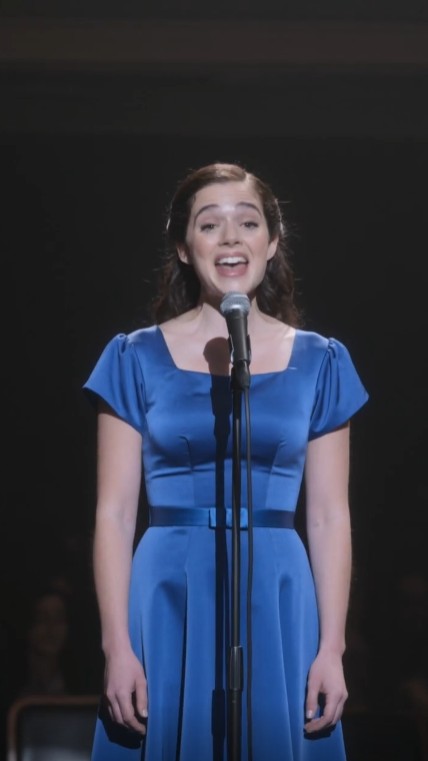
The young woman was halfway through her song when she suddenly stopped.
Hundreds of people went silent.
Because from somewhere behind the stage…
Someone had finished the melody for her.
Four quiet notes.
The singer stared toward the curtain.
“Who did that?”
Nobody answered.
She sang the melody again.
Four notes.
And once again…
Someone backstage completed it perfectly.
The singer put down her microphone.
“I need to know who’s doing that.”
A staff member looked behind the curtain.
Then returned with an elderly maintenance worker.
He looked terrified by all the attention.
“I’m sorry. I shouldn’t have interrupted.”
The singer stared at him.
“Where did you learn those four notes?”
The man shrugged.
“I’ve known them since I was a boy.”
She shook her head.
“That’s impossible.”
The audience went completely quiet.
“My mother taught me that melody.”
The worker smiled faintly.
“Then your mother remembered it.”
The singer froze.
“What does that mean?”
He looked at her.
“Because she didn’t write it.”
She stepped closer.
“Who did?”
The elderly man looked toward the piano.
Then played the four notes again.
The singer’s eyes filled with tears.
He added four more notes she’d never heard before.
She whispered:
“There’s more?”
The man nodded.
“There always was.”
His name was Henry Walker.
He was seventy-nine years old.
For twenty-seven years, he’d worked behind the scenes at the Riverside Performing Arts Center.
He repaired broken chairs.
Replaced lightbulbs.
Maintained the old heating system.
And occasionally tuned the upright piano in the rehearsal room when the professional technician was unavailable.
Most performers never learned his name.
They simply called him Mr. Walker.
But the young singer, Emily Carter, couldn’t stop staring at him.
Because the eight notes he’d just played were unlike anything she’d ever heard.
And yet…
Somehow, they felt familiar.
“Play it again,” she whispered.
Henry hesitated.
“Miss, I really shouldn’t be onstage.”
“Please.”
He looked toward the stage manager.
The woman nodded.
Henry sat at the grand piano.
His hands trembled.
Then he played.
Four notes.
A pause.
Four more.
The melody was simple.
Almost painfully simple.
But when the second half arrived, the first half suddenly made sense.
Emily covered her mouth.
“My mother used to sing that every night.”
Henry stopped playing.
“What’s your mother’s name?”
“Anna.”
Henry’s fingers remained on the keys.
“Anna what?”
“Anna Miller. Carter is my father’s surname.”
The elderly man closed his eyes.
Then whispered:
“Anna Rose Miller?”
Emily stared.
“Yes.”
Henry stood so suddenly that the piano bench moved.
“Oh, my God.”
Emily took a step toward him.
“How do you know her?”
Henry couldn’t answer.
Not immediately.
Instead, he reached into the pocket of his work jacket.
He removed a small folded piece of paper.
Its edges were yellow.
The corners had been repaired with transparent tape.
He carefully opened it.
Emily looked down.
It was an old piece of handwritten sheet music.
Eight notes.
Four on the first line.
Four on the second.
Beneath the first line was written:
ANNA
Beneath the second:
GRACE
Emily stared.
“Who is Grace?”
Henry’s face changed.
For several seconds, he looked as though he’d forgotten where he was.
Then he whispered:
“My other daughter.”
The entire theater seemed to hold its breath.
Emily looked at him.
“Your daughter?”
Henry nodded.
“And Anna…”
He swallowed.
“Anna was my first.”
Emily stepped backward.
“No.”
Henry didn’t move.
“My name is Henry Miller. I changed it to Walker after I remarried.”
Emily shook her head.
“My grandfather’s name was Henry Miller.”
“I know.”
“My mother told me he was…”
She stopped.
Henry looked at her.
“Gone?”
Emily nodded.
He lowered his eyes.
“I suppose I was.”
Then Emily asked the question that had been forming in her mind since the first four notes.
“Are you my grandfather?”
Henry looked at her for a long moment.
Then said:
“I think I am.”
Nobody applauded.
Nobody cheered.
Even the stage manager remained still.
Because this was no longer a concert.
It was a family history opening in front of hundreds of strangers.
Emily sat beside Henry at the piano.
“Tell me about the song.”
Henry looked at the sheet music.
And began.
Forty-seven years earlier, he lived in a small house on Willow Street.
He worked as a music teacher.
His wife, Margaret, taught elementary school.
They had two daughters.
Anna was eight.
Grace was five.
Anna loved singing.
Grace loved following her older sister everywhere.
If Anna climbed a tree, Grace tried.
If Anna wore a red dress, Grace wanted one.
If Anna learned a song, Grace insisted on learning it too.
But Grace had one complaint.
Anna always sang first.
One evening, while Henry was practicing piano, Grace climbed onto the bench.
“Daddy?”
“Yes?”
“Can you make me a song?”
Henry smiled.
“You already know plenty of songs.”
“No.”
She pointed toward the kitchen.
“Anna has a song.”
“What song?”
“The one Mommy sings when she brushes her hair.”
Henry laughed.
“That’s not Anna’s song.”
“It is when she sings it.”
Grace folded her arms.
“I want my own.”
Henry thought for a moment.
Then played four notes.
“That’s Anna’s.”
Grace frowned.
“Again?”
“Wait.”
He played four more.
“And that’s yours.”
Grace listened.
Then smiled.
“Mine sounds better.”
Henry laughed.
“Of course it does.”
Anna came running into the room.
“What sounds better?”
“MY SONG!”
“That’s not fair!”
Henry raised both hands.
“Girls.”
Neither listened.
So he explained.
Anna would sing the first four notes.
Grace would answer with the second four.
Neither part was meant to stand alone.
Together, they formed one melody.
Anna practiced.
Grace practiced.
At first, they kept interrupting each other.
Then, after several evenings, they got it right.
Henry remembered their mother standing in the doorway.
Margaret smiled.
“What’s that called?”
Anna answered:
“My song.”
Grace shouted:
“No! OUR song!”
Henry laughed.
“Then that’s what we’ll call it.”
Our Song.
For years, the family sang it everywhere.
In the kitchen.
In the car.
At bedtime.
Sometimes Henry played the piano while the girls sang.
Sometimes Anna hummed her part from one room and Grace answered from another.
If Anna was outside in the garden, Grace would stand at the window and sing the second half.
If Grace was hiding during a game, Anna would sing the first four notes.
Grace would usually give away her hiding place by answering.
It became their private little language.
Then, when Grace was eleven, she became seriously ill.
Henry stopped.
Emily reached for his hand.
He continued.
Grace spent months receiving treatment.
There were good weeks.
Bad weeks.
And long stretches when nobody knew what would happen next.
Anna was fourteen.
Old enough to understand that something was wrong.
Young enough to believe her little sister would always come home.
One evening, Anna visited Grace in the hospital.
Grace was tired.
She didn’t want to talk much.
So Anna sat beside her and hummed the first four notes.
Grace smiled.
Then answered.
Four notes.
Very quietly.
Anna laughed.
“You’re supposed to sing louder.”
Grace whispered:
“You’re supposed to wait for me.”
Anna promised she would.
Three weeks later, Grace died.
Henry stopped speaking.
Emily held his hand tighter.
For a long time, the only sound in the theater was the faint hum of the ventilation system.
Finally, Henry continued.
“Your mother never sang the second half again.”
Emily looked at the sheet music.
“Why?”
“Because she said it belonged to Grace.”
Henry explained.
After the funeral, the piano remained untouched.
Margaret couldn’t bear hearing it.
Henry couldn’t bear the silence.
Anna was somewhere between them.
She still hummed her four notes.
Sometimes while washing dishes.
Sometimes while doing homework.
Sometimes without realizing it.
But whenever Henry tried to finish the melody…
Anna left the room.
One evening, he asked her why.
She answered:
“That’s Grace’s part.”
Henry said:
“I know.”
“Then don’t sing it.”
He tried explaining that music didn’t disappear when someone died.
Anna started crying.
“You don’t understand.”
Henry stopped.
Because she was right about one thing.
He didn’t understand exactly what losing a sister felt like.
Just as Anna couldn’t fully understand what losing a daughter felt like.
They were grieving the same person.
But not in the same way.
Then Margaret became ill.
She died four years after Grace.
Anna was eighteen.
Henry was forty-six.
The house on Willow Street became unbearable for both of them.
Henry wanted to sell it.
Anna refused.
“Mom lived here.”
“I know.”
“Grace lived here.”
“I know.”
“Then how can you sell it?”
Henry didn’t have an answer she wanted to hear.
He had medical bills.
A mortgage.
And a house filled with memories he could barely walk through.
Anna believed he was trying to erase their family.
Henry believed Anna was asking him to live forever inside the worst years of his life.
They argued.
Then they stopped speaking.
The house was sold.
Anna moved in with her aunt.
Henry took a job in another city.
For a while, they wrote letters.
Then fewer.
Then none.
Henry eventually remarried.
His second wife, Evelyn Walker, was a widow who understood that loving someone new didn’t erase the people who came before.
Henry took her surname when they married.
They lived quietly.
Evelyn died twelve years later.
Henry never married again.
Eventually, he moved back to Riverside.
He found work at the performing arts center.
And stayed.
Emily stared at him.
“My mother told me her father was a musician.”
Henry smiled.
“Not a very successful one.”
“She said he could play anything.”
“She was exaggerating.”
“She said he made her a song.”
Henry looked down.
“She remembered that?”
Emily nodded.
“But she only ever sang four notes.”
Henry touched the old sheet music.
“Now you know why.”
Emily was quiet.
Then she asked:
“Did you ever try to find her?”
Henry nodded.
“Many times.”
He’d written letters.
Some were returned.
Some received no answer.
He’d called the last number he had.
Disconnected.
Years later, he found Anna’s wedding announcement in an old newspaper.
He learned she’d married a man named Daniel Carter.
He wrote to the address listed for her parents.
It was outdated.
Then he heard she had a daughter.
Emily.
He didn’t know where she lived.
He didn’t know whether Anna wanted him to find her.
Eventually, he stopped searching actively.
Not because he’d stopped caring.
Because he couldn’t decide whether another attempt would reopen wounds Anna had worked hard to close.
Emily looked at him.
“Mom never told me you were alive.”
Henry didn’t defend her.
“She had her reasons.”
“Were they good reasons?”
“I don’t know.”
He looked toward the audience.
“I know I gave her reasons to be angry.”
Emily studied his face.
“Did you know I was performing here tonight?”
Henry shook his head.
“No.”
“Then why were you backstage?”
“That’s where I work.”
“You didn’t see my name on the program?”
“I did.”
“But you didn’t know?”
“Emily Carter is a common enough name.”
He smiled faintly.
“And your mother was Anna Miller when I knew her.”
Emily looked toward the sheet music again.
“So when I sang those notes…”
Henry nodded.
“I thought I was imagining it.”
He’d been checking a loose backstage door when he heard the melody.
Four notes.
The exact rhythm.
The tiny pause at the end.
He’d heard those notes thousands of times.
But not for decades.
Before he realized what he was doing, he hummed the answer.
Grace’s four notes.
Then Emily sang again.
And he answered again.
“I wasn’t trying to interrupt your concert,” he said.
“I just…”
He looked at the piano.
“For a moment, I was back in our kitchen.”
Emily started crying.
Henry reached for a tissue from his pocket.
It was crumpled.
He apologized.
Emily laughed through her tears.
“You really are somebody’s grandfather.”
Henry smiled.
Then Emily asked:
“Can I call my mother?”
Henry’s expression changed.
“You don’t have to do that.”
“I know.”
“She might not want to speak to me.”
“I know.”
“Emily—”
She touched his hand.
“I’m not going to surprise her in front of an audience.”
That mattered.
Emily turned to the stage manager.
She explained that she needed to pause the concert.
The audience was informed there would be a short intermission.
Henry was guided backstage.
Emily followed.
Then she called Anna.
Her mother answered immediately.
“Sweetheart! Is the concert over?”
“No.”
“What’s wrong?”
“Nothing’s wrong.”
“Emily?”
Emily took a breath.
“Mom, I met someone.”
Anna laughed.
“During your concert?”
“Yes.”
“Who?”
Emily looked toward Henry.
“His name is Henry Walker.”
Silence.
Then Anna asked:
“What did you say?”
“Henry Walker.”
“Where is he?”
“Here.”
Another silence.
Emily continued.
“He played the second half of your song.”
Anna made a small sound.
Not quite a word.
Emily asked:
“Mom?”
Then Anna whispered:
“Dad?”
Henry closed his eyes.
Emily put the call on speaker only after asking both of them.
For several seconds, nobody spoke.
Then Henry said:
“Hello, Annie.”
Anna started crying.
Emily had never heard anyone call her mother Annie.
Not once.
Henry’s voice shook.
“I didn’t know she was your daughter.”
Anna answered:
“I know.”
“I didn’t mean to interrupt.”
“I know.”
Then Henry said:
“I still have the music.”
Anna stopped crying long enough to ask:
“What music?”
“Our Song.”
Henry looked at the paper.
“The original.”
Anna whispered:
“You kept it?”
“For forty-seven years.”
Emily watched him.
Then Anna said something that changed the story again.
“I have the other copy.”
Henry froze.
“What?”
Anna explained.
When the house on Willow Street was sold, she secretly took the old family songbook.
Inside was a handwritten copy of the melody.
Eight notes.
She’d kept it through every move.
Every marriage.
Every difficult year.
But she’d never played the second half.
Henry asked:
“Why?”
Anna’s voice broke.
“Because Grace wasn’t there to answer.”
Henry covered his face.
For decades, he had believed Anna hated the melody.
She didn’t.
She loved it too much.
Then Anna said:
“Dad, I need to tell you something.”
Henry waited.
“I wasn’t angry because you sold the house.”
He looked confused.
“You said—”
“I know what I said.”
She paused.
“I was angry because you packed Grace’s room before I was ready.”
Henry closed his eyes.
He remembered.
After Margaret died, he had begun clearing the house.
He packed Grace’s books.
Her dresses.
Her drawings.
Her little wooden music box.
He thought putting those things away would make the move easier.
Anna came home from school and found the room empty.
She screamed at him.
He told her they couldn’t keep everything forever.
She never forgave the sentence.
Henry whispered:
“I thought I was helping.”
“I know that now.”
“I should’ve asked.”
“Yes.”
“I’m sorry.”
Anna began crying again.
Then she said:
“I should’ve told you why I was so angry.”
Henry looked toward the wall.
“We both should’ve done a lot of things.”
Anna gave a small laugh.
“That’s true.”
Neither pretended one phone call repaired decades of separation.
There were questions.
Hurt feelings.
Missing years.
And a little girl named Grace whose death had changed both of their lives.
But for the first time in decades, they were talking about her.
Not avoiding her.
Not protecting each other from her memory.
Talking.
Emily finally spoke.
“Mom?”
“Yes?”
“Will you come here?”
Anna hesitated.
“Tonight?”
“Yes.”
“Emily, it’s nearly nine.”
“I know.”
“I’m two hours away.”
“I know.”
Then Emily looked toward Henry.
“Grandpa will be here tomorrow.”
Henry stared at her.
It was the first time she’d called him that.
Grandpa.
He lowered his head.
Anna heard it too.
She whispered:
“I’ll come in the morning.”
The following day, Anna Carter entered the Riverside Performing Arts Center.
She was fifty-nine.
Her hair was beginning to gray.
She carried a small blue folder.
Henry waited in the rehearsal room.
When Anna opened the door, he stood.
For a moment, neither moved.
Then Anna said:
“You got old.”
Henry laughed.
“So did you.”
She smiled.
“You’re not supposed to say that to your daughter.”
“I’ve been out of practice.”
Anna stepped toward him.
Then stopped.
Henry waited.
She looked at his hands.
The same long fingers.
The same slightly crooked little finger he’d broken as a young man.
Then she hugged him.
Henry began crying.
Anna did too.
Emily quietly stepped outside.
She left them alone.
They talked for nearly four hours.
About Grace.
About Margaret.
About the house.
About Henry’s second wife.
About Anna’s marriage.
About Emily’s childhood.
They didn’t agree about everything.
They didn’t need to.
At one point, Anna opened her blue folder.
Inside was the old songbook.
She turned to a page near the middle.
There it was.
OUR SONG
Eight notes.
Underneath, in Henry’s younger handwriting:
ANNA — FIRST FOUR
GRACE — LAST FOUR
And beneath that, written in a child’s uneven pencil:
DADDY PLAYS BOTH.
Henry stared.
“Grace wrote that.”
Anna nodded.
“She was tired of you making us practice.”
He laughed.
“She was always negotiating.”
Anna touched the page.
“I used to think if I sang her notes, I’d be taking something that belonged to her.”
Henry nodded.
“I understand.”
“But then I heard Emily sing the first half last night.”
“And you heard me answer.”
Anna smiled through tears.
“For the first time in forty-seven years, I heard the whole thing.”
Henry sat at the piano.
“Do you want to try?”
Anna looked frightened.
“I haven’t sung it.”
“I know.”
“What if I can’t?”
“Then we’ll sit here.”
She laughed.
“You make everything sound easy.”
“Nothing about this has been easy.”
Anna sat beside him.
Henry placed the music on the stand.
Then played the opening.
Four notes.
Anna sang softly.
Her voice trembled.
Henry waited.
Then he played the next four.
Anna covered her mouth.
“Again.”
He played it again.
She sang the first half.
He played the second.
Then Anna said:
“Stop.”
Henry immediately lifted his hands.
“What’s wrong?”
“Nothing.”
She wiped her eyes.
“I want to try Grace’s part.”
Henry looked at her.
“Are you sure?”
Anna nodded.
He played the first four notes.
Anna listened.
Then, for the first time since she was fourteen…
she sang the second half.
Four notes.
Quiet.
Unsteady.
Beautiful.
Henry began crying.
Anna laughed.
“Dad, you’re supposed to keep playing.”
“I know.”
“Then play.”
He did.
Emily, standing outside the rehearsal room, heard the melody through the door.
This time it didn’t stop halfway.
She waited until the music ended before entering.
Anna looked at her daughter.
“Come here.”
Emily approached.
Anna took her hand.
“I should’ve told you about Grace.”
Emily nodded.
“I would’ve liked to know her.”
Anna smiled sadly.
“You would’ve loved her.”
Then Henry opened the old songbook to a different page.
A photograph was tucked inside.
Two little girls sat at a piano.
One with dark hair.
One with light brown curls.
The younger girl was laughing.
The older one looked annoyed.
Henry pointed.
“That’s Anna.”
Emily laughed.
“Mom looks furious.”
“She was.”
“Why?”
“Grace kept playing the wrong notes on purpose.”
Anna smiled.
“She knew it annoyed me.”
Henry pointed toward the younger girl.
“And that’s Grace.”
Emily touched the photograph.
Her aunt.
A person she’d never known existed.
A little girl who had once demanded her own four notes because she didn’t want her big sister getting all the songs.
Emily looked at her grandfather.
“Can I learn her part?”
Henry smiled.
“Of course.”
Over the following months, the family rebuilt their relationship slowly.
Henry met Emily’s husband.
He met her little boy, Noah.
He visited Anna’s home.
Anna visited his.
They argued occasionally.
Sometimes about old things.
Sometimes about ordinary things.
But they stopped disappearing from each other’s lives whenever a conversation became difficult.
And Emily kept singing.
One year after the concert, she returned to Riverside for another performance.
This time Henry was seated in the audience.
Not backstage.
Not in a maintenance uniform.
He wore a dark suit Anna had helped him choose.
She sat beside him.
Emily walked onto the stage.
The audience applauded.
Then she sat at the piano.
“I want to share a song with you,” she said.
She explained that her grandfather had written it for his two daughters many years earlier.
Anna sang the first four notes.
Grace answered with the next four.
After Grace died, the family stopped singing the complete melody.
For decades, Anna sang only her half.
Until one night, during a concert in that very building, Henry heard his granddaughter singing those four notes.
And answered.
Emily looked toward the audience.
“Last year, I thought I was discovering a song.”
She smiled.
“I was actually discovering part of my family.”
Then she began playing.
Four notes.
A pause.
Four more.
She repeated the melody.
Then expanded it into a longer piece.
Not because the original needed improving.
But because she wanted to give it room to breathe.
When she finished, Henry was crying.
Anna held his hand.
The audience stood.
But Emily wasn’t watching the audience.
She was watching her mother.
Anna had her eyes closed.
And for the first time in decades, she wasn’t stopping at the fourth note.
She was quietly singing all eight.
Years passed.
Henry eventually retired from the performing arts center.
Emily continued visiting him.
Sometimes they played piano.
Sometimes they talked.
Sometimes they simply sat together.
When Noah turned seven, Henry taught him the melody.
The boy learned the first four notes quickly.
Then Henry showed him the second half.
Noah frowned.
“Why are there two parts?”
Henry smiled.
“Because I wrote it for two sisters.”
“Did they like each other?”
“Most days.”
“Did they fight?”
“Constantly.”
Noah laughed.
“Like Mom and Aunt Rachel?”
Henry looked confused.
“Who’s Aunt Rachel?”
“My mom’s best friend.”
Henry laughed.
“Close enough.”
Then Noah asked:
“Where’s the other sister now?”
Henry looked toward the photograph on the piano.
“Grace died when she was little.”
Noah became quiet.
“That’s sad.”
“Yes.”
“Does playing her song make you sad?”
Henry considered the question.
“Sometimes.”
“Then why do you play it?”
Henry smiled.
“Because it makes me remember her when she was happy too.”
Noah thought about that.
Then played all eight notes.
Henry listened.
And smiled.
When Henry died several years later, Anna and Emily were beside him.
Among his belongings, they found the original piece of sheet music.
The one he’d carried folded in his work jacket for years.
On the back, in handwriting that had grown shaky with age, Henry had written:
I thought the second half was the part we’d lost.
It wasn’t.
We lost the years we could’ve spent singing it together.
Then underneath:
I’m glad we found some of them again.
Anna framed the music.
She hung it beside the photograph of herself and Grace.
And every year on Grace’s birthday, the family gathered at Anna’s house.
Not for a sad ceremony.
Not to pretend the past had been repaired perfectly.
But to remember.
They ate Grace’s favorite cake.
They looked at photographs.
They told stories.
Then somebody sat at the piano.
Usually Emily.
Sometimes Noah.
And they played eight notes.
Four for Anna.
Four for Grace.
Together.
People who heard the story later often described it as a miracle.
A singer performs four notes.
A stranger answers from backstage.
The stranger turns out to be her grandfather.
And a family reunites.
But Emily never called it a miracle.
She called it a coincidence that gave them a chance.
Her grandfather happened to work in the theater where she performed.
He happened to hear a melody he’d written decades earlier.
He recognized its unusual rhythm.
He finished it without thinking.
And Emily happened to stop and ask who had played it.
That was all.
The rest required people to make choices.
To answer a phone call.
To travel two hours.
To admit mistakes.
To listen.
To forgive some things.
And to accept that other things would always hurt.
Because the second half of the melody had never truly been missing.
Henry remembered it.
Anna had kept it written in the old songbook.
They’d simply stopped playing it together.
For forty-seven years, Anna sang four notes and left a space where her sister’s answer should have been.
Then one evening, her daughter sang those same four notes on a stage.
And an elderly maintenance worker behind the curtain answered with the melody he’d once written for two little girls.
He didn’t bring Grace back.
He couldn’t return the lost years.
But he gave Anna something she hadn’t heard since childhood.
The sound of her sister’s part.
And when Emily finally asked why her mother had spent decades singing only half the song, Anna gave her an answer she would remember for the rest of her life.
“Because I thought finishing it meant singing without her.”
Then Anna looked at the photograph of Grace.
And smiled.
“I finally understand that singing her part is one way of remembering she was here.”