
Everyone got off…
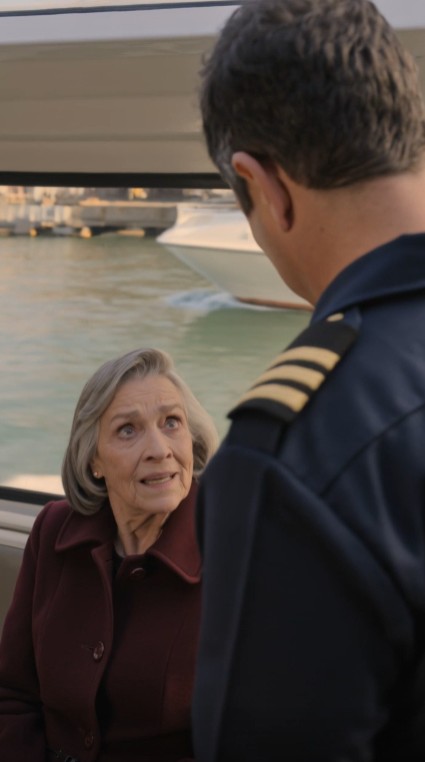
Except one elderly woman.
She stayed in her seat.
The crew member approached her.
“Ma’am, this is the last stop.”
“I know.”
“Are you waiting for someone?”
She looked through the window.
“Yes.”
The crew member checked the empty terminal.
Nobody was there.
Five minutes passed.
Then ten.
The captain finally came down.
“Ma’am, we have to prepare for the return trip.”
She quietly asked:
“Is Captain Daniel still working here?”
The captain froze.
“My name is Daniel.”
The woman slowly looked up.
For several seconds…
She just stared at him.
Then she asked:
“How old are you?”
“Forty-eight.”
Her eyes filled with tears.
The crew member looked between them.
“Do you two know each other?”
Daniel shook his head.
“I’ve never seen her before.”
The woman smiled.
“No.”
“But I saw you.”
Daniel frowned.
“When?”
She pointed toward the water.
“The first time you were ever on this ferry.”
Daniel laughed nervously.
“I was a baby the first time my mother brought me here.”
The woman’s smile disappeared.
“I know.”
Daniel stopped moving.
“How could you possibly know that?”
She leaned closer.
“Because your mother wasn’t the person holding you when you came aboard.”
The captain stared at her.
“Then who was?”
The woman looked toward the old terminal…
And whispered:
“Me.”
Daniel Carter didn’t answer.
For forty-eight years, he’d known the same story about his first ferry ride.
His mother, Rachel Carter, had brought him across the bay when he was six weeks old.
Daniel’s father worked on the opposite shore.
The family had recently moved.
Rachel didn’t drive at the time, so the ferry became part of their routine.
There were photographs of Daniel on the boat as a baby.
His mother had even kept an old ferry ticket inside his childhood photo album.
Daniel eventually started working for the same ferry company at twenty-two.
Deckhand.
First officer.
Then captain.
He had spent more than half his life crossing the same stretch of water.
And now an elderly stranger was claiming she’d been holding him during his first trip.
Daniel pulled out the seat across from her.
“What’s your name?”
“Margaret Wilson.”
It meant nothing to him.
“Did you know my mother?”
Margaret looked toward the terminal.
“For one day.”
Daniel frowned.
“One day?”
“Actually, less than that.”
The crew member, Emily, remained nearby.
Daniel asked:
“Is my mother the reason you’re here?”
Margaret nodded.
“Is she still alive?”
“Yes.”
“How is she?”
“Seventy-two and still telling me how to run my life.”
Margaret smiled.
“That sounds about right.”
Daniel stared at her.
“You said you knew her for less than a day.”
“I did.”
“Then how do you know what she was like?”
“Because she spent almost four hours arguing with me.”
Daniel almost laughed.
“That definitely sounds like her.”
Margaret reached into her handbag.
She removed an old envelope.
The paper was yellowed.
On the front, written in faded blue ink, were two words:
DANIEL CARTER
Daniel’s smile disappeared.
“That’s my mother’s handwriting.”
Margaret nodded.
“She gave it to me forty-eight years ago.”
Daniel reached for the envelope.
Margaret didn’t hand it over yet.
“Before you read this, I need to explain something.”
“Explain what?”
“Why I was holding you.”
Daniel sat back.
Margaret began.
Forty-eight years earlier, she had been twenty-nine years old.
She worked as a nurse’s aide at a small hospital on the mainland.
She was married to a mechanic named Henry Wilson.
They had been trying to have a child for years.
Eventually Margaret became pregnant.
But late in the pregnancy, complications developed.
The baby didn’t survive.
Margaret stopped working for several months.
She barely left her house.
Henry tried to help.
Her family tried.
Nothing seemed to reach her.
Then, six weeks later, Margaret decided to return to work.
Her first shift back was on a Monday.
She took the early ferry across the bay.
“I almost didn’t get on,” she told Daniel.
“Why?”
“There were babies everywhere.”
Daniel looked confused.
“On the ferry?”
“It felt that way.”
In reality, there were two.
But to Margaret, two felt like twenty.
She chose a seat near the back and looked out the window.
Then she heard someone crying.
Not a baby.
A young woman.
Rachel Carter.
Daniel’s mother.
Rachel was twenty-four.
She stood near the terminal entrance holding a tiny baby in one arm and a suitcase in the other.
Daniel.
Margaret noticed Rachel was struggling.
So did several other passengers.
But Rachel kept insisting she was fine.
Margaret walked over.
“Can I carry the suitcase?”
Rachel shook her head.
“I’ve got it.”
“You clearly don’t.”
“I do.”
Margaret smiled.
“You haven’t met me yet, so you don’t know how stubborn I am.”
Rachel looked at her.
“I can already tell.”
Margaret carried the suitcase.
They boarded together.
Rachel sat beside her.
For the first few minutes, they barely spoke.
Then Daniel started crying.
Rachel tried feeding him.
Nothing.
Checked his blanket.
Nothing.
Walked him along the aisle.
Still crying.
Rachel looked exhausted.
“When did you sleep last?” Margaret asked.
Rachel gave her a look.
“What year is it?”
Margaret laughed.
Then Rachel did too.
For the first time since losing her baby, Margaret laughed with another mother.
Daniel eventually settled.
Rachel looked at Margaret.
“You have children?”
Margaret froze.
She could have lied.
Instead:
“I was supposed to.”
Rachel immediately understood.
“I’m sorry.”
Margaret nodded.
Neither spoke for a while.
Then Rachel did something Margaret never expected.
She asked:
“Would you like to hold him?”
Margaret stared at her.
“No.”
Rachel nodded.
“Okay.”
“I mean… I don’t think I can.”
“That’s okay.”
Daniel began fussing again.
Rachel stood.
The ferry rocked slightly.
She reached for the suitcase.
Margaret instinctively put out her hands.
“Give him to me.”
Rachel paused.
“Are you sure?”
“No.”
Rachel smiled.
“That makes two of us.”
Then she placed six-week-old Daniel into Margaret’s arms.
Margaret remembered everything about that moment.
His blue blanket.
His tiny fist pressed against his cheek.
The way his hair stood up at the back.
He stopped crying.
Margaret didn’t.
Daniel looked at her now.
“You cried?”
“For most of the crossing.”
“What did Mom do?”
“Pretended not to notice.”
Daniel smiled.
“She would’ve done that.”
For nearly forty minutes, Margaret held him.
She didn’t suddenly feel healed.
She didn’t believe holding someone else’s child replaced the baby she’d lost.
Nothing could.
But for the first time in weeks, she felt something other than grief.
She felt useful.
When the ferry arrived, Rachel asked whether Margaret was all right.
Margaret answered:
“I think I will be.”
Then something unexpected happened.
A problem at the terminal delayed connecting transportation.
Rachel’s husband wasn’t there yet.
Margaret’s bus had also been delayed.
So the two women sat together.
One hour became two.
They drank terrible coffee.
Rachel changed Daniel on a bench.
Margaret helped with the suitcase.
They talked.
Not about anything extraordinary.
Marriage.
Work.
Money.
Babies.
Fear.
Margaret told Rachel she didn’t know whether she could return to the hospital.
Every corridor reminded her of what she’d lost.
Rachel listened.
Then said:
“You don’t have to decide the rest of your life today.”
Margaret remembered the sentence for forty-eight years.
Daniel looked at her.
“My mother said that?”
“Yes.”
“That sounds surprisingly sensible.”
Margaret laughed.
“She also spent twenty minutes complaining about your father being late.”
“That sounds more like her.”
Eventually Rachel’s husband, Michael, arrived.
He apologized repeatedly.
His truck had broken down.
Rachel handed Daniel to him.
Then she turned back toward Margaret.
She wrote something on a piece of paper.
Her address.
And her name.
“If you ever need coffee…”
Margaret took it.
Then Rachel hesitated.
She pulled another envelope from her bag.
“I was going to put this in Daniel’s baby book.”
Margaret frowned.
“Then why are you giving it to me?”
“Because I think maybe you should keep it for a while.”
Inside was a short letter Rachel had written to her son after his birth.
Margaret refused.
“I can’t take that.”
Rachel insisted.
“Bring it back someday.”
“When?”
“When you’re ready.”
“That makes no sense.”
“It doesn’t have to.”
Margaret finally accepted it.
They promised to write.
For a while, they did.
Three letters from Rachel.
Two from Margaret.
Then Margaret and Henry moved.
Rachel’s family moved too.
A letter came back undeliverable.
Addresses were lost.
Years passed.
The envelope remained with Margaret.
Daniel looked at it.
“You’ve had this for forty-eight years?”
“Yes.”
“Why didn’t you open it?”
“Because it wasn’t mine.”
Margaret finally handed it to him.
Daniel carefully opened the envelope.
Inside was a single sheet of paper.
The ink had faded.
At the top:
For Daniel — six weeks old
Daniel began reading.
You won’t remember today.
Your first ferry ride was loud, windy, and you cried almost the entire time.
Daniel smiled.
Then continued.
A woman named Margaret helped me with your suitcase.
His eyes moved to Margaret.
She looked down.
Daniel read on.
She held you when my arms were tired.
Someday I hope you understand that there will be moments when someone you barely know helps carry something for you.
Let them.
And when it’s your turn, carry something for someone else.
Daniel stopped.
The ferry terminal was completely quiet now.
He finished the letter.
You slept in Margaret’s arms almost the entire way across.
I don’t think she knows it, but I think she needed you for those forty minutes almost as much as I needed her.
Love, Mom
Daniel folded the letter carefully.
Margaret wiped her eyes.
“She was wrong about one thing.”
“What?”
“I knew.”
Daniel looked at her.
“I knew I needed those forty minutes.”
Emily, the crew member, quietly stepped away.
Daniel asked:
“Why now?”
Margaret looked toward the water.
“Because Henry died.”
Daniel lowered his head.
“I’m sorry.”
“Thank you.”
Henry had died seven months earlier after fifty-two years of marriage.
While sorting through their home, Margaret found the envelope again.
For decades she’d kept it inside a small wooden box.
She had occasionally searched for Rachel.
But the name Rachel Carter wasn’t unusual.
She had no idea where the family had gone.
Then she found one of Rachel’s old letters.
It mentioned something Margaret had forgotten.
Michael says Daniel will probably grow up and captain this ferry because he already sleeps better on boats than at home.
Daniel stared.
“My father wrote that?”
“Your mother.”
“Dad always joked that I was destined to work here.”
Margaret smiled.
“That gave me somewhere to start.”
She searched the ferry company’s public information.
There was a Captain Daniel Carter.
She found a photograph.
The age looked right.
So Margaret bought a ticket.
She didn’t call first.
“Why?”
“I wasn’t sure it was you.”
“You could’ve asked.”
“I did.”
“For three days?”
Margaret looked embarrassed.
Daniel stared.
“You’ve been riding this ferry for three days?”
“Yes.”
“Why didn’t you ask someone directly?”
“I asked whether Captain Daniel was working.”
“And?”
“Different shifts. Different crews. Yesterday someone told me you were off.”
Daniel laughed.
“So you just kept coming back?”
“I’ve waited forty-eight years. Three days wasn’t going to hurt me.”
Daniel looked at the letter again.
Then he asked:
“Would you like to meet her?”
Margaret stopped smiling.
“Your mother?”
“Yes.”
“I don’t know.”
“You came all this way.”
“To return the letter.”
“Margaret.”
She looked at him.
“You asked whether Captain Daniel still worked here.”
“Yes.”
“You didn’t come for the envelope.”
Margaret sighed.
“No.”
“What did you come for?”
She looked through the window.
“To find out whether she remembered me.”
Daniel smiled.
“She will.”
“You can’t know that.”
“No.”
He stood.
“But we can ask.”
Daniel called his mother.
Rachel answered on the fourth ring.
“What?”
“Hello to you too.”
“Daniel, I’m making dinner.”
“I need to ask you something.”
“If it’s about Sunday, I already told you—”
“Do you remember a woman named Margaret Wilson?”
Silence.
Daniel looked at Margaret.
Her eyes widened.
“Mom?”
Rachel finally spoke.
“Where did you hear that name?”
Daniel smiled.
“She’s sitting on my ferry.”
Another silence.
Then:
“What?”
“She came looking for me.”
Rachel didn’t say anything for several seconds.
Then Daniel heard her chair move.
“Margaret?”
“Yes.”
“Margaret Wilson?”
“Yes.”
“Put her on.”
Margaret immediately shook her head.
Daniel held out the phone.
“She wants you.”
“I can’t.”
“You crossed the bay three days in a row.”
“That was easier.”
Daniel laughed.
He placed the phone in her hand.
Margaret lifted it slowly.
“Hello?”
Daniel heard his mother’s voice from several feet away.
“Margaret?”
Margaret closed her eyes.
“Hello, Rachel.”
Then neither woman spoke.
Finally Rachel said:
“You took your time bringing my letter back.”
Margaret laughed through tears.
“You told me to bring it when I was ready.”
“Forty-eight years?”
“I like to be certain.”
Rachel laughed.
And just like that, two women who had known each other for less than four hours began talking again.
Rachel remembered Margaret.
Not every detail.
But enough.
The blue coat.
The hospital job.
Henry.
The terrible ferry coffee.
And the fact that Margaret had held Daniel almost the entire crossing.
Daniel listened.
Then interrupted.
“Mom.”
“What?”
“You told me my whole life that you carried me onto this ferry.”
“I did.”
“Margaret says she did.”
Rachel paused.
“Well, technically, she carried you onto the boat.”
Daniel laughed.
“You left out a fairly important character.”
“You were six weeks old. I didn’t think you’d fact-check me.”
Margaret laughed so hard she had to sit down.
Daniel invited her to dinner.
Margaret resisted.
Rachel didn’t allow it.
“Give Daniel your address.”
“Why?”
“Because if you don’t come, I’ll have him bring you.”
Daniel said:
“She absolutely will.”
That evening, Margaret sat at Rachel Carter’s kitchen table.
For the first time in forty-eight years.
Rachel was seventy-two now.
Margaret was seventy-seven.
They stared at each other for several seconds.
Then Rachel hugged her.
Neither said anything.
Daniel stood near the doorway.
His father Michael had died nine years earlier.
Henry was gone too.
Four people had been connected by one ferry crossing.
Now only the two women remained.
Rachel pulled away.
“You still have the same eyes.”
Margaret smiled.
“You don’t.”
“Excuse me?”
“You need glasses.”
Rachel laughed.
Within minutes, they were arguing again.
Daniel finally understood what Margaret meant when she said they’d spent four hours arguing the first time.
During dinner, Rachel brought out an old photo album.
There it was.
Daniel’s first ferry ticket.
And beside it, a photograph he’d never paid attention to.
Rachel stood outside the terminal holding a suitcase.
Michael was beside her.
In the background, partly turned away from the camera, stood another woman.
Margaret.
She was holding a baby wrapped in blue.
Daniel stared.
“That’s me?”
Rachel nodded.
“And that’s Margaret?”
“Yes.”
Margaret touched the photograph.
“I didn’t know this existed.”
Michael had taken it shortly after arriving.
Nobody had thought much about the stranger in the background.
Rachel had always known who she was.
Daniel had simply never asked.
He looked at his mother.
“Why didn’t you tell me?”
Rachel shrugged.
“I suppose I thought I had.”
“You definitely didn’t.”
“I told you about the woman who helped me.”
“You said a woman helped with my suitcase.”
Rachel frowned.
“Well, she did that too.”
Margaret smiled.
“Your mother remembers stories selectively.”
“I’ve noticed.”
Then Rachel became serious.
“I did try to find you.”
Margaret looked up.
“When?”
“A few years later.”
Rachel had sent a Christmas card to Margaret’s old address.
It was returned.
She asked around.
Nobody knew where the Wilsons had moved.
Life continued.
Rachel kept Margaret’s name in Daniel’s baby book.
Then the story gradually became one of hundreds of small family memories that were rarely discussed.
Margaret nodded.
“I should’ve written sooner.”
Rachel shook her head.
“We both could have.”
There was no need to invent a villain.
Nobody had deliberately abandoned the friendship.
Two women met for a few hours.
They exchanged several letters.
Then life moved them apart.
The remarkable part wasn’t that they lost contact.
It was that forty-eight years later, a letter brought them back together.
Margaret and Rachel began meeting regularly.
Sometimes at Rachel’s house.
Sometimes at Margaret’s.
But most often on the ferry.
Once a month, they took the crossing together.
No destination necessary.
They bought coffee.
Sat by the window.
Argued about everything.
Daniel occasionally joined them.
The first time he did, Margaret pointed toward a particular row.
“There.”
“What?”
“That’s approximately where I held you.”
Daniel looked at the seat.
“They’ve replaced these seats three times since then.”
“I know where I was sitting.”
Rachel shook her head.
“You were two rows forward.”
“No.”
“Yes.”
“Rachel, I was there.”
“So was I.”
Daniel stood.
“I’m going back to the bridge.”
Neither woman noticed.
Three years later, Margaret’s health began to decline.
Nothing sudden.
Age simply made travel more difficult.
Her monthly ferry trips became less frequent.
Then stopped.
Daniel visited her instead.
One afternoon, Margaret handed him a small wooden box.
Inside were the five letters she and Rachel had exchanged after their first meeting.
Daniel looked surprised.
“You kept everything.”
“Apparently.”
He opened one.
Rachel had written it eight weeks after the ferry ride.
Daniel is getting enormous. He still hates sleeping. Michael says we should return him.
Daniel laughed.
“Dad would’ve said that.”
Margaret pointed toward another.
It was her reply.
No returns. I checked the ferry policy.
Daniel smiled.
Then he noticed another line.
Margaret had written:
I went back to work today.
Daniel stopped.
He looked at her.
“That was your first day back?”
“Yes.”
“The day you met Mom?”
“No. I couldn’t do it that day.”
Margaret had reached the hospital after the ferry crossing.
She stood outside for nearly twenty minutes.
Then went home.
The next morning, she tried again.
This time she entered.
She completed half a shift.
The following day, almost a full one.
Eventually she returned permanently.
She later trained as a registered nurse.
She spent more than thirty years caring for patients.
Daniel looked at her.
“Did holding me make you go back?”
Margaret shook her head.
“No.”
“Mom’s letter made it sound important.”
“It was important.”
“But?”
“You weren’t medicine, Daniel.”
He smiled.
“Good.”
“You were a baby.”
She took his hand.
“Grief doesn’t disappear because something beautiful happens for forty minutes.”
Daniel nodded.
“But that morning reminded me I could feel something besides grief.”
That was enough.
Margaret died two years later at seventy-nine.
Rachel sat beside Daniel at the funeral.
Afterward, Margaret’s niece gave Daniel an envelope.
His name was on it.
Inside was a short note.
Dear Captain Daniel,
Thank you for letting an old woman stay on your ferry longer than she was supposed to.
Daniel smiled.
Your mother once trusted me with you for forty minutes.
Forty-eight years later, you trusted me with the story.
We’re even.
Then one final sentence:
When someone says they’re waiting for somebody, give them ten minutes before you throw them off the boat.
Daniel laughed.
Rachel asked:
“What?”
He handed her the letter.
She read it.
Then smiled.
“That sounds like Margaret.”
Years later, Daniel still captained the ferry.
New crew members occasionally heard the story.
But he corrected anyone who exaggerated it.
Margaret hadn’t secretly rescued him as a baby.
Rachel wasn’t missing.
There had been no kidnapping.
No hidden family identity.
A tired young mother had simply accepted help from a stranger.
For one ferry crossing, another woman carried her baby.
That woman happened to be experiencing one of the hardest periods of her own life.
Then the two women lost contact.
Forty-eight years passed.
And Margaret returned.
Not because she wanted attention.
Not because she expected Daniel to remember her.
He couldn’t.
He had been six weeks old.
She returned because she’d carried an envelope for nearly half a century.
And because somewhere inside that old woman was still the twenty-nine-year-old sitting on a ferry, holding someone else’s baby while trying to understand how her own life could possibly continue.
One evening, near the end of Daniel’s shift, a young mother boarded with a baby, two bags and a folded stroller.
She struggled to get through the doorway.
Daniel happened to be walking past.
“Need a hand?”
“I’ve got it.”
Daniel smiled.
“You clearly don’t.”
The woman looked at him.
Then laughed.
“Fine.”
Daniel took one of the bags.
As he carried it toward her seat, he suddenly stopped.
Forty-eight years earlier, Margaret had apparently said almost exactly the same thing to Rachel.
He smiled.
The young mother asked:
“What?”
“Nothing.”
He placed the bag beside her.
Then went back to work.
He didn’t tell her the story.
He didn’t need to.
His mother’s letter had said:
There will be moments when someone you barely know helps carry something for you. Let them.
And when it’s your turn, carry something for someone else.
Daniel finally understood why Rachel had trusted a stranger with her baby all those years ago.
Sometimes trust isn’t dramatic.
Sometimes it lasts only long enough to cross a stretch of water.
Margaret had carried Daniel for less than an hour.
But she carried the memory for forty-eight years.
And when she finally returned to the ferry and asked for Captain Daniel, she wasn’t expecting him to remember her.
She simply wanted to know what had happened to the baby she’d once held.
She found him standing in front of her.
Forty-eight years old.
Captain of the very ferry where they’d first met.
And when Daniel asked how she could possibly know about his first crossing, Margaret gave him the only answer she needed:
“Because your mother wasn’t holding you when you came aboard.”
“Then who was?”
Margaret looked toward the water.
And smiled.
“Me.”