
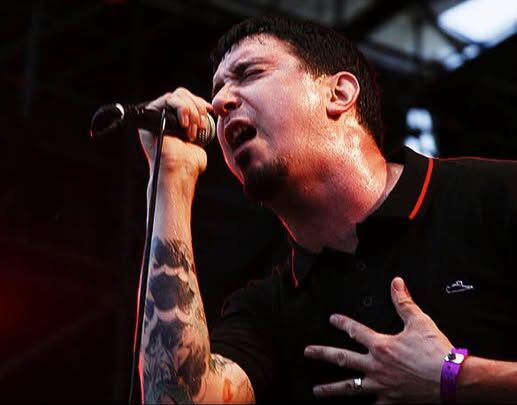
Lou Koller, the longtime vocalist of Sick of It All and one of the most recognizable figures in New York hardcore, has died at the age of 59 following a battle with esophageal adenocarcinoma.
His death brings an emotional close to a career that helped shape the sound, spirit, and identity of a musical movement. For nearly four decades, Koller stood at the front of a band known for its intensity, loyalty, and enduring connection with listeners around the world.
From small clubs in Queens to international concert stages, he built a reputation as a powerful performer whose voice carried anger, humor, resilience, and a strong sense of community.
For many fans, Sick of It All concerts were more than musical events. They became places where people who often felt pushed to the margins could find energy, connection, and a sense of belonging.
Koller had previously shared encouraging news about his health. At one point, medical scans appeared clear, giving him and his supporters hope that he had overcome the disease and could begin looking toward the future again.
The band’s touring schedule had been interrupted while he focused on treatment, but optimism remained strong. Sick of It All was also approaching its 40th anniversary, a milestone that represented decades of recording, touring, friendship, and commitment to the hardcore scene.
For a time, it seemed possible that Koller would be able to put the most difficult period behind him and return his attention to music.
That hope was shattered when the cancer returned.
The recurrence forced him to confront the disease again after a period when recovery had appeared within reach.
His public reaction was painfully brief.
“Back to square one.”
Those words carried the exhaustion of someone being asked to begin an exhausting fight all over again.
The setback was especially difficult because it came so close to what should have been a major celebration in Koller’s life.
Sick of It All was nearing four decades as a band, an extraordinary achievement in a musical world where groups frequently split apart, change members, or disappear after only a few years.
Koller had spent most of his adult life helping create that history.
His voice became inseparable from the identity of Sick of It All, while his presence helped connect the band’s early New York roots with generations of hardcore fans around the world.
The band emerged from the New York hardcore scene and carried its aggressive, energetic sound far beyond local clubs.
As the audience grew, the venues changed.
But the relationship between Koller and the people standing in front of the stage remained remarkably direct.
His performances were intense, yet the energy he brought was never based on aggression alone.
There was humor.
There was warmth.
There was a sense that the audience was participating rather than simply watching.
Hardcore music is often associated with speed, confrontation, and physical intensity, but Koller helped turn those qualities into something that could also feel deeply communal.
His delivery could be fierce, but the environment surrounding the music was built around unity.
Fans were not simply listening to someone express anger.
They were releasing their own frustration alongside him.
That ability became one of the defining qualities of his career.
He could turn anger into connection.
He could make a crowded room of strangers feel as though everyone understood the same emotion.
His humor also gave the band a personality that extended beyond the music.
People who knew him or followed Sick of It All over the years remembered the jokes, sarcasm, smiles, and moments between songs almost as vividly as the performances themselves.
Those qualities remained important even after cancer became part of his public story.
His illness was serious, but it never became the only thing that defined him.
He remained the musician, bandmate, friend, and performer who had spent decades giving people a reason to gather together.
As his health worsened, Sick of It All’s activities were affected.
Tours were paused, performances were reconsidered, and fans waited anxiously for updates.
The encouraging scans provided a moment of relief.
They offered the possibility that the hardest chapter might finally be ending.
The cancer’s return changed everything.
For supporters who had followed Koller for decades, the setback felt especially cruel because endurance had always seemed to be part of his identity.
He had survived changing musical trends and decades of touring while remaining attached to the community that helped build him.
Cancer presented a different kind of challenge.
It was not something that could necessarily be overcome through determination, loyalty, or willpower.
His death ultimately came only weeks before the anniversary that he and his bandmates had spent almost 40 years building toward.
The loss reaches far beyond Sick of It All itself.
Koller influenced musicians, fans, friends, and hardcore communities around the world.
For longtime listeners, his voice became attached to specific periods of their lives.
Some remembered their first hardcore show.
Others remembered friendships formed inside crowded clubs.
For some, the music became something they relied on during difficult periods when frustration, isolation, or anger felt impossible to explain any other way.
That is why the death of a musician can feel unexpectedly personal even to people who never met him.
Koller gave listeners a recognizable voice for emotions they already carried.
Sick of It All created a space where anger did not have to remain isolating.
It could be shouted collectively.
It could become movement.
It could become community.
Every concert reinforced that relationship.
The noise and physical chaos of a hardcore show were held together by a kind of trust between the band and the audience.
Koller stood at the center of that experience.
His voice, humor, expressions, and stage presence became part of what people expected when they walked into a Sick of It All show.
His illness also served as a painful reminder of how unpredictable serious disease can be.
A period of encouraging medical results can create enormous hope, yet cancer can return and force patients and families into another cycle of uncertainty and treatment.
Koller’s words, “Back to square one,” captured that reality with heartbreaking simplicity.
They described more than a medical setback.
They expressed what it feels like to believe progress has been made, only to discover that the fight must begin again.
His death also reminds people of the importance of paying attention to changes in their health and seeking medical care when something does not feel right.
Serious illnesses can develop quietly, and symptoms are not always easy to recognize in their earliest stages.
Koller’s story was ultimately his own, but the uncertainty and emotional strain surrounding cancer treatment are experiences shared by countless patients and families.
What remains now is the music.
Lou Koller’s physical presence onstage is gone, but the recordings, performances, and influence he leaves behind remain embedded in the history of New York hardcore.
Future listeners who discover Sick of It All will still hear the urgency that made his voice so distinctive.
They will hear decades of frustration, resilience, humor, and loyalty compressed into songs built to be experienced together.
His legacy survives in packed clubs and old concert memories.
It survives in recordings played loudly in bedrooms, cars, rehearsal spaces, and venues.
It survives in musicians who were inspired by Sick of It All to start bands of their own.
And it survives in fans who found a community when they needed one most.
Koller spent nearly four decades helping turn frustration into movement and isolation into connection.
The support surrounding him during his illness reflected the same bond he had spent years creating with other people.
He did not get the opportunity to stand onstage and celebrate Sick of It All’s 40th anniversary in the way so many had hoped.
But his contribution to that milestone cannot be separated from it.
The band’s longevity is itself part of his legacy.
It represents decades of commitment to music, friendship, touring, and a scene that became an extended family for countless people around the world.
Lou Koller may be gone, but the sound he helped create is not.
His voice will continue coming through speakers wherever Sick of It All is played.
It will continue filling venues and rehearsal rooms.
It will continue reminding longtime fans of the moments when the music helped them survive difficult years.
And it will continue reaching younger listeners discovering New York hardcore for the first time.
For the people who found strength in that voice, his legacy will remain deeply personal.
The music was always loud.
The silence left by his passing will be felt just as strongly.