
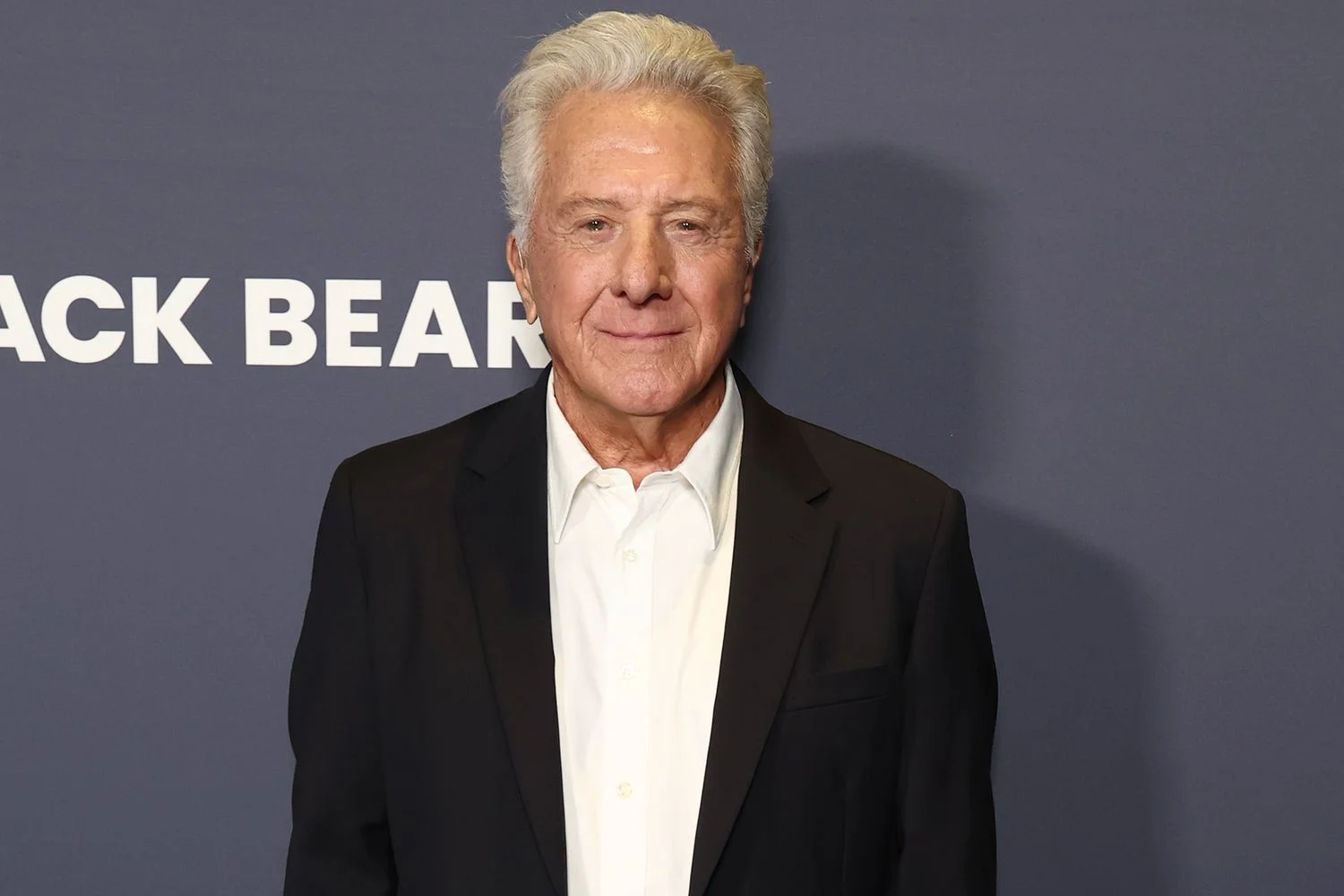
Dustin Hoffman, 88, Reveals the $5 Job He Had Before Hollywood Fame — and Why He Still Jokes About Returning to It
Dustin Hoffman may be one of Hollywood’s most celebrated actors, but the 88-year-old star has revealed that he once believed his future might lie in teaching rather than performing. Before becoming a two-time Academy Award winner, Hoffman spent years studying acting, struggling to find regular work, and earning money by teaching other aspiring performers.
In an interview with PEOPLE alongside his Tuner costar Leo Woodall, Hoffman reflected on the uncertainty that shaped his early career. Despite decades of success, he joked that teaching acting remains a profession he could still fall back on if his movie career ever stopped working out.
The comment offered a glimpse into the actor’s perspective on fame, particularly considering the extraordinary career he eventually built. Hoffman became internationally recognized following his breakthrough in The Graduate in 1967, but his path to Hollywood success was far from immediate.
Before major film roles arrived, he spent nearly a decade learning his craft and searching for opportunities. During that period, teaching acting became a practical way to make money while remaining involved in the profession he wanted to pursue.
Hoffman recalled that he could earn approximately $5 from each student, an amount that helped support him during years when acting opportunities were scarce. He explained that studying the craft for such a long time had given him enough knowledge to begin helping others, even before he had achieved the professional success he hoped for.
His experience reflects a reality that is often overlooked when audiences look back at the careers of famous actors. The years of unsuccessful auditions, small jobs, and financial uncertainty can disappear from public memory once someone becomes a recognizable star.
For Hoffman, however, those early struggles remain an important part of his story.
Years of Training Before Hollywood Success
Hoffman’s career began long before he became associated with some of the most acclaimed films in American cinema. As a young performer, he pursued acting seriously but found that developing his skills did not automatically lead to steady employment.
He spent years training and auditioning, gradually building experience through theater and smaller screen appearances. While the work helped him develop confidence and technique, it did not immediately provide the financial stability associated with a successful entertainment career.
Teaching offered another way to remain connected to acting during those uncertain years. Instead of stepping away from the profession, Hoffman could continue discussing scenes, studying performances, and helping students understand the challenges of working in front of an audience.
The experience also gave him a different perspective on the learning process. Explaining techniques to other performers required him to think about acting in a more deliberate way.
During his interview with PEOPLE, Hoffman acknowledged that long periods without consistent work are common for actors. He suggested that performers who begin booking jobs after several years of trying may already be considered fortunate.
Those remarks stand in sharp contrast to the public image of Hollywood, where successful actors can appear to move effortlessly from one major role to another.
Hoffman’s career demonstrates how much preparation can take place before audiences recognize an actor’s name.
The Breakthrough That Changed Everything
In 1967, Hoffman appeared in The Tiger Makes Out and The Graduate, marking a turning point in his film career.
His performance as Benjamin Braddock in The Graduate brought him widespread recognition and established him as one of the most compelling actors of his generation. The role introduced audiences to a young performer capable of capturing uncertainty, awkwardness, and emotional conflict in ways that felt unusually natural.
The success of the film changed the direction of Hoffman’s professional life.
After years of struggling to secure opportunities, he was suddenly attracting attention from major filmmakers and audiences around the world.
The decades that followed included acclaimed performances in films such as Midnight Cowboy, Kramer vs. Kramer, Tootsie, and Rain Man.
Hoffman received two Academy Awards for Best Actor, winning for Kramer vs. Kramer and Rain Man. His work across drama and comedy helped establish a reputation for detailed character performances and an ability to portray complicated personalities.
Yet his latest reflections suggest that success never completely erased his memories of the years when employment was uncertain.
Even at 88, he can look back at his teaching experience with humor and appreciation.
How His Teaching Experience Influenced Tootsie
One particularly interesting detail from Hoffman’s interview concerned the 1982 comedy Tootsie, in which he plays Michael Dorsey, an actor struggling to find work.
The character’s financial difficulties and professional frustrations offered a natural connection to Hoffman’s own earlier experiences.
Hoffman recalled suggesting to director Sydney Pollack that the movie open with a scene showing his character teaching an acting class.
Rather than relying entirely on professional extras, Hoffman contacted his friend Jack Waltzer, an actor and acting teacher, and asked whether his students could participate.
Waltzer arranged for the class to appear, and the sequence was developed through improvisation.
The approach helped bring an element of authenticity to the film’s depiction of struggling performers.
For Hoffman, it was also an opportunity to draw directly from something he knew personally.
He understood what it meant to teach acting while trying to establish a career. He understood the frustration of searching for work, and he understood how performers could continue developing their skills even when opportunities were limited.
Tootsie became another major achievement in Hoffman’s career, earning him an Academy Award nomination.
The story behind its classroom scene illustrates how experiences that initially appear to be professional setbacks can later become valuable creative resources.
Dustin Hoffman Returns in Tuner
Hoffman’s reflections come as he discusses his film Tuner, in which he stars opposite British actor Leo Woodall.
The movie, directed by Daniel Roher, centers on Niki, a young piano tuner whose extraordinary sensitivity to sound leads him into an increasingly dangerous situation.
Woodall plays Niki, while Hoffman portrays Harry, his older mentor and fellow piano technician.
The two characters share a professional relationship built around music, experience, and an unusual connection between generations.
When Harry becomes seriously ill and requires hospital care, Niki faces mounting financial pressure. His exceptional hearing unexpectedly proves useful for opening safes, drawing him into a criminal world that threatens to change his life.
The film combines crime, drama, and personal relationships while exploring the consequences of using an extraordinary talent for purposes its owner never originally imagined.
For Hoffman, the role places him in a familiar position as an experienced mentor guiding a younger character.
But the relationship also gives audiences an opportunity to see him working alongside a performer from a very different generation.
Leo Woodall Reflects on Working With a Hollywood Legend
Woodall, who has attracted attention for his performances in The White Lotus and One Day, has spoken enthusiastically about working with Hoffman.
The younger actor described the experience as an important opportunity to observe a performer with decades of experience.
In interviews promoting Tuner, Woodall discussed Hoffman’s willingness to improvise and the unpredictable energy he brought to their scenes.
Some of their interactions developed far beyond what was originally written in the screenplay.
Woodall explained that apparently brief scenes could turn into extended improvisational performances, with Hoffman introducing unexpected stories and details.
That approach presented an interesting challenge for Woodall, who needed to respond naturally while staying connected to the emotional direction of the scene.
He also expressed admiration for Hoffman’s continued passion for acting.
Despite the enormous difference in their ages and professional experience, the two actors found common ground through their shared commitment to performance.
Their collaboration became one of the film’s defining relationships.
A Career Built on Experimentation
One of the remarkable aspects of Hoffman’s film career is his willingness to take on very different kinds of roles.
His early performances established him as an actor comfortable portraying characters who did not fit conventional Hollywood expectations.
Over time, he moved between emotionally intense dramas, comedies, thrillers, and character-driven stories.
His performance in Kramer vs. Kramer explored the challenges of parenthood and family responsibility, while Rain Man presented a demanding relationship between two brothers.
In Tootsie, Hoffman demonstrated his ability to approach comedy while examining questions about identity, professional ambition, and personal behavior.
These performances helped build a career recognized for versatility rather than dependence on one particular character type.
His background in acting classes and theater contributed to that development.
The years he spent studying before becoming famous gave him opportunities to experiment with technique and understand the importance of preparation.
That history helps explain why he continues emphasizing the value of learning, even after decades of success.
His Advice to Actors Still Waiting for a Break
Hoffman used the PEOPLE interview to offer advice to performers who may be facing the same uncertainty he once experienced.
Rather than waiting exclusively for prestigious opportunities, he encouraged actors to remain active and consider work that allows them to develop their abilities.
Teaching, community theater, and smaller professional assignments can all provide useful experience.
His central message was that learning should continue even when an actor is not appearing in major productions.
Hoffman also discussed the importance of practice and correcting mistakes.
He compared artistic improvement with the discipline required in sports, where even highly skilled professionals continue training because they recognize areas that can be improved.
The comparison highlights a broader principle of his approach to acting.
Experience alone does not eliminate the need to keep working on one’s craft.
An established performer can still discover new techniques, encounter unexpected challenges, and learn from people with different perspectives.
For younger actors, Hoffman’s words provide a reminder that progress is not always measured by immediate fame or recognition.
Sometimes professional development happens during the years when very few people are watching.
Why His Comments Are Resonating Decades Later
Hoffman’s remarks carry particular weight because of the contrast between his early circumstances and his later achievements.
The young actor who once relied on $5 payments from students eventually became one of the most recognizable performers in the industry.
His career now spans more than five decades of film work, major awards, and collaborations with celebrated directors.
Yet when discussing those early years, he does not present the difficult period as wasted time.
Instead, teaching appears to have been an extension of his education as a performer.
The experience allowed him to remain involved in acting while developing skills he could use throughout his career.
His comments also challenge the assumption that successful people always know exactly where their professional lives are heading.
Before The Graduate transformed his career, Hoffman could not have predicted the level of recognition that would follow.
He was a working actor trying to support himself while continuing to improve.
And teaching was one of the ways he managed to do that.
What Tuner Reveals About His Continuing Passion
At 88, Hoffman remains connected to filmmaking through projects such as Tuner, demonstrating that his interest in performance extends well beyond the period when he first became famous.
The film’s relationship between Harry and Niki also creates an interesting parallel with the conversation surrounding his early teaching career.
Harry is an experienced mentor whose knowledge helps guide a younger man through a specialized profession.
Hoffman, meanwhile, is a veteran performer working alongside Woodall, an actor whose career continues to develop.
The connection is not identical, but it gives the film an added dimension when considered alongside their interviews.
Woodall has spoken about learning from Hoffman’s experience, particularly his spontaneity and commitment to performance.
Hoffman’s involvement offers another example of how established actors can contribute to a project not only through their own roles, but through the creative energy they bring to their colleagues.
For audiences familiar with his earlier films, Tuner provides another opportunity to see that approach in action.
A Reminder That Success Rarely Happens Overnight
Hoffman’s reflections ultimately return to the years before international recognition changed his life.
He studied acting for a long time.
He struggled to find consistent work.
He taught other people while continuing to pursue his own ambitions.
Then, after years of uncertainty, the opportunities that established his film career finally arrived.
It is a story that may sound surprising when viewed alongside his Academy Awards and celebrated performances.
But it also helps explain the perspective he brings to acting today.
His advice is not centered on expecting immediate success. Instead, he emphasizes remaining active, taking available opportunities, and continuing to learn.
The same performer who once taught students for a few dollars now speaks about those experiences as an important part of his professional development.
And his willingness to joke about returning to teaching suggests he has never completely forgotten the practical realities of his early career.
For Hoffman, the years before fame were not simply an obstacle he had to overcome.
They helped shape the actor he eventually became.
Now, as he reflects on those experiences while promoting Tuner alongside Leo Woodall, his story offers a reminder that even Hollywood’s most celebrated careers can begin with years of uncertainty, persistence, and work that receives little public attention.
The actor who once wondered whether he could make a living performing eventually became a two-time Oscar winner.
But the teacher who earned $5 per student remains part of his story.