
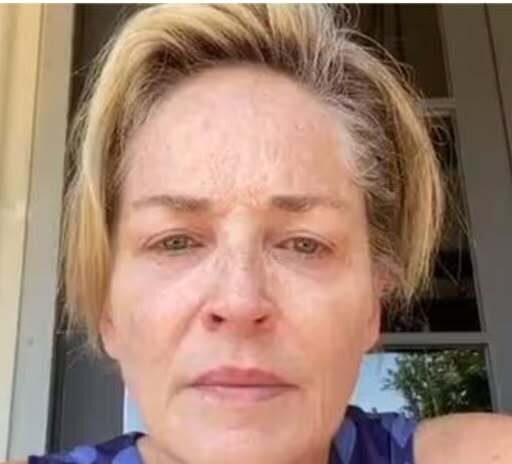
Nearly twenty-five years after surviving a devastating stroke, Sharon Stone is speaking openly about the long road that followed — from neurological damage and career setbacks to difficult decisions about medication and her desire to reclaim control of her life.
The actress suffered a ruptured vertebral artery in 2001 that caused bleeding in her brain for nine days. The medical emergency dramatically changed her life and forced her to step away from acting while she focused on recovery.
Stone has said the stroke affected her vision, memory, sense of touch and ability to read. For years afterward, she continued dealing with neurological consequences that were not always visible to the people around her.
Returning to Hollywood did not mean returning to the life she had before the stroke.
Stone later explained that she needed medication to help prevent seizures and required eight hours of uninterrupted sleep for the treatment to work properly. She has also spoken publicly about how those health requirements affected her ability to obtain acting work.
For a long time, Stone said, she tried to behave as though everything was normal.
Eventually, she became more open about the fact that the stroke had left her with lasting limitations.
Then, in September 2025, Stone made another major decision.
She said she stopped taking medication that had been prescribed following her stroke, despite being warned by doctors not to discontinue it.
The experience was anything but easy.
Stone said she became extremely ill and endured severe symptoms for approximately four and a half months.
She described the process as part of a deeply personal effort to regain a sense of independence after years of medical treatment.
Her goal, she said, was to live what she considered a drug-free life.
Her comments are particularly significant because the medication had been connected to seizure prevention, making her situation highly specific to her own medical history.
Stone later made another change by giving up marijuana.
She said she again experienced a difficult physical reaction, this time lasting roughly a month.
The actress described speaking with her neurologist about the symptoms she experienced and made clear that the process had been physically demanding.
Her decision to reconsider the substances and medications in her life was also influenced by personal loss.
Stone has spoken about friends who died after struggling with drug abuse and has warned about the difference between treatment intended to support health and substance use that becomes harmful.
Still, her experience is not a general recommendation for others to stop prescribed medication.
Her story reflects her individual circumstances after a severe neurological event and years of medical treatment. Changes to prescribed medication, particularly medication connected to seizure prevention, can carry serious risks and should be discussed with a qualified medical professional.
For Stone, however, the past several years have been about much more than medication.
They have also been about finding a new identity after an illness that changed nearly every part of her life.
Painting became one of her most important creative outlets.
Stone began spending more time making art during the COVID-19 lockdown, and what started as a personal activity gradually developed into something much larger.
She eventually moved her workspace into a guest house after encouragement from her sons and began dedicating more of her time to painting.
Her artwork later reached galleries, giving Stone another creative path beyond acting.
That development carries particular meaning considering how severely the stroke once affected her sight, touch and ability to process the world around her.
The actress has also expressed interest in performing again, including the possibility of appearing on Broadway.
Rather than viewing this stage of her life only through the lens of what she lost, Stone has increasingly described it as a period of renewal.
Her journey has been extraordinarily long.
The stroke changed her body.
It interrupted her career.
It forced her to rebuild basic abilities she had once taken for granted.
And even decades later, she has continued making decisions about how she wants to live with its consequences.
Stone’s recent reflections reveal just how complicated recovery can be.
Surviving the initial emergency was only the beginning.
The years that followed required adjustments to her health, her career and her understanding of herself.
Now, nearly a quarter century after the medical crisis that nearly took her life, Stone appears determined to define what comes next on her own terms.
Painting has given her another way to express herself.
Performing remains a possibility.
Her family remains close.
And after decades of living with the consequences of one terrifying medical emergency, Sharon Stone says she is focused on something she has been fighting to regain for years:
Her life.