
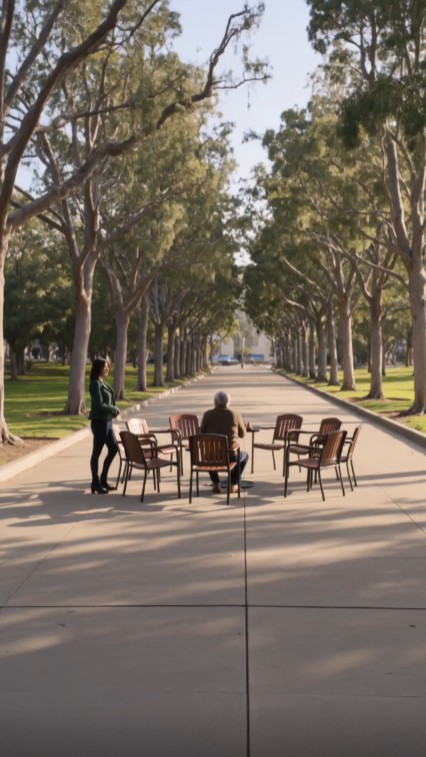
An elderly man carried eleven folding chairs into the park and arranged them around an old stone chess table.
Then he sat down.
And waited.
His name was Harold.
He was seventy-eight years old.
For more than forty years, almost everyone in the neighborhood had known him as the man who played chess beneath the large oak tree.
But Harold had rarely played only for himself.
He taught children.
Any child.
No fee.
No appointment.
No expensive chess set required.
If someone wanted to learn, Harold moved a piece across the board and said:
“Sit down.”
Some children came because they loved chess.
Some came because their parents worked late.
Some could not afford organized activities.
Others simply needed somewhere peaceful to spend an afternoon.
Harold welcomed all of them.
“Chess doesn’t care how much money is in your pocket,” he liked to say.
“It only cares what you do with the pieces you have.”
Over the decades, hundreds of children sat across from him.
But one particular group remained in his memory.
Eleven children.
They came almost every afternoon during one unforgettable summer.
There was Maya, who talked constantly.
Daniel, who hated losing.
Sophie, who barely spoke.
Michael, who tried to invent his own rules.
Claire, who could predict moves faster than children twice her age.
And six others who gradually turned the old table beneath the oak tree into the center of their summer.
Harold taught them openings.
Patience.
How to lose without throwing the pieces.
How to look at the whole board before moving.
But mostly, he listened.
Children told Harold things adults often missed.
Problems at school.
Arguments at home.
Fears.
Dreams.
Sometimes chess was only the excuse to sit down.
Then summer ended.
The children grew.
One by one, they stopped coming.
High school.
University.
Jobs.
Marriage.
Different cities.
Different countries.
The chess table became quieter.
Harold kept coming.
Almost every afternoon.
Then one morning, decades later, his phone buzzed.
Harold was not particularly good with text messages.
He held the phone far from his face and read slowly.
Please bring eleven chairs to the old chess table tomorrow at 2:00.
Nothing else.
No name.
Harold thought it might be a prank.
Then a second message arrived.
Please trust us, Mr. Harold.
That changed everything.
Very few people still called him Mr. Harold.
So the next afternoon, he arrived early.
He borrowed eleven folding chairs from the park recreation building.
Arranged them around the chess table.
Then sat down.
A park worker named Luis approached.
“Harold, are you hosting a tournament?”
“No.”
“A chess club?”
“Not that I know of.”
Luis laughed.
“Then why eleven chairs?”
Harold looked toward the walkway.
“I hope somebody tells me.”
Two o’clock arrived.
Nobody came.
2:05.
Still nobody.
Harold looked at his phone.
Maybe he had misunderstood.
At 2:10, Luis approached again.
“Want me to help put these away?”
Harold shook his head.
“Five more minutes.”
Then he saw them.
Eleven adults appeared at the far end of the walkway.
Different ages.
Different clothes.
One in a business suit.
One wearing hospital scrubs.
Another carrying a backpack.
A woman pushing a bicycle.
They walked together.
Harold stood slowly.
The woman in front carried a black chess piece.
A queen.
She stopped several feet from him.
Then smiled.
“Checkmate, Mr. Harold.”
Harold’s hands began trembling.
He knew that voice.
“Maya?”
She laughed.
“You remember?”
Harold looked at the others.
Daniel.
Sophie.
Michael.
Claire.
One face after another rearranged itself in his memory.
The adults disappeared.
For an instant, Harold saw children.
Sitting around his chess table.
Arguing.
Laughing.
Fighting over whose turn came next.
“Oh my goodness.”
Maya hugged him.
Then the others did too.
Harold wiped his eyes.
“You people got old.”
Daniel laughed.
“So did you.”
“Impossible.”
Maya handed Harold the chess queen.
He recognized it immediately.
It came from his old wooden set.
One piece had disappeared nearly thirty years earlier.
Harold pointed at her.
“You stole my queen.”
Maya looked offended.
“I borrowed it.”
“For three decades?”
“I wanted to make sure I understood how it moved.”
Everyone laughed.
Then Claire removed an old photograph from her bag.
Eleven children surrounded the same chess table.
Harold sat in the middle.
On the back was a date.
August 18.
Thirty-one years earlier.
Harold stared at it.
“I haven’t seen this in years.”
“We found a copy,” Claire said.
Then Harold looked at the eleven chairs.
“So this is just a reunion?”
Maya smiled.
“Not exactly.”
Each former student had brought something.
Daniel carried a battered chess clock.
Sophie carried a folder.
Michael had a wooden box.
Others held envelopes.
Harold frowned.
“What have you done?”
“Sit down,” Maya said.
He laughed.
“That’s my line.”
“Today it’s ours.”
They filled the eleven chairs.
Harold sat at the stone table.
Maya began.
Thirty-one years earlier, on the final afternoon before several members of the group moved away, Harold had organized a small tournament.
There had been no trophies.
No money.
The prize was an old wooden queen.
The same piece Maya now held.
She had won.
But after the game, Harold had told them something.
“Being good at chess doesn’t matter much if you never make room at the board for someone else.”
Then he gave them a challenge.
Someday, each of them should teach one other person something they knew.
It did not have to be chess.
Just give someone an opportunity they might not otherwise have.
The children had called it Harold’s Promise.
Harold stared.
“I said that?”
All eleven groaned.
“You don’t remember?”
“I have said many intelligent things.”
Daniel laughed.
“You made us sign the back of the tournament sheet.”
Sophie opened the folder.
There it was.
Old paper.
Eleven signatures.
At the bottom, in Harold’s handwriting:
WHEN YOU CAN, PULL OUT ANOTHER CHAIR.
Harold became quiet.
Maya said:
“We came back because all eleven finally did it.”
One by one, they told him what happened.
Maya became an engineer.
Years earlier, she began mentoring girls from schools without engineering programs.
One of those students eventually earned a scholarship.
Daniel became a mechanic.
He began taking one apprentice each year from a youth employment program.
Claire became an attorney.
She volunteered evenings helping teenagers prepare college and training applications.
Michael became a restaurant owner.
Every summer, he hired young people who had never held a job before and taught them basic kitchen skills.
Sophie became a nurse.
For years, she quietly paid exam fees for nursing assistants who wanted additional qualifications but could not afford them.
The others had their own stories.
A teacher.
A carpenter.
A software developer.
A social worker.
A bus driver who taught neighborhood children bicycle repair on weekends.
None claimed to have transformed the world.
That had never been the promise.
They had simply pulled out another chair.
Harold looked around the circle.
“This is what you brought me?”
Maya shook her head.
“No.”
“That’s only the first surprise.”
Michael placed the wooden box on the chess table.
Inside were eleven new chess sets.
Small.
Durable.
Inexpensive sets designed for children to use anywhere.
Harold looked confused.
“What are these for?”
Then Sophie handed him the folder.
Inside were documents for a community program.
The eleven former students had spent more than a year planning it.
They had raised money themselves.
Found additional local sponsors.
Received permission from the parks department and community center.
The program was called:
HAROLD’S TABLE.
It would provide free weekly chess sessions and mentoring for children.
No membership fees.
No equipment required.
No experience necessary.
Exactly as Harold had done for them.
Harold stared at the page.
“No.”
Maya became worried.
“No?”
“You’re not putting my name on anything.”
Everyone laughed.
“We knew you’d say that.”
“Then why ask?”
“Because we’re ignoring you.”
Harold shook his head.
“I taught chess in a park.”
Daniel leaned forward.
“No.”
“You gave us somewhere to go.”
That quieted him.
Sophie spoke next.
Her family had been going through a difficult period when she was eleven.
She rarely wanted to go home immediately after school.
Harold never knew all the details.
He simply let her sit beside the board.
Some afternoons, she did not play.
She just watched.
“You never asked me to explain why I was there,” Sophie said.
“You just kept a chair open.”
Harold looked down.
Michael spoke next.
His parents could not afford organized sports.
He felt embarrassed because his friends attended activities his family could not pay for.
Chess in the park cost nothing.
“You made free feel normal,” he said.
Then Claire.
She had been painfully shy.
Harold made her announce every move aloud.
She hated him for it.
Years later, she stood in courtrooms speaking before judges.
“When people ask how I learned to speak when I was nervous, I think about this table.”
Harold’s eyes filled.
He tried to make a joke.
“So I’m responsible for a lawyer?”
Claire smiled.
“Unfortunately.”
Then Maya brought out the final item.
An envelope.
“Before you read this, there’s someone else.”
Harold frowned.
The eleven adults looked toward the walkway.
A group of children was approaching.
About twenty of them.
Some carried chessboards.
Others held backpacks.
One little boy held his mother’s hand.
They stopped beside the table.
Maya said:
“These are the first students.”
Harold stared.
A boy looked at the empty board.
Then at Harold.
“Are you Mr. Harold?”
Harold nodded.
The boy asked:
“Can you teach me?”
Harold looked at the eleven adults.
They were all smiling.
He slowly sat at the table.
Then pointed toward the chair opposite him.
“Sit down.”
Everyone laughed.
The first lesson began exactly as hundreds had before.
“This is the pawn.”
“It looks small.”
“It is.”
“Is it important?”
“Very.”
“Why?”
Harold smiled.
“Because small pieces can change the entire board.”
While Harold taught, the eleven former students set up other tables.
Soon the quiet corner of the park was filled with chessboards again.
But there was still one more surprise.
Later that afternoon, Maya handed Harold the envelope.
Inside was a letter signed by all eleven.
Mr. Harold,
You told us the best chess move is not always the one that wins immediately.
Sometimes you make a move because it creates possibilities later.
You probably thought you were teaching children how pieces moved.
But you were making moves too.
You gave us time.
Patience.
A place to sit.
And the idea that when we had something worth sharing, we should share it.
These chairs are our way of telling you that your move worked.
Harold stopped reading.
For several seconds, he looked toward the children playing nearby.
Then he whispered:
“I didn’t do all that.”
Maya sat beside him.
“Maybe not intentionally.”
Harold laughed.
“That sounds more accurate.”
The program continued every Saturday.
Harold attended whenever he could.
But he was no longer responsible for teaching everyone.
His former students took turns.
Claire taught beginners.
Daniel repaired damaged chessboards.
Michael brought sandwiches.
Sophie organized volunteers.
Maya ran small tournaments.
And whenever someone asked why eleven chairs were stored beside the recreation building, there was always an answer.
“They belong to Harold’s first class.”
Technically, that wasn’t true.
Harold had taught children before them.
And after them.
But those eleven had been the group that made the promise.
Years later, when Harold’s health made daily park visits difficult, the program continued.
One Saturday, Maya visited him at home.
She brought the old black queen.
Harold smiled.
“You’re finally returning stolen property?”
“Borrowed property.”
She placed it in his hand.
Then showed him a photograph.
It looked almost identical to the one from thirty-one years earlier.
Children surrounding the stone chess table.
Adults standing behind them.
Eleven folding chairs nearby.
Harold stared.
“How many kids now?”
“More than two hundred have come through the program.”
His eyebrows rose.
“All because you people don’t know when to stop.”
Maya smiled.
“You taught us persistence.”
“I regret everything.”
But he was smiling too.
The eleven former students had returned expecting to thank the man who changed their childhoods.
Instead, Harold reminded them of something.
“You did the important part.”
“What?”
“You came back.”
He pointed toward the photograph.
“A lesson only matters if somebody carries it somewhere.”
That was why the real surprise that afternoon was not simply eleven adults returning to the chess table.
It was what they brought with them.
Not money.
Not expensive gifts.
Not plaques.
They brought evidence that something small Harold had given them decades earlier had continued moving through the world.
An apprenticeship.
A scholarship application.
A nursing exam.
A first job.
A few hours of someone’s time.
And now a free program for another generation of children.
Thirty-one years earlier, Harold had looked at eleven young faces and told them:
“When you can, pull out another chair.”
They remembered.
And when they finally returned, they brought eleven chairs back to the same table.
Not to sit in them forever.
But to make sure someone else would always have a place.