
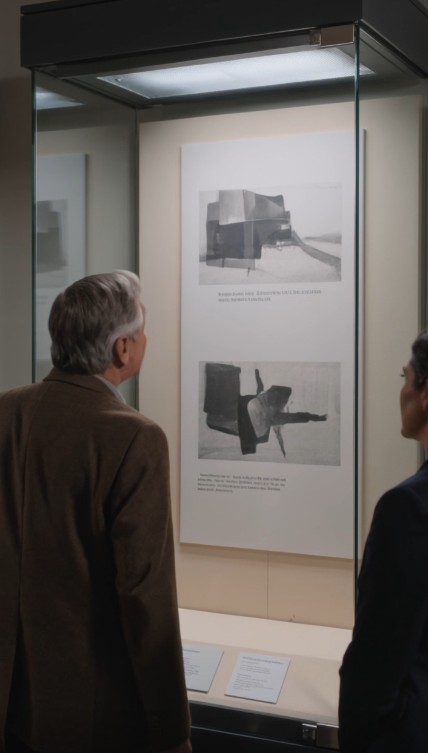
Nobody noticed anything wrong.
Until an elderly man stopped…
Read it twice…
And said:
“That date is impossible.”
The museum guide smiled politely.
“Sir, our historians verified it.”
The man shook his head.
“They’re wrong.”
A few visitors stopped to listen.
The guide asked:
“What makes you so certain?”
The elderly man pointed at the display.
“It says this happened on October 14.”
“Yes.”
“It happened October 17.”
The guide frowned.
“How could you know that?”
The man answered:
“Because I was there.”
Everything went quiet.
The curator was called.
She arrived carrying the museum’s records.
“Sir, may I ask your name?”
“Henry Miller.”
She searched.
Nothing.
“Your name isn’t anywhere in our records.”
Henry smiled sadly.
“I know.”
Then he pointed toward a large group photograph on the wall.
“Look at the third man from the left.”
The curator looked.
Then looked back at him.
“That isn’t you.”
“No.”
“Then who is it?”
The elderly man answered:
“My brother.”
The curator checked the man’s name.
Her expression changed.
Then she whispered:
“According to our records… he didn’t have a brother.”
Henry nodded.
“That’s the mistake I’ve waited fifty-two years to correct.”
The curator stared at him.
“What happened on October 17?”
Henry looked around at the people gathering behind them.
Then said:
“Something this museum has never told anyone.”
The curator’s name was Emily Carter.
She had spent fourteen years working at the Riverside Industrial Museum.
The exhibit Henry was challenging was one of its most important.
It documented the 1974 Riverside Mill flood.
For generations, the mill had been the largest employer in town.
Nearly eight hundred people worked there at its peak.
Then, during three days of severe autumn rain, the river overflowed.
Water entered the lower sections of the property.
Employees were evacuated.
Several workers stayed behind to help secure equipment and move records.
The museum’s display described what happened next.
According to the panel:
October 14, 1974 — Riverside Mill Emergency Crew
Below the words was the photograph.
Eleven men stood outside the mill.
Wet clothes.
Mud-covered boots.
Tired faces.
The third man from the left was identified as:
THOMAS MILLER, 24
Emily looked at Henry.
“How old are you?”
“Seventy-four.”
“You were twenty-two in 1974.”
“Yes.”
“And Thomas?”
“Twenty-four.”
Emily checked the museum database again.
Thomas Miller was there.
Employment records.
Payroll records.
A newspaper clipping.
Even a short biography.
Born 1950.
Worked at Riverside Mill from 1969 until 1974.
Never married.
No children.
Parents listed as Robert and Margaret Miller.
Under siblings:
None known.
Emily looked at Henry.
“If you were his brother, why aren’t you in any of this?”
Henry gave a tired smile.
“Because I didn’t work here.”
“That wouldn’t explain the family record.”
“No.”
“Then what does?”
Henry looked toward the photograph.
“Thomas told people he was an only child.”
Emily frowned.
“Why?”
“Because of me.”
That answer only created more questions.
Emily asked Henry to come into the museum archive.
He agreed.
The visitors who had gathered were disappointed when the conversation moved behind a staff-only door.
But Emily wasn’t going to turn an elderly stranger’s family history into a public performance before checking anything.
Inside the archive room, she placed a folder on the table.
“Before we go any further, I need to tell you something.”
Henry nodded.
“The exhibit isn’t based on one document.”
“I assumed that.”
“We have company records, newspaper reports, municipal documents and oral histories.”
“And they’re all wrong about the date?”
“Several sources say October 14.”
Henry leaned back.
“Show me.”
Emily did.
The first was a newspaper clipping dated October 15.
It described rising water and preparations at Riverside Mill.
Henry read it.
Then pushed it back.
“This isn’t the event in the photograph.”
Emily paused.
“What do you mean?”
“The flood started earlier. Everyone knew that.”
He pointed toward the exhibit description.
“But those eleven men didn’t do what you’re describing until the seventeenth.”
Emily opened another record.
An internal mill report.
The top read:
Emergency response initiated — October 14, 1974.
Henry nodded.
“Exactly.”
Emily frowned.
“You just said the date was wrong.”
“The emergency started on the fourteenth.”
He tapped the photograph.
“That photograph wasn’t taken until the seventeenth.”
Emily stopped.
That was different.
The exhibit had apparently treated the start of the emergency and the date of the photograph as the same event.
“Can you prove that?”
Henry reached inside his coat.
He removed a small envelope.
Inside was an old photograph.
Emily placed it carefully on the table.
It showed the same mill.
The same loading entrance.
But only two young men were visible.
One was Thomas.
The other was Henry.
On the back, written in faded ink:
Henry + Tommy — Oct. 17, 1974
Emily looked up.
“Who wrote this?”
“Our mother.”
“That establishes what someone believed the date was. It doesn’t necessarily establish when the photograph was taken.”
Henry nodded.
“I know.”
Emily was surprised.
Most people who challenged museum records became angry when questioned.
Henry didn’t.
Instead, he reached into his coat again.
This time he removed a folded bus ticket.
The printed date was still faintly visible.
OCT 17 1974
Emily looked at it.
“What does this have to do with the mill?”
“That bus brought me here.”
Henry began telling her what had happened.
In 1974, Henry Miller didn’t live in Riverside.
He lived almost sixty miles away.
He had left home at seventeen after a terrible argument with his father.
Thomas stayed.
The brothers had been close as children.
As teenagers, they became very different.
Thomas was careful.
Henry was impulsive.
Thomas worked at the mill.
Henry wanted nothing to do with the town.
Their father, Robert, was strict and proud.
One night, Robert and Henry argued over money.
The argument became ugly.
Henry packed a bag.
Their mother begged him to stay until morning.
He didn’t.
For the next five years, Henry barely returned.
He wrote to his mother.
Sometimes Thomas.
Never his father.
“That’s why Thomas told people he didn’t have a brother?”
Emily asked.
Henry shook his head.
“Not at first.”
The real break came later.
Henry had gotten into financial trouble.
Nothing criminal.
But he’d borrowed money and failed to repay it on time.
Robert found out.
He told Thomas that Henry had embarrassed the family.
Then Robert made a cruel demand.
“If people ask, you have no brother.”
Emily looked disturbed.
“And Thomas agreed?”
“For a while.”
Henry didn’t excuse him.
Thomas was an adult.
He could have refused.
But Thomas still lived at home.
Still worked with their father.
Still wanted Robert’s approval.
So when coworkers asked about family, Thomas began saying he was an only child.
Not everyone believed it.
But eventually, in the mill’s personnel records, someone entered:
No siblings.
Years later, that line became part of the museum’s research.
Emily stared at the database.
One small administrative entry had outlived almost everyone involved.
“What changed on October 17?” she asked.
Henry looked toward the old photograph.
“Thomas called me.”
On October 16, the river rose faster than expected.
The mill closed.
Most workers went home.
Thomas joined a small crew moving equipment and documents from the lower building.
The next morning, October 17, Henry was living in another town when his landlord knocked on his door.
“Telephone.”
Long-distance calls were expensive.
Henry assumed something had happened to his mother.
Instead, Thomas was on the line.
“Henry?”
It was the first time they’d spoken in nearly two years.
Henry remembered his first words.
“What do you want?”
Thomas answered:
“I need you.”
Henry almost hung up.
Then Thomas explained.
The mill’s lower storage area had flooded.
Several families living on the low road behind the mill had also been forced from their homes.
Workers were using company trucks to move supplies.
They needed people.
Anyone physically able to help.
Henry said:
“You have hundreds of employees.”
Thomas answered:
“Most can’t get here.”
Roads were flooded.
Transportation was disrupted.
Thomas had remembered that Henry once worked for a warehouse and knew how to operate loading equipment.
“Why would I help Dad’s mill?”
Thomas became angry.
“This isn’t about Dad.”
Then he said something Henry never forgot.
“People’s houses are underwater.”
Henry bought the first bus ticket he could.
October 17.
He arrived shortly after noon.
The bus couldn’t reach the mill.
Henry walked the final mile.
Mud covered his shoes.
Thomas saw him near the loading entrance.
Neither brother knew what to say.
Finally Thomas asked:
“You came?”
Henry answered:
“You called.”
That was their reunion.
No hug.
No apology.
No dramatic speech.
There wasn’t time.
For the next several hours, they worked.
But this was where the museum’s version became incomplete.
The eleven men in the famous photograph were described as the Riverside Mill Emergency Crew.
Technically, that was true.
But they weren’t the only people there.
Far from it.
Local residents arrived.
Teenagers.
Shopkeepers.
Two schoolteachers.
A bus driver.
Several women from a nearby church brought food and blankets.
People used pickup trucks to move belongings from flooded homes.
A local mechanic brought rope and tools.
Henry helped load boxes of medicine and household supplies being moved to higher ground.
Thomas coordinated trucks.
By late afternoon, dozens of people had helped in some way.
“Then why does the museum only mention eleven men?” Emily asked.
“Because they’re the ones in the photograph.”
Henry pointed toward Thomas.
“And because they worked for the mill.”
The photographer had been sent by a local newspaper.
He wanted a picture of the official mill crew.
Someone called the eleven employees together.
They stood outside.
The photograph was taken.
Henry was nearby.
But he wasn’t an employee.
So he wasn’t included.
“Were you upset?”
“No.”
“Not even a little?”
“I was trying to find dry socks.”
Emily smiled.
Henry continued.
Later that evening, his mother arrived.
Margaret Miller had heard Henry was back.
She hadn’t seen her younger son in almost three years.
She found him standing beside Thomas near the loading dock.
She cried.
Thomas looked embarrassed.
Henry pretended not to.
Then Margaret took out a small camera.
“Stand together.”
Henry refused.
Thomas said:
“Just do it.”
Their mother took the photograph Henry had brought to the museum.
Henry and Thomas.
October 17, 1974.
Emily looked at it again.
“Your mother wrote the date because she took it that day.”
“Yes.”
“Do you have anything else?”
Henry nodded.
“That’s where it gets complicated.”
After the flood, Henry stayed in Riverside for three days.
He slept at Thomas’s apartment.
They talked.
Not enough to repair everything.
But enough to begin.
Thomas admitted he’d told people he had no brother.
Henry was furious.
Thomas apologized.
Then he said:
“I’ll fix it.”
Henry asked:
“How?”
Thomas didn’t know.
But he made a promise.
He would correct his employment file.
He would tell coworkers.
He would stop allowing their father’s anger to decide whether Henry existed.
Four days later, Thomas died.
Emily went completely still.
“How?”
“A road accident.”
Not related to the flood.
Not at the mill.
Thomas had been driving to another town to collect replacement equipment.
His vehicle collided with another car on a wet road.
He was twenty-four.
Henry never got the apology he thought would come later.
Never got the corrected personnel form.
Never got another chance to speak to his brother.
And because Thomas died so soon afterward, the old record remained.
No siblings.
Their father refused to discuss it.
Margaret tried to correct people when she could.
But the mill closed years later.
Records were boxed.
Some disappeared.
Some survived.
The newspaper photograph became famous locally.
Eventually the museum acquired it.
By then, nearly everyone who knew the Miller family personally was gone.
Emily asked:
“Why didn’t your mother contact the museum?”
“She died before this exhibit existed.”
“And you?”
Henry looked down.
“I didn’t know what the museum said.”
He had moved across the country.
Married.
Raised two daughters.
Worked for thirty-seven years as a warehouse supervisor.
He returned to Riverside only occasionally.
Then, six months earlier, his wife died.
His daughter suggested he visit places from his childhood.
So Henry returned.
That afternoon, he entered the museum.
He wasn’t looking for Thomas.
Then he saw the photograph.
His brother.
Twenty-four years old forever.
And beneath it:
October 14, 1974
Henry knew immediately it was wrong.
Not because nothing happened on October 14.
Plenty had.
But because Thomas was wearing the green work jacket their mother had repaired on the evening of October 16.
Henry remembered it clearly.
When he arrived on the seventeenth, Thomas joked:
“Mom finally fixed the sleeve.”
That alone wasn’t proof.
But the bus ticket was.
The family photograph was.
And Henry had something else.
He placed a folded letter on the table.
Emily opened it carefully.
It was addressed to Henry.
Dated:
October 18, 1974
The handwriting belonged to Thomas.
Emily read.
Henry,
You left before I could say this properly.
I’m sorry.
Emily stopped.
Henry nodded.
“Keep reading.”
Thomas wrote that he’d been ashamed of what he’d done.
He admitted telling coworkers he was an only child.
He admitted allowing their father’s anger to become his own.
Then:
Yesterday you came when I called even though I gave you plenty of reasons not to.
Emily looked at the date again.
October 18.
Yesterday.
That meant Henry had been there October 17.
Thomas continued:
Mom took that ridiculous picture of us, so now she’ll probably make copies for everyone she’s ever met.
Emily looked at Henry’s photograph.
That was stronger evidence.
Then came another sentence.
I talked to Mr. Harris in personnel this morning. I’m correcting the family information on Monday.
Thomas never reached Monday.
The accident happened Sunday evening.
Emily lowered the letter.
“So that’s why the record was never corrected.”
Henry nodded.
For fifty-two years, he had kept the letter.
Not because he expected to prove anything to a museum.
Because it was the last thing his brother ever wrote to him.
Emily asked quietly:
“What is it you think the museum has never told anyone?”
Henry looked at the famous group photograph.
“That those eleven weren’t the whole story.”
He wasn’t asking the museum to remove their names.
He wasn’t saying they hadn’t helped.
They had.
Thomas had.
Henry was proud of him.
But the display had gradually turned a complicated community response into a neat story about eleven employees.
The surviving records suggested something broader.
The museum itself had photographs in storage showing local residents carrying supplies.
Another showed women preparing meals.
A third showed teenagers moving furniture from a flooded house.
Those images had never been included in the permanent exhibit.
Emily knew exactly which photographs he meant.
She had seen them.
They were cataloged simply as:
Flood volunteers — date unknown.
Henry pointed toward the exhibit.
“You tell people eleven men saved the mill.”
Emily corrected him.
“The panel says they helped protect equipment and assist during the flood.”
“Read the next paragraph.”
She did.
It called them:
The group whose efforts became the center of Riverside’s emergency response.
Henry shook his head.
“They were part of it.”
Not the center.
Not the entire story.
Part.
Thomas himself had apparently believed that.
Henry removed one final item.
A small newspaper clipping.
Not from the main Riverside paper.
From a weekly publication in the neighboring county.
The headline read:
VOLUNTEERS JOIN MILL WORKERS IN RIVERSIDE FLOOD RESPONSE
The article was dated October 19, 1974.
It mentioned shop owners.
Residents.
Church volunteers.
Mill employees.
And one line:
Brothers Thomas and Henry Miller were among those loading emergency supplies Thursday afternoon.
Emily read it twice.
There it was.
Henry Miller.
In print.
October 17.
Thomas’s brother.
Fifty-two years before Henry walked into the museum.
Emily sat back.
“This changes the exhibit.”
Henry shook his head.
“It corrects it.”
That distinction mattered to him.
He wasn’t there to destroy the museum’s history.
He wasn’t accusing historians of intentionally lying.
They had worked from the records available to them.
Some records were incomplete.
One personnel form contained false family information.
A photograph had been associated with the date the emergency began rather than the day it was taken.
Over decades, those small errors hardened into accepted history.
Emily asked:
“Would you allow us to scan these?”
Henry looked at Thomas’s letter.
“Not all of it.”
“Of course.”
“The personal parts stay personal.”
“Absolutely.”
“But you can scan the section about the seventeenth and the personnel record.”
“And the photograph?”
Henry smiled.
“My mother would haunt me if I didn’t.”
Emily laughed.
Over the next several weeks, the museum investigated.
They didn’t simply accept Henry’s memory because he was emotional or convincing.
They checked.
Municipal records confirmed bus service into Riverside on October 17.
The bus company archive confirmed the ticket format.
The neighboring newspaper’s original microfilm contained the same article Henry had brought.
Another photograph surfaced from a private collection.
It showed Henry carrying a box beside a truck.
Thomas was visible behind him.
On the back:
Riverside — Thursday, Oct. 17
Then came the most unexpected discovery.
The museum contacted the family of the former mill personnel manager, Mr. Harris.
His daughter still had several boxes of her father’s papers.
Inside one folder was a handwritten note.
T. Miller — update family file Monday. Brother Henry.
Monday’s date was October 21.
The update was never completed.
Emily called Henry.
“We found it.”
There was silence.
“Found what?”
“The note Thomas asked them to make.”
Henry didn’t speak.
Emily continued.
“He did what he promised.”
Henry began crying.
Not loudly.
He was seventy-four years old, standing in his daughter’s kitchen, hearing that his brother had kept a promise fifty-two years earlier.
“He actually did it?”
“Yes.”
“He told personnel?”
“Yes.”
Henry sat down.
For most of his life, he’d believed Thomas intended to correct the lie.
The letter said so.
But intention and action weren’t the same.
Now Henry knew.
Thomas had walked into the personnel office the morning after their reunion.
He’d said:
I have a brother.
His name is Henry.
Correct the file.
The paperwork simply never caught up.
The museum closed the flood exhibit for three days.
When it reopened, the famous photograph remained exactly where it had always been.
Thomas remained the third man from the left.
But the date underneath had changed.
October 17, 1974
The new text explained that emergency preparations began October 14, while surviving evidence indicated the photograph was taken three days later.
A second section had been added.
BEYOND THE PHOTOGRAPH
It told visitors that the eleven mill employees pictured were only part of a larger response involving residents, local businesses, community volunteers and others whose names were incompletely documented.
Several previously archived photographs were displayed.
People carrying boxes.
Preparing food.
Moving belongings.
Driving trucks.
Helping neighbors.
And near the center was a smaller photograph.
Two brothers.
Thomas and Henry Miller.
The caption read:
Thomas Miller, 24, and his younger brother Henry Miller, 22, photographed October 17, 1974. The brothers participated in the flood response after years of estrangement. Surviving records confirm Thomas requested that his employment file be corrected to identify Henry as his brother.
Henry stood in front of it on opening day.
Emily watched from several feet away.
“You okay?”
Henry nodded.
“There’s one thing wrong.”
Emily’s heart dropped.
“What?”
Henry pointed at the picture.
“I had much better hair than Thomas.”
Emily laughed.
“So did he, apparently.”
Henry smiled.
Then his expression softened.
“You didn’t have to put me in.”
“Yes, we did.”
“No. You had to correct the date.”
Emily shook her head.
“We had to correct the record.”
Henry looked at his brother’s face.
For fifty-two years, a file had said Thomas Miller had no brother.
Now the museum said otherwise.
But Henry cared even more about the new photographs surrounding theirs.
The volunteers.
The families.
The people whose names had never made it into official reports.
A teenage girl in one photograph had been identified after a visitor recognized her as his mother.
A local family identified two men standing beside a truck.
Another visitor brought in a diary written by her grandmother during the flood.
The museum created a project inviting families to contribute documented information about people who had participated in the response.
Not every person could be identified.
Some probably never would be.
Emily refused to guess.
Unknown people remained labeled unknown.
Henry liked that.
“Better an honest blank than a confident mistake.”
Emily wrote the sentence down.
Months later, Henry returned to the museum with his daughter, Rachel.
She had heard the story her whole life.
But she’d never seen the exhibit.
When she reached the photograph, she stopped.
“So that’s Uncle Thomas.”
Henry nodded.
Rachel had been born seven years after Thomas died.
She knew him only through photographs.
She read the caption.
Then noticed the personnel note displayed beneath it.
Brother Henry.
Rachel took her father’s hand.
“You waited fifty-two years for two words.”
Henry shook his head.
“No.”
“What then?”
“I waited fifty-two years to find out he actually said them.”
That was the difference.
Henry hadn’t come to the museum looking for recognition.
He hadn’t even known his own absence was part of the exhibit until he arrived.
He came as an elderly visitor.
He stopped because of one date.
October 14.
Everyone else had walked past it.
To them, it was simply history.
To Henry, October 17 was the day his brother called after years of silence.
The day Henry bought a bus ticket.
The day he walked through mud toward the mill.
The day Thomas looked at him and said:
“You came?”
And Henry answered:
“You called.”
It was the day two brothers began repairing something they believed they’d have years to finish.
They got four days.
For decades, Henry had wished they’d had more.
But standing inside the museum, he finally understood that those four days mattered.
Thomas apologized.
Henry came when Thomas needed him.
Their mother photographed them together.
Thomas wrote the letter.
And before he died, he walked into the personnel office and tried to correct the lie he’d told years earlier.
The correction never reached the official file.
But Thomas had made it.
That was enough for Henry.
A year later, the museum invited him to speak to a group of local students.
Henry initially refused.
“I’m not a historian.”
Emily answered:
“Good.”
“What does that mean?”
“It means you’ll tell them what you know and admit what you don’t.”
Henry agreed.
He stood beside the photograph.
One student asked:
“Were you a hero during the flood?”
Henry laughed.
“No.”
“But you helped.”
“So did lots of people.”
“Then why weren’t you in the famous picture?”
“Because I wasn’t a mill employee.”
The student thought about that.
“Does that bother you?”
Henry looked at the photograph.
“No.”
Then he pointed toward the expanded display.
“It would’ve bothered me if everyone outside that picture disappeared from the story.”
Another student asked:
“Why did your brother say he didn’t have a brother?”
Henry didn’t soften the truth.
“Because our family was angry with each other, and sometimes people say cruel things when pride becomes more important than love.”
“Did you forgive him?”
Henry paused.
“Yes.”
“When?”
Henry looked at Thomas’s photograph.
“Probably before I admitted it.”
After the students left, Emily found Henry standing alone.
“You know what people remember most about this exhibit now?”
“What?”
“Not the wrong date.”
Henry smiled.
“What then?”
“The personnel note.”
Two handwritten words.
Brother Henry.
Henry nodded.
“Good.”
He visited the museum less frequently as he grew older.
But every October 17, Emily received a card.
Usually it contained a joke.
Sometimes a photograph.
One year it simply said:
Still the correct date. — Henry
Emily pinned it inside her office.
Eventually, Henry died at eighty-one.
His daughter donated a few family materials to the museum with clear restrictions.
Thomas’s full personal letter remained with the family.
Henry had wanted it that way.
The museum kept only the small excerpt necessary to document the historical correction.
On the next October 17, Emily walked to the exhibit before opening.
She stood in front of the photograph.
Eleven young men stared back from 1974.
Third from the left:
Thomas Miller.
Beside the photograph, visitors could now see the wider story.
The volunteers.
The families.
The workers.
The corrected timeline.
And the small photograph Margaret Miller had taken of her two sons.
Henry and Thomas.
Together.
Emily thought about the afternoon Henry first walked in.
Thousands of visitors had passed the exhibit without questioning it.
Why would they?
A museum label carries authority.
A printed date looks certain.
An official record looks permanent.
But history isn’t protected by pretending records can never be wrong.
Sometimes it is protected when someone notices that two pieces don’t fit…
and people are willing to check.
Henry had been right about October 17.
But he had also been right about something larger.
The museum hadn’t intentionally hidden the truth.
It simply hadn’t known the whole story.
An official photograph showed eleven men.
A personnel record said Thomas Miller had no siblings.
A report dated the emergency to October 14.
Each fact, viewed alone, seemed straightforward.
Put together incorrectly, they created a story that wasn’t quite true.
Then an elderly man stopped in front of the display.
He read the date twice.
And said:
“That date is impossible.”
The museum guide told him historians had verified it.
Henry didn’t become angry.
He simply pointed toward the third man from the left.
“My brother.”
The records said Thomas had no brother.
For fifty-two years, Henry had lived outside the official version of that story.
But tucked away in an old personnel manager’s papers was a handwritten correction Thomas had requested before he died.
Just two words.
Two words that never reached the permanent file.
Two words Henry had spent most of his life not knowing existed.
Brother Henry.
And in the end, that was the secret the museum had never told anyone.
Not some conspiracy.
Not a hidden crime.
Something far more ordinary—and, to Henry, far more important.
The famous eleven-man photograph had never shown everyone who was there.
The date beneath it had confused the beginning of the emergency with a later moment.
And the man identified as an only child had spent one of the final days of his life trying to make sure the record finally acknowledged the brother standing just outside the frame.